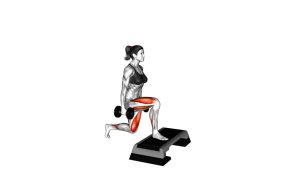
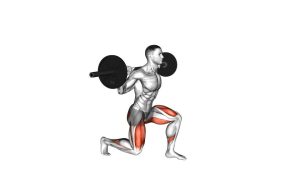
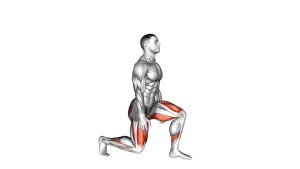
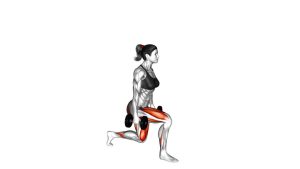
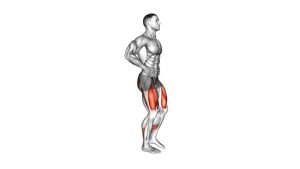
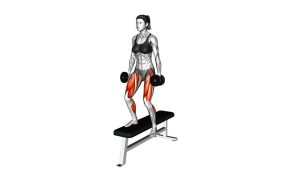
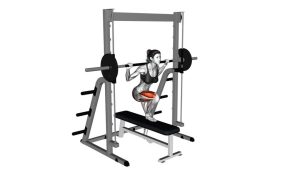
Smith Machine Single-Leg Split Squat: Form, Sets, Tips & FAQ
Learn the Smith Machine Single-Leg Split Squat for stronger quads, glutes, and balance with setup, reps, form cues, mistakes, FAQs, and equipment.
Smith Machine Single-Leg Split Squat
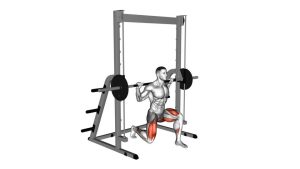
This exercise is excellent for building single-leg strength, improving left-to-right balance, and targeting the quads with a stable machine setup. Because the bar moves on rails, the movement feels more supported than a free-weight split squat, making it easier to focus on depth, knee tracking, and front-leg tension.
Quick Overview
| Body Part | Legs |
|---|---|
| Primary Muscle | Quadriceps |
| Secondary Muscle | Glutes, hamstrings, adductors, calves, and core stabilizers |
| Equipment | Smith machine, weight plates, optional bar pad |
| Difficulty | Intermediate |
Sets & Reps (By Goal)
- Muscle growth: 3–4 sets × 8–12 reps per leg with controlled tempo.
- Strength focus: 4–5 sets × 5–8 reps per leg using heavier but stable loading.
- Beginner control: 2–3 sets × 8–10 reps per leg with light weight or empty bar.
- Leg balance correction: 3 sets × 10–15 reps per weaker side first, then match reps on the stronger side.
Progression rule: Add reps before adding weight. Increase load only when both legs can reach consistent depth with smooth knee tracking and no push-off from the rear leg.
Setup / Starting Position
- Set the bar height: Position the Smith machine bar around upper-chest height so you can unrack it safely.
- Place the bar: Step under the bar and rest it across your upper traps, not directly on your neck.
- Choose your stance: Step one foot forward and place the rear foot behind you for support.
- Find your working leg: Most of your body weight should be on the front leg, with the rear leg used mainly for balance.
- Brace your torso: Keep your ribs stacked, core tight, chest lifted, and eyes forward.
- Unlock the bar: Rotate the bar hooks away and settle into a stable split stance before beginning the rep.
Execution (Step-by-Step)
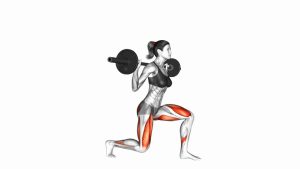
- Start tall: Stand in a split stance with the bar secure, core braced, and front foot flat on the floor.
- Lower under control: Bend the front knee and rear knee as your body travels downward along the Smith machine path.
- Keep pressure on the front leg: Let the front quad and glute control the descent while the rear leg lightly assists balance.
- Reach a strong bottom position: Lower until your front thigh approaches parallel or your rear knee nears the floor without bouncing.
- Drive through the front foot: Push through the mid-foot and heel of the working leg to rise back up.
- Finish with control: Return to the top without locking the knee aggressively or shifting weight backward.
- Repeat all reps: Complete the target reps on one side, then switch legs and match the same controlled technique.
Pro Tips & Common Mistakes
- Keep the front foot planted: Do not let the heel lift during the descent or drive phase.
- Do not bounce at the bottom: Pause briefly and reverse the movement with muscular control.
- Avoid pushing too much with the rear leg: The back foot should help balance, not take over the exercise.
- Control your knee path: Keep the front knee tracking in the same direction as the toes.
- Use a smooth tempo: Lower for 2–3 seconds, pause briefly, then drive up with control.
- Keep the torso stable: A slight forward lean is acceptable, but avoid rounding the back or collapsing the chest.
- Do not overload too soon: Heavy weight with poor stance can stress the knee, hip, or lower back.
- Set the safety stops: Adjust the Smith machine catches before heavy sets so you can safely exit if needed.
FAQ
Is the Smith Machine Single-Leg Split Squat good for quads?
Yes. It is very effective for quad development because the front leg performs most of the work, especially when you use a slightly shorter stance and allow controlled forward knee travel.
Is this the same as a Bulgarian split squat?
No. In this version, the rear foot stays on the floor. A Bulgarian split squat usually places the rear foot on a bench, which increases range of motion and balance demand.
Should I feel this more in my quads or glutes?
It depends on stance. A shorter, more upright setup usually feels more quad-focused. A longer stance with slightly more hip hinge usually increases glute involvement.
How deep should I go?
Lower until your front thigh approaches parallel or your rear knee nears the floor while keeping control. Do not force depth if your heel lifts, knee caves inward, or hips rotate.
Is this exercise beginner-friendly?
It can be beginner-friendly when performed with light weight and careful setup, but it is usually best for lifters who already understand basic squat and lunge mechanics.
Recommended Equipment
- Smith Machine Bar Pad — helps reduce upper-back pressure during split squat sets.
- Weightlifting Shoes — provide a stable base and can help maintain stronger squat mechanics.
- Gym Floor Mat — useful for traction and comfort during lower-body training.
- Knee Sleeves — add warmth and light support for heavy leg sessions.
- Smith Machine Home Gym — allows controlled split squat training at home if you have enough space.
Tip: Equipment should improve comfort and stability, not replace good technique. Keep the load controlled and prioritize clean front-leg movement.