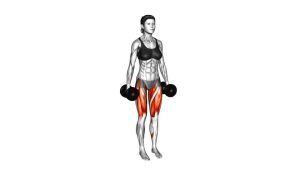
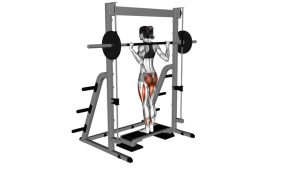
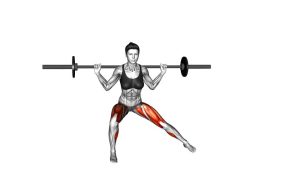
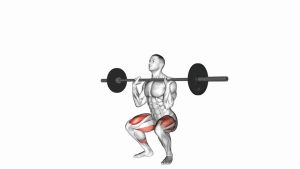
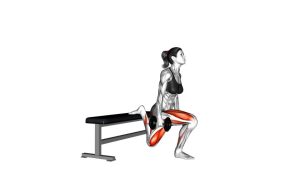
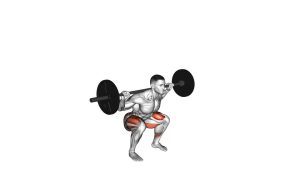
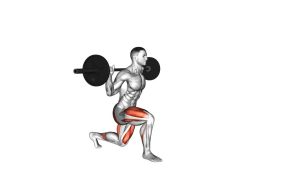
Barbell Forward Lunge: Form, Muscles Worked, Sets, Tips & FAQ
Learn the Barbell Forward Lunge for stronger quads, glutes, balance, and leg control. Includes setup, steps, sets, mistakes, FAQ, and gear.
Barbell Forward Lunge
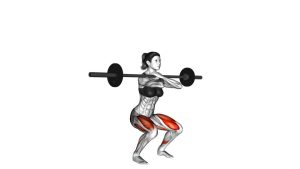
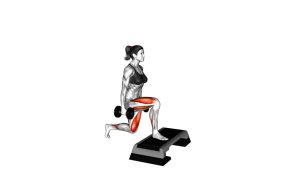
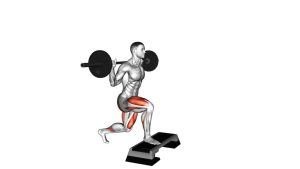
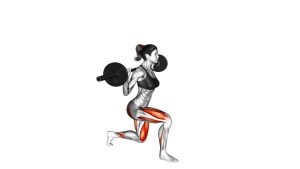
This exercise is best performed with a controlled stride, steady breathing, and strong posture. Because the barbell increases the balance demand, each rep should be smooth rather than rushed. The front leg does most of the work while the rear leg helps with balance and controlled lowering. A slightly shorter and more upright lunge usually emphasizes the quadriceps, while a longer stride with a small hip hinge can increase glute involvement.
Quick Overview
| Body Part | Legs |
|---|---|
| Primary Muscle | Quadriceps |
| Secondary Muscle | Glutes, hamstrings, calves, adductors, core stabilizers |
| Equipment | Barbell, weight plates, squat rack recommended |
| Difficulty | Intermediate |
Sets & Reps (By Goal)
- Strength: 3–5 sets × 4–6 reps per leg with heavier load and full rest.
- Muscle growth: 3–4 sets × 8–12 reps per leg with controlled tempo.
- Balance and control: 2–3 sets × 8–10 reps per leg using light-to-moderate weight.
- Conditioning: 2–4 sets × 10–15 reps per leg with lighter weight and shorter rest.
Progression rule: Add reps first, then increase load only when every rep keeps the front knee stable, the torso upright, and the barbell level.
Setup / Starting Position
- Rack the bar safely: Set the barbell at upper-chest height so you can unrack it without standing on your toes.
- Position the bar: Place it across the upper traps, not directly on the neck.
- Grip evenly: Hold the bar with both hands outside shoulder width and pull your upper back tight.
- Stand tall: Brace your core, keep the ribs stacked over the pelvis, and look forward.
- Set your feet: Begin with feet about hip-width apart so you can step forward without crossing your midline.
Tip: Before adding challenging weight, practice the movement pattern with bodyweight or dumbbells to build balance and step consistency.
Execution (Step-by-Step)
- Brace first: Take a breath, tighten your core, and keep the barbell steady across your upper back.
- Step forward: Move one foot forward into a controlled stride without slamming the foot into the floor.
- Lower under control: Bend both knees as the rear knee travels down toward the floor.
- Track the front knee: Keep the front knee aligned with the toes instead of letting it cave inward.
- Reach the bottom position: Lower until the front thigh is near parallel and the rear knee is close to the floor.
- Drive back up: Push through the front foot to extend the knee and hip.
- Return to standing: Step the front foot back to the starting stance and reset your balance before the next rep.
Pro Tips & Common Mistakes
- Use a consistent stride: A step that changes every rep makes balance and muscle targeting harder.
- Do not crash into the bottom: Lower with control to protect the knee and improve strength.
- Keep the front heel grounded: Avoid rising onto the toes as you push back.
- Control the bar path: Do not let the bar roll, tilt, or shift side to side.
- Avoid knee collapse: Keep the front knee tracking in line with the second and third toes.
- Do not overuse the back leg: The rear leg supports balance, but the front leg should drive the return.
- Reset between reps: Briefly regain posture before stepping again, especially with heavier loads.
FAQ
What muscles does the Barbell Forward Lunge work?
The Barbell Forward Lunge primarily works the quadriceps. It also trains the glutes, hamstrings, calves, adductors, and core stabilizers.
Is the Barbell Forward Lunge good for building legs?
Yes. It is excellent for building unilateral leg strength, improving balance, and developing the quads and glutes. It also helps reveal and correct strength differences between legs.
Should my knee go past my toes during a forward lunge?
A small amount of forward knee travel is normal, especially in a quad-focused lunge. The key is to keep the heel planted, the knee controlled, and the knee tracking in line with the toes.
Is this better than a reverse lunge?
Neither is always better. The forward lunge usually creates more braking demand and can feel more quad-dominant. The reverse lunge is often easier to control and may feel more joint-friendly for some lifters.
Who should avoid heavy Barbell Forward Lunges?
Lifters with poor balance, acute knee pain, hip pain, or back discomfort should avoid heavy loading until technique is stable. Start with bodyweight, dumbbells, or reverse lunges if the barbell version feels unstable.
Recommended Equipment
- Olympic Barbell — the main tool for loaded barbell lunges and lower-body strength training
- Olympic Weight Plates — allows gradual loading for strength and muscle-building progress
- Squat Rack — helps you unrack and rerack the bar safely
- Barbell Pad — optional comfort support for lifters sensitive to bar pressure
- Weightlifting Shoes — provides a stable base and firm contact with the floor
Tip: For this exercise, stable shoes and a safe rack setup matter more than heavy loading. Build control first, then increase resistance gradually.