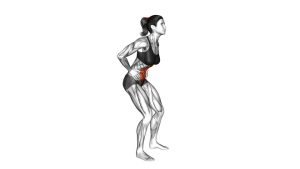
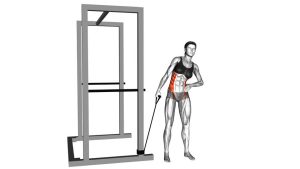
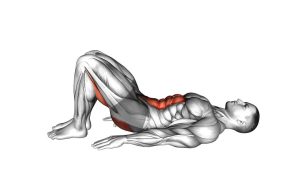
Bodyweight Windmill: Form, Benefits, Sets, Tips & FAQ
Learn the Bodyweight Windmill for stronger obliques, better trunk control, and improved mobility with step-by-step form, sets, tips, FAQs, and gear.
Bodyweight Windmill
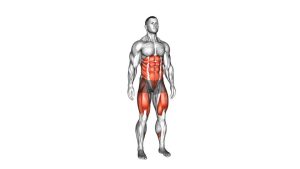
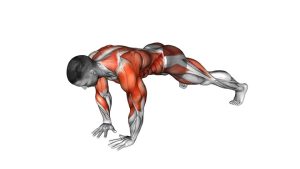
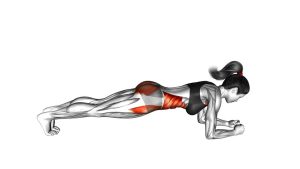
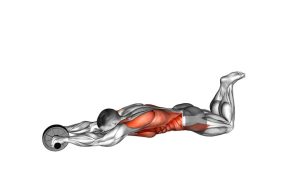
This movement is best performed with slow, clean control. Because the exercise uses bodyweight only, it works well as a warm-up, mobility drill, beginner core exercise, or low-impact standing abs movement. However, quality matters more than speed. Therefore, each rep should feel deliberate, balanced, and stable from start to finish.
Quick Overview
| Body Part | Core |
|---|---|
| Primary Muscle | Obliques |
| Secondary Muscle | Rectus abdominis, transverse abdominis, spinal stabilizers, hips, and shoulders |
| Equipment | No equipment required |
| Difficulty | Beginner |
Sets & Reps (By Goal)
- Beginner control: 2–3 sets × 6–8 reps per side with a slow tempo.
- Core endurance: 3–4 sets × 10–15 reps per side with steady breathing.
- Mobility warm-up: 1–2 sets × 8–10 reps per side before training.
- Low-impact conditioning: 3 rounds × 30–45 seconds at a smooth rhythm.
Progression rule: First improve control and range. Then, add more reps or slow the lowering phase before increasing workout density.
Setup / Starting Position
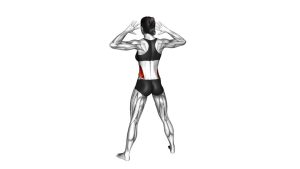
- Stand tall: Place your feet wider than hip-width so your base feels stable.
- Extend your arms: Reach both arms out wide, forming a long line through the upper body.
- Brace gently: Tighten the core lightly without holding your breath.
- Keep your chest open: Avoid rounding forward before you begin the side bend.
- Start centered: Keep your weight balanced between both feet.
Tip: Use a smaller range if your hips shift too much or your lower back takes over the movement.
Execution (Step-by-Step)
- Begin from tall posture: Stand upright with arms extended and shoulders relaxed.
- Bend to one side: Slowly lower one arm toward the same-side leg while the opposite arm reaches upward.
- Control the trunk: Let the movement come from the side of your waist rather than collapsing through the lower back.
- Pause briefly: Hold the bottom position for a moment while keeping the core active.
- Return to center: Drive through the obliques and bring the torso back upright with control.
- Repeat on the other side: Move smoothly into the opposite side and keep the same tempo.
Pro Tips & Common Mistakes
- Move slowly: Fast reps reduce core tension and make the exercise less effective.
- Keep the arms extended: Long arms help guide the windmill shape and improve awareness.
- Do not collapse forward: The movement should feel like a controlled side bend, not a sloppy forward fold.
- Control the hips: Let the torso move while keeping the lower body steady.
- Use your obliques: Pull yourself back to center through the side of the waist.
- Breathe smoothly: Exhale as you bend, then inhale as you return upright.
- Avoid overreaching: Reaching too far can shift tension into the lower back.
FAQ
What muscles does the Bodyweight Windmill work?
The Bodyweight Windmill mainly works the obliques. It also engages the rectus abdominis, deep core muscles, spinal stabilizers, hips, and shoulders because the body must stay balanced during the side-to-side motion.
Is the Bodyweight Windmill good for beginners?
Yes. Since it requires no equipment and uses a controlled standing position, it is beginner-friendly. However, beginners should use a small range of motion and focus on smooth technique before adding more reps.
Should I feel this exercise in my lower back?
You may feel light stabilizing effort around the trunk, but the main work should come from the sides of your core. If your lower back feels strained, reduce the range, slow down, and avoid leaning too far.
Can I use the Bodyweight Windmill as a warm-up?
Yes. It works well as a warm-up because it gently moves the trunk, activates the obliques, and prepares the body for core, lower-body, or full-body training.
How can I make the Bodyweight Windmill harder?
First, slow the tempo and increase control. After that, you can add more reps, pause longer at the bottom, or later progress to a light dumbbell or kettlebell version if your form stays stable.
Recommended Equipment (Optional)
- Exercise Mat — useful for warm-ups, mobility work, and floor-based core training after this exercise.
- Yoga Blocks — helpful for mobility support and range-of-motion modifications.
- Light Dumbbells Set — useful if you later progress to a lightly loaded windmill variation.
- Light Kettlebell — appropriate for advanced progressions after mastering bodyweight control.
- Full-Length Workout Mirror — helps check arm position, trunk angle, and side-to-side control.
Tip: Equipment is optional. Master the bodyweight version first, then progress only when your motion stays smooth and pain-free.