Crab Pilates Exercise: Form, Core Benefits, Sets, Tips & FAQ
Learn the Crab Pilates exercise for core control, spinal mobility, balance, and coordination with step-by-step form, sets, tips, FAQs, and equipment.
Crab Pilates
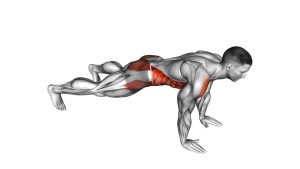
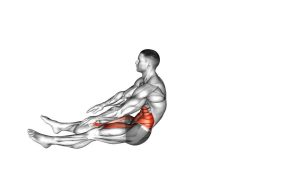
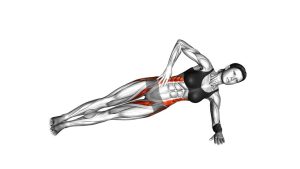
Crab Pilates works best when the body stays compact and the spine moves like a smooth wheel. Instead of throwing yourself backward, use your abdominals to control the roll. The hips lift, the upper back receives the weight, and the legs reposition with precision before the body rolls forward again. Because this exercise includes spinal flexion, balance, and a brief inverted transition, it should be practiced only after you have mastered easier Pilates rolling drills.
During the exercise, the abs should stay active, the shoulders should remain relaxed, and the neck should never take pressure. The best reps feel smooth and rhythmic. If the movement feels heavy, noisy, rushed, or uncontrolled, return to simpler drills such as Rolling Like a Ball until your control improves.
Quick Overview
| Body Part | Core |
|---|---|
| Primary Muscle | Rectus abdominis, deep core stabilizers, transverse abdominis |
| Secondary Muscle | Hip flexors, spinal erectors, obliques, upper-back stabilizers |
| Equipment | Pilates mat or padded exercise mat |
| Difficulty | Advanced |
Sets & Reps (By Goal)
- Technique practice: 2–3 sets × 3–5 slow reps, resting 45–75 seconds between sets.
- Core control: 3 sets × 5–8 controlled reps, using smooth breathing and clean balance.
- Pilates flow: 1–2 rounds × 4–6 reps inside a mat sequence after easier rolling exercises.
- Coordination training: 2–4 sets × 3–6 reps, focusing on the leg switch and quiet landing.
Progression rule: Add reps only when every roll feels smooth, balanced, and pain-free. Never progress by using more speed or more momentum.
Setup / Starting Position
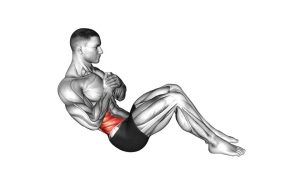
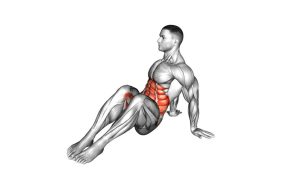
- Sit on the mat: Begin seated with your knees bent and your body balanced near the sit bones.
- Create a rounded spine: Curl into a strong C-shape from the lower back through the upper back.
- Draw the knees in: Keep the thighs close to the torso so the body stays compact.
- Hold the lower legs: Place your hands around the shins, ankles, or feet depending on your Pilates variation.
- Lift the feet lightly: Balance with control while keeping the shoulders relaxed and the neck long.
- Prepare the breath: Inhale before the roll, then keep the abdominals active as the body moves.
Your starting shape should feel compact but not crushed. The goal is a controlled rounded position, not a forced spinal collapse.
Execution (Step-by-Step)
- Start in a compact tuck: Sit tall enough to balance, then round the spine and keep the knees close to the chest.
- Initiate the backward roll: Pull the abdominals inward and let the pelvis roll backward with control. The lower back, mid-back, and upper back should contact the mat in sequence.
- Lift the hips smoothly: Allow the hips to rise as the body rolls onto the upper back and shoulders. Keep pressure away from the head and neck.
- Maintain the rounded shape: Keep the spine curved and the body compact. Avoid opening the chest too early.
- Perform the leg transition: Reposition or switch the legs quickly but cleanly while the torso remains controlled.
- Roll forward with control: Use the abdominals to guide the body back down through the spine. Do not swing the legs aggressively.
- Return to seated balance: Arrive on the sit bones with the feet lifted or lightly controlled. Hold the finish without wobbling.
- Reset before the next rep: Rebuild the rounded shape, relax the shoulders, and repeat only if the previous rep was clean.
Pro Tips & Common Mistakes
Pro Tips
- Think “round and light”: A compact rounded spine helps the body roll smoothly.
- Use the abs to brake: Control both the backward and forward phases instead of relying on momentum.
- Keep the head protected: Roll onto the upper back and shoulders, never onto the neck or head.
- Move with rhythm: The movement should feel like one connected sequence, not separate disconnected parts.
- Control the finish: The seated balance at the end shows whether the rep was truly controlled.
Common Mistakes
- Throwing the body backward: This removes core control and can increase spinal stress.
- Landing on the neck: This is unsafe. Keep the roll on the upper back and shoulders.
- Opening the body too soon: Losing the compact shape makes the roll harder to control.
- Using a flat spine: A flat back creates a clunky roll. Maintain the C-curve.
- Rushing the leg switch: Quick does not mean sloppy. Keep the transition clean and organized.
- Holding the breath: Breath tension can make the movement stiff and uncontrolled.
FAQ
What muscles does Crab Pilates work?
Crab Pilates mainly works the rectus abdominis, transverse abdominis, and other deep core stabilizers. It also challenges the hip flexors, obliques, spinal stabilizers, and upper-back control during the rolling phase.
Is Crab Pilates beginner-friendly?
No. Crab Pilates is usually considered an advanced Pilates mat exercise because it requires rolling control, spinal mobility, coordination, and safe upper-back positioning. Beginners should first master easier drills like Rolling Like a Ball.
Should my head touch the floor during Crab Pilates?
No. The weight should stay on the upper back and shoulders during the inverted part of the movement. Avoid placing pressure on the head or neck.
Why do I lose balance when I roll forward?
Balance is usually lost when the legs swing too hard, the spine opens too early, or the abs stop controlling the return. Keep the knees close, slow the roll, and finish on the sit bones with control.
Can Crab Pilates help with core strength?
Yes. Crab Pilates builds dynamic core strength because the abs must control the spine, stabilize the pelvis, manage momentum, and return the body to balance. It is especially useful for advanced Pilates control.
Recommended Equipment
- Thick Pilates Mat — provides cushioning for rolling exercises and protects the spine during mat work.
- Extra Thick Exercise Mat — useful if your floor is hard or your spine needs extra padding during rolling drills.
- Pilates Grip Socks — helps prevent sliding when setting up and returning to seated balance.
- Pilates Magic Circle — useful for related Pilates core drills, hip control, and inner-thigh activation.
- Small Pilates Ball — helpful for regressions, core activation, and controlled spinal mobility practice.
Tip: For Crab Pilates, a supportive mat is the most important item. Extra tools are optional and should be used mainly for preparation, regressions, or complementary Pilates core work.