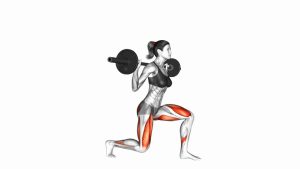
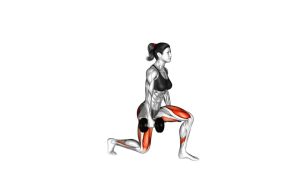
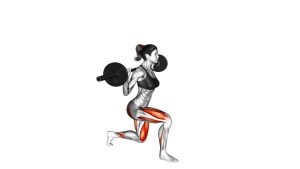
Dumbbell Bulgarian Split Squat: Form, Muscles, Sets, Tips & FAQ
Learn the Dumbbell Bulgarian Split Squat for stronger quads, glutes, balance, and single-leg control with setup, form cues, sets, tips, FAQs, and equipment.
Dumbbell Bulgarian Split Squat
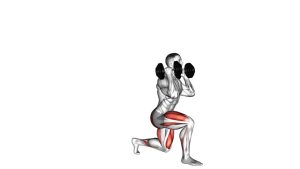
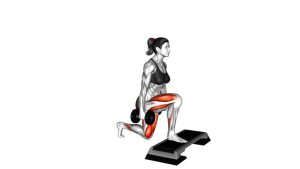
This exercise is excellent for building strong, balanced legs because each side works independently. It can help reduce strength differences between legs, improve squat mechanics, and add serious quad and glute stimulus without needing a heavy barbell. The key is to keep the front knee tracking in line with the toes while the dumbbells stay quiet at your sides.
Quick Overview
| Body Part | Legs |
|---|---|
| Primary Muscle | Quadriceps |
| Secondary Muscle | Glutes, hamstrings, adductors, calves, core, hip stabilizers |
| Equipment | Dumbbells and a bench, box, or stable platform |
| Difficulty | Intermediate |
Sets & Reps (By Goal)
- Strength: 3–5 sets × 5–8 reps per leg with heavier dumbbells and 90–150 sec rest.
- Muscle growth: 3–4 sets × 8–12 reps per leg with controlled tempo and 60–90 sec rest.
- Balance and control: 2–3 sets × 8–10 reps per leg using light dumbbells or bodyweight.
- Conditioning finisher: 2–3 sets × 12–15 reps per leg with lighter dumbbells and shorter rest.
Progression rule: First improve balance and depth. Then increase reps. Add heavier dumbbells only when both legs stay stable and controlled.
Setup / Starting Position
- Stand in front of a bench: Place one foot behind you on the bench with the top of the foot resting down.
- Set the front foot: Step far enough forward so your front knee can bend without the heel lifting.
- Hold the dumbbells: Keep one dumbbell in each hand with arms straight and palms facing your body.
- Brace your torso: Keep the chest lifted, ribs controlled, and core lightly tight.
- Find balance first: Stabilize before starting the first rep. Your front leg should feel like the main working leg.
Tip: A slightly forward torso lean is normal and can increase glute involvement. A more upright torso usually increases quad emphasis.
Execution (Step-by-Step)
- Begin tall: Keep your front foot flat, dumbbells still, and eyes forward.
- Lower slowly: Bend the front knee and hip while the rear knee moves down toward the floor.
- Control the knee path: Keep the front knee tracking in the same direction as the toes.
- Reach your depth: Lower until the front thigh is near parallel or until you reach a comfortable controlled range.
- Drive upward: Push through the front mid-foot and heel to stand back up.
- Finish with control: Return near the top without bouncing, locking out aggressively, or pushing off the rear foot.
Pro Tips & Common Mistakes
- Keep the front heel grounded: If the heel lifts, your stance may be too short or your weight may be too far forward.
- Avoid knee collapse: Keep the knee aligned with the toes instead of letting it cave inward.
- Do not bounce at the bottom: Pause briefly or control the transition to protect the knee and improve muscle tension.
- Keep the dumbbells quiet: Swinging weights usually means you are using momentum instead of control.
- Use the rear leg for balance: The elevated leg should not dominate the movement.
- Adjust torso angle for emphasis: Upright torso targets quads more; slight forward lean increases glute contribution.
- Start lighter than expected: This exercise becomes challenging quickly because balance and stability are involved.
FAQ
What muscles does the Dumbbell Bulgarian Split Squat work?
It primarily works the quadriceps. It also trains the glutes, hamstrings, adductors, calves, core, and hip stabilizers because the body must control balance on one working leg.
Is the Bulgarian split squat better for quads or glutes?
It can target both. A more upright torso and shorter stance usually emphasize the quads more. A slightly longer stance with a controlled forward lean usually increases glute involvement.
How high should the rear foot be?
A bench around knee height or slightly below is common. If the bench feels too high or causes hip discomfort, use a lower box or platform.
Should my front knee go past my toes?
It can move forward naturally as long as the heel stays down, the knee tracks with the toes, and the movement feels controlled. Avoid forcing depth if it causes pain.
Why do I lose balance during Bulgarian split squats?
Balance problems often come from a stance that is too narrow, dumbbells that are too heavy, or rushing the descent. Widen the stance slightly, reduce the load, and move slower.
Recommended Equipment
- Adjustable Dumbbells — useful for progressive overload without needing many separate dumbbell pairs.
- Flat Weight Bench — provides a stable rear-foot platform for Bulgarian split squats.
- Exercise Step Platform — a lower alternative for beginners who need a more comfortable rear-foot height.
- Weightlifting Shoes — can help improve foot stability and squat mechanics during lower-body training.
- Exercise Mat — helpful for comfort and floor grip during setup, warm-ups, and accessory work.
Choose stable equipment before adding load. A secure bench and controlled dumbbells make this exercise safer and more effective.