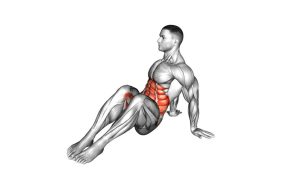
Side Crunch Exercise: Proper Form, Oblique Benefits, Sets, Tips & FAQ
Learn how to do the Side Crunch with proper form to target your obliques, improve core control, avoid mistakes, and build stronger side abs.
Side Crunch
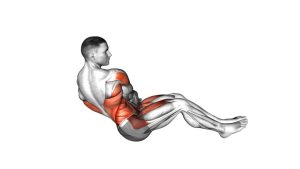
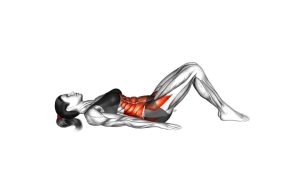
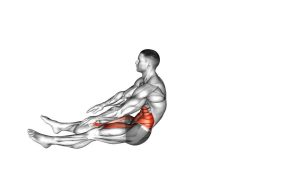
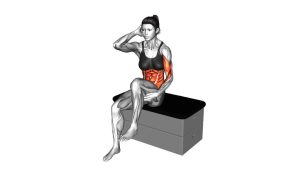
This exercise works best when the movement is small, clean, and controlled. The goal is not to pull on the neck or swing the torso upward. Instead, you should create a smooth side crunch by shortening the working side of your waist. Keep your hips stable, breathe steadily, and focus on squeezing the obliques at the top of each repetition.
The Side Crunch is especially useful for home workouts because it requires no equipment. It can be used as a main oblique exercise, a finisher after an abs workout, or a controlled core drill for people who want to improve side-body strength without heavy loading.
Quick Overview
| Body Part | Core |
|---|---|
| Primary Muscle | Obliques |
| Secondary Muscle | Rectus abdominis, transverse abdominis, quadratus lumborum |
| Equipment | No equipment required |
| Difficulty | Beginner to Intermediate |
Sets & Reps (By Goal)
- Beginner control: 2–3 sets × 8–12 reps per side, using a slow and smooth tempo.
- Core endurance: 3–4 sets × 12–20 reps per side, keeping the range controlled.
- Oblique strength focus: 3–4 sets × 10–15 reps per side with a 1–2 second squeeze at the top.
- Abs finisher: 2–3 rounds × 15–25 reps per side after your main core workout.
- Technique practice: 1–2 light sets per side before a core session to improve oblique awareness.
Progression rule: First improve control, range, and pause quality. After that, add reps or hold the top contraction longer. Avoid rushing into weighted versions if your hips rock or your neck works harder than your core.
Setup / Starting Position
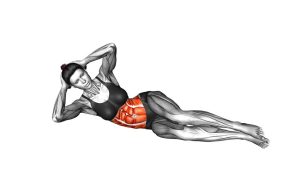
- Lie on your side: Position your body on the floor with your legs stacked or slightly bent for balance.
- Stabilize your lower body: Keep your hips steady and avoid rolling backward or forward.
- Place one hand near your head: Use it only for light support. Do not pull your neck upward.
- Set your torso long: Start with the ribs and hips separated so the working side of the waist can contract clearly.
- Brace gently: Tighten your core enough to stay stable, but do not hold your breath.
- Choose a comfortable leg position: Bent knees usually feel easier, while straighter legs require more control.
Tip: Before starting, imagine your bottom hip is anchored to the floor. This cue helps prevent rocking and keeps the obliques doing the work.
Execution (Step-by-Step)
- Start from a long side position: Keep your torso relaxed but aligned. Your neck should stay neutral.
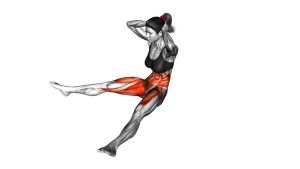
- Exhale and crunch sideways: Lift your upper torso by bringing your ribs toward your same-side hip.
- Keep the motion lateral: Avoid turning the movement into a forward sit-up or twisting crunch.
- Squeeze the obliques: Pause briefly at the top and feel the working side of your waist shorten.
- Lower with control: Return your torso toward the floor without dropping suddenly.
- Reset your position: Let the waist lengthen again before starting the next rep.
- Repeat evenly: Complete all reps on one side, then switch sides and match the same form and tempo.
Pro Tips & Common Mistakes
Pro Tips
- Think ribs to hip: This cue helps you target the obliques instead of lifting with the neck.
- Use a short pause: Hold the top for 1–2 seconds to improve muscle tension and control.
- Move slowly: A controlled side crunch is more effective than a fast, momentum-based rep.
- Keep the lower body quiet: Stable hips make the movement cleaner and more targeted.
- Train both sides evenly: Match the same reps, tempo, and range on each side.
Common Mistakes
- Pulling the head: This can strain the neck and reduce oblique engagement.
- Rolling backward: This changes the angle and turns the exercise into a different movement.
- Crunching forward: The Side Crunch should bend the torso sideways, not straight up.
- Using momentum: Swinging reduces muscle tension and makes the exercise less effective.
- Holding the breath: Exhale during the crunch and inhale as you lower back down.
- Doing too much range: A large lift is not always better. Clean side flexion matters more than height.
FAQ
What muscles does the Side Crunch work?
The Side Crunch mainly targets the obliques, which run along the sides of your abdomen. It also involves the rectus abdominis, transverse abdominis, and small stabilizing muscles around the trunk.
Is the Side Crunch good for building side abs?
Yes. The Side Crunch is a useful isolation exercise for improving oblique control and side-ab definition. For best results, combine it with full core training, progressive overload, proper nutrition, and consistent weekly volume.
Should I do Side Crunches every day?
You can practice them often at low volume, but hard oblique training should usually include recovery. Start with 2–4 sessions per week and adjust based on soreness, performance, and overall training load.
Why do I feel Side Crunches in my neck?
Neck tension usually happens when you pull the head with your hand or lift with the upper body instead of the obliques. Keep your hand light, relax your jaw, and focus on bringing your ribs toward your hip.
Can beginners do the Side Crunch?
Yes. Beginners can do this exercise by using a smaller range of motion, bending the knees for balance, and performing each repetition slowly. Quality matters more than high reps.
Is the Side Crunch better than Russian Twists?
They train the core differently. The Side Crunch focuses more on side bending and oblique contraction, while Russian Twists emphasize rotation. Both can be useful, but the Side Crunch is usually easier to control.
Recommended Equipment
- Exercise Mat — provides cushioning for your hips, ribs, and elbows during floor-based side crunches.
- Thick Yoga Mat — useful if you need extra comfort on hard floors while training abs and obliques.
- Ankle Weights — optional progression tool for advanced side-body and lower-core variations.
- Medicine Ball — helpful for progressing into weighted oblique drills after mastering bodyweight form.
- Resistance Bands Set — useful for pairing Side Crunches with anti-rotation and core stability exercises.
Tip: You do not need equipment to perform the Side Crunch well. Start with clean bodyweight reps first, then add tools only when your technique stays stable on both sides.