Side Lunge: Proper Form, Muscles Worked, Sets, Tips & FAQ
Learn how to do the Side Lunge with proper form, muscles worked, sets by goal, step-by-step cues, common mistakes, FAQs, and equipment tips.
Side Lunge
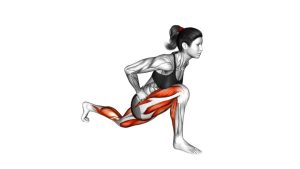
The Side Lunge is useful because it trains the legs in the frontal plane, which many standard leg exercises do not emphasize enough. Instead of moving only forward and backward, this movement teaches the hips, knees, and ankles to control side-to-side force. It can be used in warm-ups, mobility sessions, lower-body workouts, athletic training, or bodyweight conditioning.
Quick Overview
| Body Part | Legs |
|---|---|
| Primary Muscle | Glutes, quadriceps, adductors |
| Secondary Muscle | Hamstrings, calves, core stabilizers, glute medius |
| Equipment | Bodyweight only |
| Difficulty | Beginner to Intermediate |
Sets & Reps (By Goal)
- Beginner technique: 2–3 sets × 6–8 reps per side with slow control.
- Muscle endurance: 3–4 sets × 10–15 reps per side with steady tempo.
- Strength focus: 3–5 sets × 6–10 reps per side, using deeper range and stricter control.
- Mobility warm-up: 1–3 sets × 6–10 reps per side with light effort and smooth movement.
- Conditioning: 3–5 rounds × 30–45 seconds, alternating sides while keeping form clean.
Progression rule: Improve control and range of motion first. After that, add tempo pauses, dumbbells, a kettlebell, or more total reps.
Setup / Starting Position
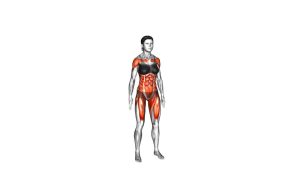
- Stand tall: Begin with feet about hip-width apart and your posture upright.
- Brace lightly: Keep your core active without holding your breath.
- Set your feet: Keep toes mostly forward or slightly turned out based on hip comfort.
- Prepare the arms: Hold your hands in front of the chest for balance or let them move naturally.
- Choose your side: Step laterally with one leg while the opposite leg stays extended.
Start with a moderate step width. A step that is too narrow limits the movement, while a step that is too wide may pull the inner thigh too aggressively.
Execution (Step-by-Step)
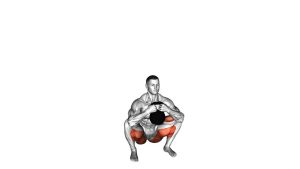
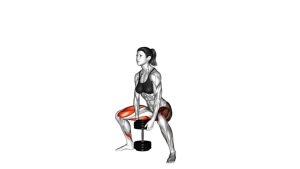
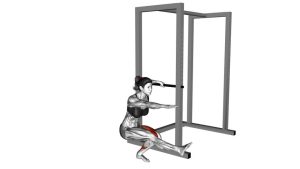
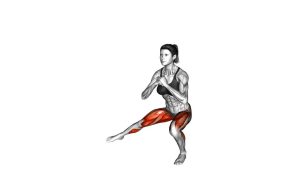
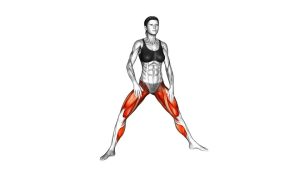
- Step to the side: Move one foot out laterally and plant it firmly on the floor.
- Sit the hips back: Bend the stepping knee while pushing the hips backward like a squat pattern.
- Keep the opposite leg straight: Let the non-working leg stay extended with the foot grounded.
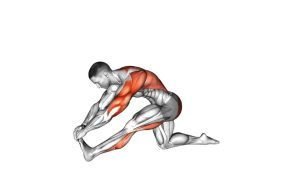
- Control the bottom: Lower until you feel the working leg loaded and the inner thigh of the straight leg lengthened.
- Maintain alignment: Keep the working knee tracking over the toes without letting it cave inward.
- Push back to center: Drive through the heel and midfoot of the working leg to return to standing.
- Reset before the next rep: Regain posture and repeat on the same side or alternate sides.
Pro Tips & Common Mistakes
- Sit back, not just sideways: Push the hips backward so the glutes and quads load correctly.
- Keep the heel down: Avoid shifting all your weight onto the toes of the working leg.
- Do not collapse the knee: Keep the knee aligned with the foot throughout the descent and push-off.
- Control the straight leg: Keep the opposite leg long without locking aggressively or twisting the knee.
- Avoid rounding the back: A slight forward torso angle is fine, but the spine should stay neutral.
- Use your arms for balance: Reaching the arms slightly forward can help control the bottom position.
- Do not rush the return: Push back with control instead of bouncing or swinging the body upright.
FAQ
What muscles do Side Lunges work?
Side Lunges mainly work the glutes, quadriceps, and adductors. They also train the hamstrings, calves, core, and glute medius for balance and lateral stability.
Are Side Lunges good for inner thighs?
Yes. The straight-leg side of the movement places a strong stretch and control demand on the adductors, which are the inner-thigh muscles.
Should my knee go past my toes during a Side Lunge?
Some forward knee travel can happen naturally, but the main focus should be keeping the heel grounded, hips back, and knee aligned with the toes.
Why do I feel Side Lunges mostly in my inner thigh?
That is common, especially if your adductors are tight or not used to lateral movement. Reduce the step width, move slower, and avoid forcing the bottom range.
Can beginners do Side Lunges?
Yes. Beginners should start with a shallow range, controlled reps, and bodyweight only. As mobility and strength improve, the range can become deeper.
How can I make Side Lunges harder?
You can hold a dumbbell or kettlebell, slow the lowering phase, pause at the bottom, increase reps, or perform alternating side lunges continuously.
Recommended Equipment
- Exercise Mat — provides a comfortable non-slip surface for bodyweight lower-body training.
- Adjustable Dumbbells — useful for progressing Side Lunges into a loaded strength movement.
- Kettlebell — excellent for goblet-style loaded Side Lunges and lower-body strength work.
- Resistance Bands for Legs — helpful for glute activation and lateral stability warm-ups.
- Slant Board — optional tool for ankle mobility and squat-pattern preparation.
Choose equipment based on your goal. Beginners can master the Side Lunge with bodyweight first, then add load once balance, knee tracking, and hip control are consistent.