Sitting Air Twisting Crunch: Form, Benefits, Sets, Tips & FAQ
Learn the Sitting Air Twisting Crunch to train abs and obliques with seated rotation, knee lifts, step-by-step form, tips, FAQs, and gear.
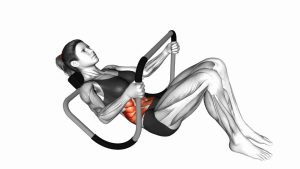
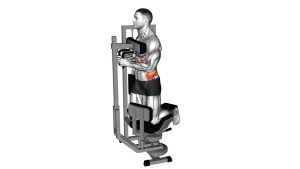
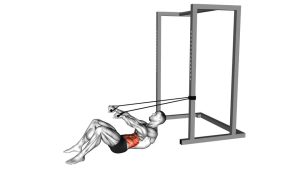
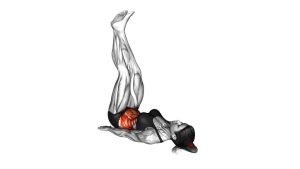
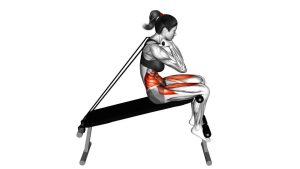
Sitting Air Twisting Crunch on a Padded Stool
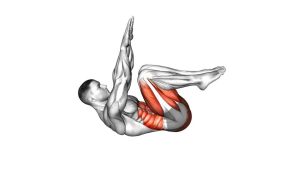
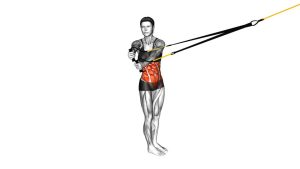
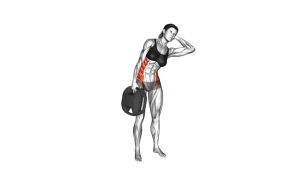
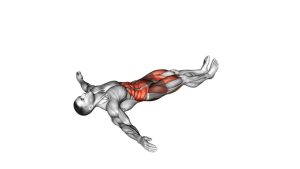
This exercise is useful for training the rectus abdominis and obliques without using weights. In addition, the seated position helps keep the movement compact and focused. However, the exercise still requires balance, control, and steady breathing because the legs move while the torso twists.
Quick Overview
| Body Part | Core |
|---|---|
| Primary Muscle | Rectus abdominis |
| Secondary Muscle | Obliques, hip flexors, deep core stabilizers |
| Equipment | Padded stool, bench, or stable elevated seat |
| Difficulty | Beginner to Intermediate |
Sets & Reps (By Goal)
- Core control: 2–3 sets × 8–10 reps per side with slow, clean rotation.
- Muscle endurance: 3–4 sets × 12–16 total alternating reps with steady breathing.
- Oblique focus: 3 sets × 10–12 reps per side, pausing briefly at each twist.
- Beginner practice: 2 sets × 6–8 reps per side with a smaller range of motion.
Progression rule: First improve balance and control. Then, increase reps slowly before adding longer holds or a larger twisting range.
Setup / Starting Position
- Sit on a padded stool: Choose a stable stool, box, or bench that does not slide during movement.
- Place your hands behind your head: Keep the elbows open, but avoid pulling the head forward.
- Brace your core: Sit tall and keep the ribs controlled before lifting the legs.
- Lift the feet slightly: Bend the knees and let the legs hover in front of you.
- Start neutral: Keep the torso upright before beginning the first twist.
If balance feels difficult, reduce the knee lift and keep the motion smaller until your torso stays steady.
Execution (Step-by-Step)
- Brace before moving: Tighten the midsection lightly and keep the chest lifted.
- Lift one knee toward the torso: Bring the knee upward while beginning to crunch forward.
- Rotate toward the raised knee: Twist through the torso, not just through the elbows.
- Crunch at the top: Bring the ribs and knee closer together without collapsing the neck.
- Return to center: Lower the leg and untwist the torso with control.
- Repeat on the opposite side: Lift the other knee and rotate toward it using the same smooth pattern.
Pro Tips & Common Mistakes
- Rotate from the torso: Do not simply point the elbow toward the knee. Instead, turn the ribs and shoulders together.
- Keep the elbows open: This helps reduce neck pulling and keeps the crunch focused on the core.
- Move with control: Fast swinging reduces abdominal tension and makes balance harder.
- Do not lean too far back: Stay balanced on the stool and avoid excessive lower-back arching.
- Exhale during the crunch: Breathing out as you twist can improve core contraction.
- Use a stable seat: A padded but firm stool is best because unstable surfaces may increase fall risk.
FAQ
What muscles does the Sitting Air Twisting Crunch work?
It mainly works the rectus abdominis and obliques. In addition, the hip flexors assist because the knees lift during each repetition.
Is this exercise good for beginners?
Yes, it can be beginner-friendly when performed slowly with a small range of motion. However, beginners should use a stable stool and focus on balance before increasing reps.
Should my feet stay off the floor?
In the visible exercise, the feet stay lifted during the twisting crunch. This increases core demand. If that feels too difficult, briefly touching the feet down between reps can make the exercise easier.
Why do I feel my hip flexors during this movement?
The hip flexors help lift the knees. However, your abs should still control the crunch and rotation. To reduce hip-flexor dominance, slow down and focus on pulling the ribs toward the pelvis.
Can I do this exercise every day?
You can practice it frequently at low volume, especially for coordination. Still, for harder sets, allow recovery time so the abs and obliques can adapt.
Recommended Equipment
- Padded Workout Stool — provides a comfortable elevated seat for seated core exercises.
- Adjustable Weight Bench — offers a stable surface for seated crunches and other core movements.
- Exercise Mat — useful for warm-ups, floor core work, and safer training space around the stool.
- Non-Slip Floor Pads — help keep the stool or bench stable during seated movement.
- Core Sliders — useful for adding other bodyweight core variations to your routine.
Choose equipment that feels stable before starting. Since this exercise includes twisting and leg lifting, seat stability is more important than height.