Lying Ab Press: Form, Benefits, Sets, Tips & FAQ
Learn the Lying Ab Press to strengthen your abs with controlled crunch tension, tabletop legs, proper setup, step-by-step form, tips, FAQs, and gear.
Lying Ab Press
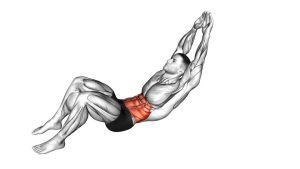
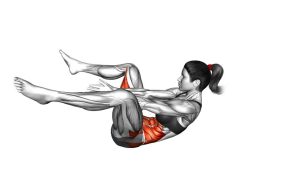
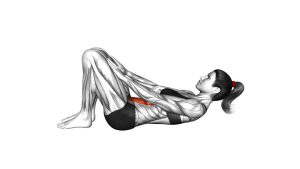
This exercise works best when the movement stays slow, short, and deliberate. First, the knees remain bent and lifted over the hips. Then, the hands press into the thighs while the shoulders curl slightly upward. As a result, the abdominal muscles create tension from both the crunch and the resisted press.
Quick Overview
| Body Part | Abs |
|---|---|
| Primary Muscle | Rectus abdominis |
| Secondary Muscle | Deep core stabilizers, hip flexors, obliques |
| Equipment | No equipment required; optional exercise mat |
| Difficulty | Beginner to intermediate |
Sets & Reps (By Goal)
- Core activation: 2–3 sets × 8–10 slow reps with a 2-second press
- Ab strength: 3–4 sets × 10–15 reps with controlled breathing
- Beginner control: 2 sets × 6–8 reps with short pauses between reps
- Core endurance: 3 sets × 20–30 seconds of repeated controlled presses
Progression rule: Increase control before increasing volume. Also, add longer press holds only when you can keep the legs still and the neck relaxed.
Setup / Starting Position
- Lie on your back: Start flat on the floor with your head, upper back, and lower back supported.
- Raise your legs: Bend your hips and knees to about 90 degrees so your legs form a tabletop position.
- Place your hands: Put both hands on the front of your thighs, just above the knees.
- Set your ribs: Keep your ribs controlled and avoid arching your lower back excessively.
- Relax your neck: Keep the chin slightly tucked without forcing the head forward.
The setup should feel stable before you begin. Therefore, adjust the leg height slightly if your lower back cannot stay controlled.
Execution (Step-by-Step)
- Brace gently: Take a steady breath and prepare your core without holding excessive tension.
- Press into the thighs: Push your hands into your thighs while your thighs resist the pressure.
- Lift slightly: Curl your head and shoulders a small distance off the floor.
- Hold the squeeze: Pause briefly while keeping the legs still and the abs tight.
- Lower with control: Return your upper back and head to the floor slowly.
- Repeat cleanly: Continue for the target reps without swinging the legs or rushing the press.
Pro Tips & Common Mistakes
- Keep the movement short: A small controlled curl is enough to target the abs effectively.
- Press evenly: Push both hands into both thighs with balanced pressure.
- Do not swing: If the legs move a lot, slow down and reduce the force of the press.
- Avoid neck pulling: The hands stay on the thighs, so the neck should not be yanked forward.
- Control the lower back: Keep the pelvis stable and avoid excessive arching.
- Breathe through the rep: Exhale during the press, then inhale as you lower back down.
- Use a mat if needed: A soft mat can make the floor position more comfortable.
FAQ
What muscles does the Lying Ab Press work?
The Lying Ab Press mainly works the rectus abdominis. However, the deep core stabilizers and obliques also assist because the legs stay raised and steady during the press.
Is the Lying Ab Press good for beginners?
Yes. It is beginner-friendly because the movement is small and controlled. Nevertheless, beginners should use light pressure and focus on keeping the lower back stable.
Should my legs move during the exercise?
No. The legs should stay mostly still in the tabletop position. If they move too much, reduce the hand pressure and slow the repetition down.
Is this exercise the same as a crunch?
It is similar to a crunch, but it adds hand pressure into the thighs. Therefore, it creates extra abdominal tension without needing external weight.
How can I make the Lying Ab Press harder?
You can hold the press longer, increase the number of reps, or slow the lowering phase. However, only progress when your legs stay stable and your neck remains relaxed.
Recommended Equipment (Optional)
- Exercise Mat — adds comfort and support for floor-based ab training
- Thick Yoga Mat — useful if your spine or shoulders feel uncomfortable on hard floors
- Ab Workout Mat — designed for crunch-style movements and repeated core sessions
- Non-Slip Exercise Mat — helps keep your body stable during controlled floor exercises
- Core Sliders — optional tool for progressing into other core stability drills
Tip: Equipment is optional for this exercise. However, a comfortable mat can improve consistency, especially when performing multiple sets on the floor.