Bottle Weighted Russian Twist: Form, Core Benefits, Sets & Tips
Learn the Bottle Weighted Russian Twist for stronger obliques, better core control, and seated rotational strength with safe form, sets, tips, FAQs.
Bottle Weighted Russian Twist
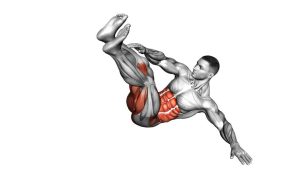
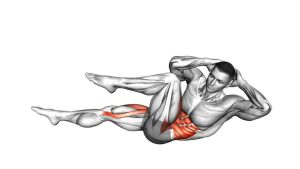
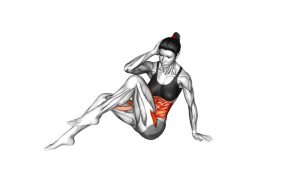
This exercise works best when the rotation is controlled and the weight remains close to the body. Therefore, the arms should not dominate the movement. Instead, the shoulders, ribs, and torso should turn together as one unit. Moreover, the knees should stay bent, the feet should remain stable, and the spine should stay long while the body leans slightly back.
Quick Overview
| Body Part | Core |
|---|---|
| Primary Muscle | Obliques |
| Secondary Muscle | Rectus abdominis, transverse abdominis, hip flexors |
| Equipment | Bottle, light weighted object, or small medicine ball |
| Difficulty | Intermediate because the feet stay elevated and the torso rotates under load |
Sets & Reps (By Goal)
- Core endurance: 2–3 sets × 16–24 total twists with light weight
- Oblique strength: 3–4 sets × 10–16 total twists with slower control
- Beginner control: 2 sets × 8–12 total twists with feet lightly touching the floor
- Conditioning finisher: 2–3 rounds × 20–30 seconds with steady breathing
Progression rule: First improve control, then add reps. After that, increase the bottle weight slightly. However, never increase load if your spine rounds, your feet swing, or your torso starts using momentum.
Setup / Starting Position
- Sit on the floor: Bend both knees and position your body in a balanced seated stance.
- Lean back slightly: Create a mild reclined angle while keeping your chest lifted and your spine long.
- Lift the feet: Raise both feet slightly from the floor if you can control the position.
- Hold the bottle close: Keep the bottle or weight tight near your chest instead of extending it far away.
- Brace the core: Tighten your midsection gently before the first twist.
If the elevated-feet position feels unstable, place your heels lightly on the floor. As a result, you can learn the rotation pattern without losing spinal control.
Execution (Step-by-Step)
- Start in the center: Hold the bottle close to your chest and keep your knees bent.
- Rotate to one side: Turn your shoulders and ribcage together while keeping the bottle close.
- Pause briefly: Stop the twist before your lower back rounds or your hips shift.
- Return through center: Move smoothly back to the middle without dropping your feet.
- Rotate to the other side: Repeat the same controlled twist in the opposite direction.
- Continue alternating: Keep the movement steady until all reps are complete.
Pro Tips & Common Mistakes
- Keep the weight close: Holding the bottle near your chest helps reduce swinging and improves control.
- Rotate from the torso: Turn the ribcage and shoulders together instead of waving the arms side to side.
- Control the legs: Keep the knees bent and avoid kicking the feet during each twist.
- Avoid rounding the lower back: Stay tall through the chest even while leaning back.
- Use a moderate range: Twist far enough to feel the obliques, but not so far that the hips shift.
- Breathe steadily: Exhale gently as you rotate, then inhale as you pass through center.
- Slow down the tempo: A slower twist usually builds better core tension than fast, loose reps.
FAQ
What muscles does the Bottle Weighted Russian Twist work?
It mainly works the obliques, which help rotate and stabilize the torso. Additionally, the abs, deep core muscles, and hip flexors assist because the body stays leaned back with the feet lifted.
Should my feet stay off the floor?
In the video version, the feet are elevated. However, beginners can keep the heels lightly on the floor. This makes the exercise easier and helps maintain cleaner torso rotation.
Should the bottle touch the floor on each side?
No. In this version, the bottle stays close to the chest and does not touch the floor. Because of that, the movement stays compact, controlled, and focused on torso rotation.
Why do I feel this in my hip flexors?
You may feel the hip flexors because the legs are lifted and the torso is reclined. However, if the hip flexors dominate too much, lower your heels to the floor or reduce the lean-back angle.
Is the Bottle Weighted Russian Twist good for beginners?
It can be beginner-friendly when performed with the feet down and a very light bottle. Nevertheless, the elevated-feet version is more challenging and should be used only when you can keep your spine stable.
Recommended Equipment
- Workout Water Bottle — useful as a light weighted object for home core training
- Medicine Ball — a stronger progression for Russian twists and rotational core work
- Thick Exercise Mat — improves comfort while seated on the floor
- Soft Kettlebell — provides a compact weighted option for controlled torso rotation
- Light Adjustable Dumbbell — allows gradual loading as core strength improves
Choose a light load first. Then, progress gradually only when each twist stays smooth, your feet remain controlled, and your lower back does not collapse.