Sitting Shoulder Press Toe Touch on a Padded Stool: Form, Sets, Tips & FAQ
Learn the Sitting Shoulder Press Toe Touch on a Padded Stool for shoulder strength, core control, and seated mobility. Includes setup, step-by-step form, sets by goal, mistakes, FAQs, and recommended equipment.
Sitting Shoulder Press Toe Touch on a Padded Stool
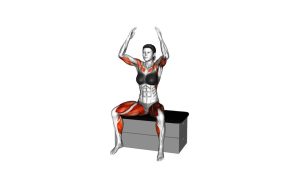
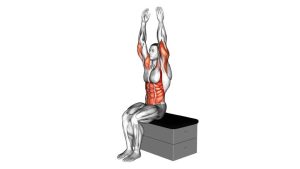
This exercise works well as a warm-up, light conditioning drill, or low-impact cardio-strength movement. It trains the shoulders dynamically while also reinforcing trunk control as you move from spinal flexion into a tall seated press. Because the pattern is repetitive and coordinated, it can also help improve movement flow and body awareness during seated training.
Quick Overview
| Body Part | Shoulders |
|---|---|
| Primary Muscle | Deltoids (especially front delts) |
| Secondary Muscle | Rectus abdominis, triceps, hip flexors, upper back stabilizers |
| Equipment | Padded stool or padded bench |
| Difficulty | Beginner to Intermediate (coordination-based, low impact) |
Sets & Reps (By Goal)
- Warm-up / movement prep: 2–3 sets × 8–10 reps
- Light conditioning: 2–4 sets × 12–20 reps
- Mobility + coordination: 2–3 sets × 8–12 slow, controlled reps
- Low-impact fat-loss circuit: 3–4 sets × 15–25 reps with short rest
Progression rule: First improve control, tempo, and range of motion. Then increase reps or total work time. Do not speed up the movement until each phase looks smooth and balanced.
Setup / Starting Position
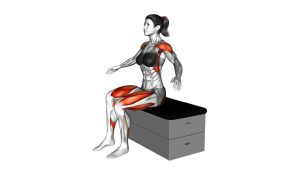
- Sit securely: Sit near the middle of a padded stool or bench with both feet planted on the floor about hip-width apart.
- Start folded forward: Lean your torso slightly or fully forward toward your thighs with the arms reaching down toward the feet.
- Brace lightly: Keep the core active so the movement stays controlled when you rise up.
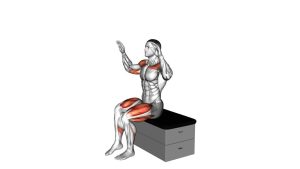
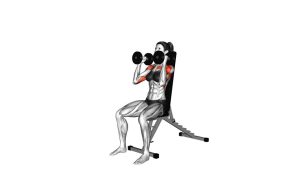
- Prepare the shoulders: As you begin the upward phase, bring the elbows up into a bent “goalpost” or shoulder-press position.
- Stay balanced: Keep your weight centered on the stool and avoid shifting too far forward or backward.
Tip: A stable padded seat makes the movement more comfortable and helps you focus on control instead of bracing against a hard surface.
Execution (Step-by-Step)
- Begin in the toe-touch position: Fold forward from the hips and spine with the hands reaching toward the feet or floor.
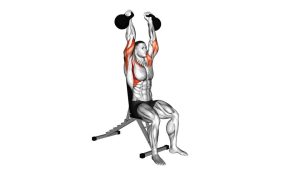
- Rise to upright: Lift the torso up smoothly while bringing the arms up into a shoulder-press setup.
- Press overhead: Extend the arms upward until they are fully or nearly fully overhead without shrugging excessively.
- Lower with control: Bring the arms back down to the bent starting press position while staying tall through the torso.
- Return to the toe touch: Fold forward again in a controlled manner, reaching toward the feet to complete one repetition.
Pro Tips & Common Mistakes
- Press up, not back: Reach vertically overhead instead of leaning backward into the low back.
- Control the fold: Don’t flop into the toe touch. Lower yourself with your abs engaged.
- Keep the feet grounded: Stable foot pressure helps you stay balanced and rhythmical.
- Use a manageable range: You do not need to touch the toes every rep if flexibility is limited.
- Don’t rush the transition: The switch from fold to press should stay smooth, not jerky.
- Watch shoulder tension: Avoid shrugging the shoulders hard toward the ears during the press.
- Stay centered on the stool: Too much forward reach can make the movement unstable.
FAQ
What muscles does the Sitting Shoulder Press Toe Touch work?
It mainly targets the shoulders, especially the front delts, while also involving the core, triceps, and hip flexors during the fold-and-rise pattern.
Is this exercise good for beginners?
Yes. It is a beginner-friendly movement when performed slowly and with a comfortable range of motion. Beginners should focus on coordination and posture before increasing speed or volume.
Do I have to touch my toes on every rep?
No. Reach as far as your mobility allows while maintaining control. The goal is a clean forward fold, not forcing the stretch.
Can I use this as a warm-up?
Yes. It works well in warm-ups because it raises body temperature, engages the shoulders and core, and introduces a coordinated seated movement pattern.
What should I avoid during this exercise?
Avoid slamming into the toe touch, arching hard during the press, shrugging excessively, or sitting on an unstable surface. Controlled tempo is more important than speed.
Recommended Equipment (Optional)
- Balance Pad — adds comfortable cushioning and can be used for seated support, balance work, and rehab-style exercise
- Round Stool Cushion — improves comfort on hard stools and can make longer seated sessions more practical
- Resistance Bands Set — useful for pairing this movement with extra shoulder, upper-back, and full-body training
- Resistance Band Set with Handles — a simple add-on for seated pressing, rows, and accessory work at home
- Cervical Pillow — optional recovery-focused support for neck comfort after long desk hours or upper-body sessions
Tip: Choose tools that improve comfort, support posture, or expand your training options. Accessories should make movement easier to perform well, not more awkward.