Sitting Dynamic Side Stretch: Form, Benefits, Sets & Tips
Learn the Sitting Dynamic Side Stretch to improve side-body mobility, oblique control, and seated flexibility with clear steps, tips, and FAQs.
Sitting Dynamic Side Stretch
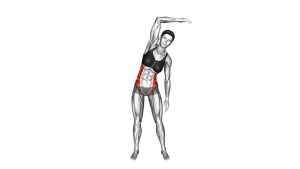
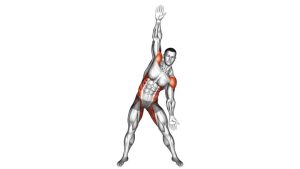
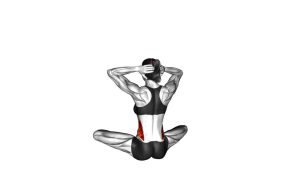
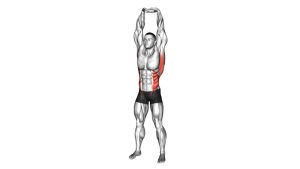
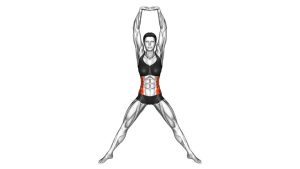
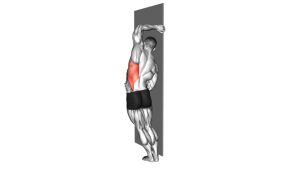
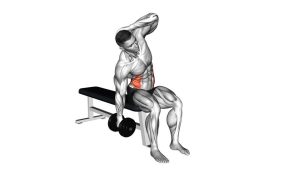
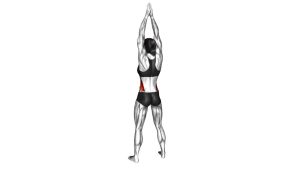
This exercise is performed from a seated floor position with the legs crossed. From there, one arm reaches overhead while the torso bends sideways. Then, the body returns to the center before repeating on the opposite side. As a result, the drill works well as a warm-up, mobility reset, or light flexibility exercise before core training, yoga, stretching, or general movement practice.
Quick Overview
| Body Part | Core |
|---|---|
| Primary Muscle | Obliques |
| Secondary Muscle | Lats, intercostals, quadratus lumborum, spinal stabilizers, shoulders |
| Equipment | No equipment required; optional exercise mat for comfort |
| Difficulty | Beginner |
Sets & Reps (By Goal)
- Daily mobility: 2–3 sets × 8–12 reps per side with a smooth, easy tempo.
- Warm-up before training: 1–2 sets × 6–10 reps per side before core, back, or full-body work.
- Flexibility focus: 2–4 sets × 8–15 reps per side with a 1–2 second pause at the comfortable end range.
- Desk or posture reset: 1–2 light sets × 5–8 reps per side, focusing on breathing and control.
Progression rule: First improve smoothness and breathing. After that, increase the range slightly only if the hips stay grounded and the torso does not twist.
Setup / Starting Position
- Sit on the floor: Begin in a comfortable cross-legged seated position.
- Stack your posture: Keep the chest open, spine tall, and head aligned over the shoulders.
- Relax the shoulders: Let the arms start naturally near the body before each reach.
- Ground the hips: Keep both sitting bones connected to the floor as much as possible.
- Prepare to move slowly: The movement should feel controlled, not rushed or forced.
Tip: Use an exercise mat if the floor feels uncomfortable. Additionally, sit on a folded towel if your hips feel tight in the cross-legged position.
Execution (Step-by-Step)
- Start tall: Sit upright with your spine long and your ribs stacked over your hips.
- Raise one arm: Reach one arm overhead while keeping the elbow mostly straight.
- Bend to the side: Lean your torso sideways in the direction opposite the raised arm.
- Reach diagonally: Let the overhead arm follow the side bend so the side of the torso lengthens.
- Keep control: Avoid collapsing forward, twisting, or bouncing at the bottom of the stretch.
- Return to center: Bring the torso back upright with control.
- Switch sides: Lower the first arm, raise the opposite arm, and repeat the same side-bending pattern.
Pro Tips & Common Mistakes
- Reach before you bend: First lengthen through the overhead arm, then move into the side bend.
- Keep both hips grounded: This helps the stretch stay focused through the side body instead of turning into a lean from the pelvis.
- Avoid twisting: Keep the chest generally facing forward throughout the movement.
- Do not bounce: Since this is a dynamic stretch, the motion should flow, but it should never jerk.
- Use calm breathing: Exhale gently as you bend and inhale as you return to the center.
- Protect the shoulder: Reach long without shrugging aggressively toward the ear.
- Stay within your range: A smaller smooth bend is better than a deep, uncontrolled stretch.
FAQ
What is the Sitting Dynamic Side Stretch good for?
It is useful for improving side-body mobility, warming up the obliques, and creating smoother lateral movement through the torso. Additionally, it can help prepare the core and upper body before training.
Where should I feel this stretch?
You should mainly feel a gentle stretch along the side of the torso, including the obliques, ribs, and lat area. However, you should not feel sharp pain in the lower back, shoulder, or neck.
Should my hips lift during the side bend?
No. Try to keep both hips grounded. If one hip lifts, the range may be too large, so reduce the bend and focus on a longer, smoother reach.
Is this exercise better as a warm-up or cooldown?
It can work for both. As a warm-up, use a smooth dynamic tempo. As a cooldown, slow the movement down and pause lightly at the end range.
Can beginners do the Sitting Dynamic Side Stretch?
Yes. This is a beginner-friendly movement because it uses bodyweight only and allows a small range of motion. Still, beginners should move slowly and avoid forcing the stretch.
Recommended Equipment (Optional)
- Exercise Mat — adds comfort for seated floor mobility work.
- Yoga Blocks — helpful for seated support if the hips feel tight.
- Stretching Strap — useful for additional flexibility routines before or after this drill.
- Foam Roller — supports general warm-up work for the back, lats, and hips.
- Meditation Cushion — raises the hips slightly for a more comfortable seated position.
Tip: Equipment is optional. However, a mat or cushion can make the seated position easier to maintain with better posture.