Weighted Seated Plate Driver: Form, Muscles Worked, Sets, Tips & FAQ
Learn how to do the Weighted Seated Plate Driver with proper form. Discover muscles worked, setup, step-by-step execution, sets and reps by goal, common mistakes, FAQs, and recommended equipment.
Weighted Seated Plate Driver
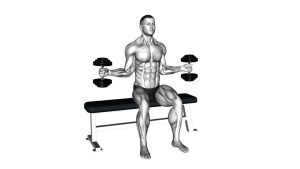
This exercise looks simple, but it becomes demanding quickly because the shoulders must hold the plate out in front while also controlling rotation. It works best with a moderate plate, strict posture, and smooth reps. You should feel continuous tension in the shoulders, especially the front delts, without needing to swing the plate or twist the whole body.
Quick Overview
| Body Part | Shoulders |
|---|---|
| Primary Muscle | Anterior deltoids (front shoulders) |
| Secondary Muscle | Lateral deltoids, rotator cuff, upper chest, serratus anterior, core stabilizers |
| Equipment | Weight plate and flat bench |
| Difficulty | Beginner to Intermediate (easy to learn, challenging to sustain with strict form) |
Sets & Reps (By Goal)
- Shoulder endurance: 2–4 sets × 12–20 total rotations per side with 30–60 sec rest
- Warm-up / activation: 1–3 sets × 8–12 controlled rotations per side using a light plate
- Hypertrophy finisher: 2–3 sets × 20–40 total alternating turns with continuous tension
- Stability and control: 2–3 sets × 10–16 slow reps per side with a strict 2–3 sec tempo
Progression rule: First improve control and duration, then increase the plate weight. If your elbows drop or your torso starts twisting, the load is too heavy.
Setup / Starting Position
- Sit tall on a bench: Plant both feet flat on the floor and sit upright near the front of the bench.
- Brace lightly: Keep your ribs stacked over your hips and engage your core so the torso stays steady.
- Grab the plate securely: Hold the weight plate with both hands around the sides, usually at roughly the 3 and 9 o’clock positions.
- Raise the plate in front: Extend your arms forward until the plate is around shoulder height.
- Set shoulder position: Keep shoulders down and back slightly without shrugging. Elbows stay soft, not locked rigidly.
Tip: A plate with grip holes usually feels more comfortable and secure for this movement than a smooth plate.
Execution (Step-by-Step)
- Hold the plate steady: Start with the plate centered in front of your chest at shoulder height.
- Rotate to one side: Turn the plate as if you are steering a wheel, moving slowly without letting your elbows collapse.
- Return through center: Bring the plate back to neutral under control rather than snapping it back.
- Rotate to the opposite side: Repeat the same motion smoothly to the other side.
- Maintain posture: Keep your torso still, chest up, neck neutral, and shoulders level throughout the set.
- Finish with control: Once your reps are done, bring the plate back in toward the body before lowering it.
Pro Tips & Common Mistakes
- Use a lighter plate than expected: This exercise becomes hard quickly because the arms stay elevated the entire time.
- Keep the plate at shoulder level: Letting it drift down reduces the challenge and changes the movement.
- Don’t rush the rotation: Slow turns keep tension on the delts and reduce sloppy momentum.
- Avoid shrugging: If your traps take over, reset your shoulders and reduce the load.
- Do not twist your torso: The goal is shoulder control and anti-rotation stability, not trunk rotation.
- Keep elbows slightly bent: A soft elbow position is usually more comfortable and easier to control.
- Use it late in the workout: This is excellent as a shoulder finisher after presses, raises, or upright stability work.
FAQ
What muscles does the Weighted Seated Plate Driver work?
It mainly targets the anterior deltoids. The lateral delts, rotator cuff, upper chest, and core stabilizers also help keep the plate controlled and the torso steady.
Is this exercise for strength or endurance?
It is usually better for muscular endurance, stability, and time-under-tension than for max strength. Most people use it as a burnout, finisher, or control drill rather than a primary heavy lift.
How heavy should the plate be?
Use a plate that lets you keep the arms up and the torso still for the full set. For many lifters, a lighter plate with stricter form works better than going heavy and losing control.
Can beginners do the seated plate driver?
Yes. Beginners can start with a very light plate and fewer total rotations. The seated setup makes it easier to focus on shoulder control without worrying about standing balance.
When should I place it in my workout?
It fits best near the end of a shoulder or upper-body session as a finisher, or earlier in a workout with a very light load as part of activation and shoulder prep.
Recommended Equipment (Optional)
- Grip Weight Plates — the main tool for this exercise; grip holes make the plate easier and safer to hold
- Adjustable Weight Bench — useful for a stable seated setup and versatile enough for many other upper-body exercises
- Plate Storage Rack — keeps weight plates organized and easy to access during home workouts
- Exercise Mat — adds floor grip and comfort around the bench area, especially for home gym training
- Resistance Bands Set — great for pairing with shoulder warm-ups, pull-aparts, and rotator cuff activation
Tip: Choose a plate with easy-grip handles for better control, especially if you plan to use this exercise for higher-rep shoulder endurance work.