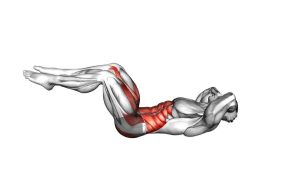
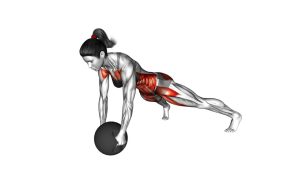
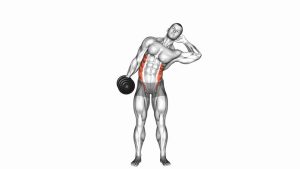
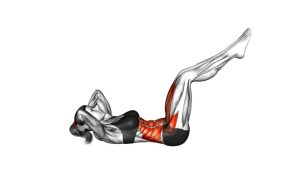
45-Degree Side Bend: Oblique Form, Sets, Tips & FAQ
Learn the 45-Degree Side Bend to train obliques with strict lateral flexion, stable hips, proper setup, goal-based sets, mistakes, FAQs, and equipment.
45-Degree Side Bend
This exercise works best when the hips stay fixed, the torso moves in a clean side-bending path, and the neck remains neutral. The movement should feel strict and deliberate. During the lowering phase, the working-side obliques lengthen under tension. During the lifting phase, they contract to bring the torso back to a straight line.
Because the bench supports the lower body, the 45-Degree Side Bend gives you a stable position to isolate the obliques. It is especially useful for building side-core strength without needing heavy weights. For best results, keep the range smooth, avoid twisting, and pause briefly at the top before starting the next repetition.
Quick Overview
| Body Part | Obliques |
|---|---|
| Primary Muscle | Internal obliques and external obliques |
| Secondary Muscle | Quadratus lumborum, rectus abdominis, transverse abdominis, spinal stabilizers |
| Equipment | 45-degree hyperextension bench, Roman chair, or back extension bench |
| Difficulty | Beginner to intermediate, depending on range of motion and loading |
Sets & Reps (By Goal)
- Beginner technique: 2–3 sets × 8–10 reps per side, using bodyweight only and a slow tempo.
- Oblique endurance: 3–4 sets × 12–20 reps per side, keeping constant tension and short rest periods.
- Core strength: 3–4 sets × 8–12 reps per side, adding a light plate only after bodyweight control is excellent.
- Warm-up activation: 1–2 sets × 8–12 reps per side before heavier core, squat, deadlift, or athletic training.
- Hypertrophy focus: 3–5 sets × 10–15 reps per side with controlled eccentric lowering and a strong top squeeze.
Progression rule: Improve control before adding load. First increase range quality, then add reps, then add a small weight if needed. Never progress by swinging harder or dropping deeper than your spine can control.
Setup / Starting Position
- Adjust the bench: Set yourself sideways on a 45-degree hyperextension bench so your hips rest securely against the pad.
- Lock the lower body: Place your feet under the foot pads and keep your legs firm. The lower body should not slide or rotate.
- Set the hip position: Keep the side of your hip supported, while allowing your torso to move freely over the edge of the pad.
- Place the hands: Position your hands lightly behind the head, across the chest, or on the shoulders. Avoid pulling the neck.
- Stack the torso: Start with your body in a straight diagonal line from head to feet.
- Brace gently: Tighten your core as if preparing for a controlled side bend, not a heavy max-effort lift.
- Keep the neck neutral: Look forward and keep the head aligned with the spine.
Tip: If the bench height feels uncomfortable, adjust your hip placement. The pad should support the pelvis without blocking the torso from bending sideways.
Execution (Step-by-Step)
- Begin from a straight line: Start with your torso aligned with your legs and your hips fixed against the pad.
- Lower sideways: Slowly bend your torso down toward the floor in a pure side-bending motion.
- Control the stretch: Stop when you feel a comfortable stretch through the upper-side obliques. Do not collapse into the bottom.
- Drive through the obliques: Contract the working-side obliques to lift your torso back toward neutral.
- Avoid twisting: Keep your chest facing forward instead of rotating toward the floor or ceiling.
- Finish tall: Return to a straight body line at the top. Pause briefly and squeeze the side core.
- Repeat with control: Complete all reps on one side, then turn around and train the opposite side evenly.
Pro Tips & Common Mistakes
Pro Tips
- Use a small pause at the top: A brief squeeze helps you finish each rep with the obliques instead of momentum.
- Move in one plane: Think “sideways down, sideways up.” This cue helps prevent unwanted twisting.
- Keep the hips quiet: Stable hips make the obliques do more of the work.
- Control the lowering phase: A slow eccentric builds tension and improves body awareness.
- Train both sides equally: Match reps, tempo, and range of motion on both sides to avoid strength imbalance.
- Start bodyweight-only: The bench angle already creates enough challenge for many beginners.
Common Mistakes
- Swinging the torso: Momentum reduces oblique tension and may irritate the lower back.
- Rotating the chest: Twisting changes the exercise and can shift stress away from the target muscles.
- Pulling the head: Hands should support position lightly, not yank the neck upward.
- Going too deep: More range is not better if you lose control or feel pinching.
- Letting the hips move: Sliding or rolling hips makes the movement less stable and less effective.
- Overloading too soon: Heavy plates are unnecessary until your bodyweight reps are strict and repeatable.
FAQ
What muscles does the 45-Degree Side Bend work?
The main muscles are the internal and external obliques. The quadratus lumborum, transverse abdominis, rectus abdominis, and spinal stabilizers also assist by controlling the torso and keeping the trunk stable.
Is the 45-Degree Side Bend good for building obliques?
Yes. It is an effective oblique exercise when performed with strict lateral flexion and controlled tempo. It works especially well for building side-core endurance, strength, and muscular control.
Should I use weight for this exercise?
Start with bodyweight first. Add a small plate or dumbbell only when you can perform clean reps without swinging, twisting, or feeling lower-back discomfort.
Where should I feel the movement?
You should feel the working-side obliques contract as you lift your torso. You may also feel a controlled stretch along the opposite side during the lowering phase.
Is this exercise bad for the lower back?
It should not bother the lower back when performed with good control and a comfortable range. Problems usually happen when the movement becomes too fast, too deep, too heavy, or too twisted.
How is this different from a standing dumbbell side bend?
The 45-Degree Side Bend fixes the lower body on a bench, which can make the obliques easier to isolate. A standing dumbbell side bend requires more whole-body balance and can be easier to cheat with momentum.
Recommended Equipment
- 45-Degree Hyperextension Bench — the main bench option for performing strict side bends and back extensions.
- Roman Chair Exercise Bench — a useful alternative for oblique side bends, back extensions, and core training.
- Small Weight Plate — helpful for adding light resistance once bodyweight reps feel controlled.
- Exercise Mat — useful for warm-up drills, side planks, and floor-based oblique work.
- Resistance Bands Set — great for pairing this exercise with anti-rotation core drills and posture work.
Tip: Equipment should support better control, not heavier cheating. Choose stable gear, secure your feet well, and keep the movement slow before increasing resistance.