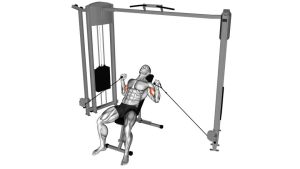
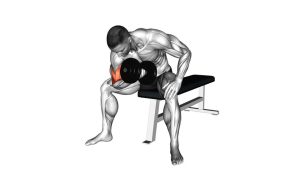
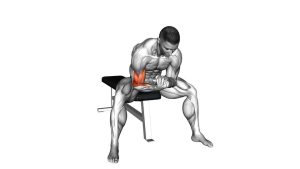
Dumbbell Standing One-Arm Curl Over Incline Bench: Form, Muscles Worked, Sets & Tip
Learn how to perform the Dumbbell Standing One-Arm Curl Over Incline Bench with strict form. Discover muscles worked, setup, step-by-step execution, sets and reps by goal, common mistakes, FAQs, and recommended equipment.
Dumbbell Standing One-Arm Curl Over Incline Bench
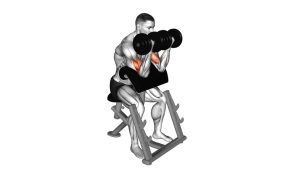
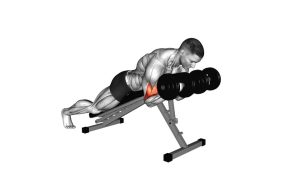
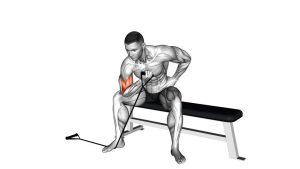
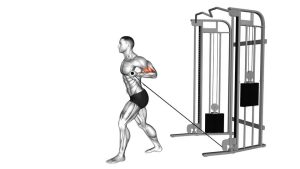
This exercise is excellent for lifters who want more strict biceps tension and less cheating. The bench support limits shoulder movement and makes each rep easier to control, which can help improve symmetry between arms and increase the quality of each contraction. Use a weight you can lift without swinging, twisting, or rushing the lowering phase.
Quick Overview
| Body Part | Biceps |
|---|---|
| Primary Muscle | Biceps brachii |
| Secondary Muscle | Brachialis, brachioradialis, forearm stabilizers |
| Equipment | Incline bench, dumbbell |
| Difficulty | Beginner to Intermediate |
Sets & Reps (By Goal)
- Muscle growth: 3–4 sets × 8–12 reps per arm, 60–90 sec rest
- Strength with strict form: 4–5 sets × 6–8 reps per arm, 90–120 sec rest
- Muscle control / symmetry work: 2–4 sets × 10–15 reps per arm, 45–75 sec rest
- Finisher / pump work: 2–3 sets × 12–15 reps per arm, short rest and slow lowering
Progression rule: Increase reps first, then load. Only go heavier if you can keep the upper arm fixed, avoid torso twisting, and control the eccentric all the way down.
Setup / Starting Position
- Set the bench angle: Adjust an incline bench to a moderate angle, usually around 45 degrees.
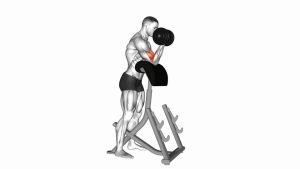
- Stand behind the bench: Position yourself so the top edge of the pad supports the back of your working upper arm.
- Grip the dumbbell: Hold one dumbbell with a supinated grip (palm facing up).
- Anchor the upper arm: Press the triceps area lightly into the bench to keep the arm stable.
- Start with full extension: Let the arm hang nearly straight without relaxing completely out of position.
- Brace lightly: Keep your chest up, shoulders down, and torso still.
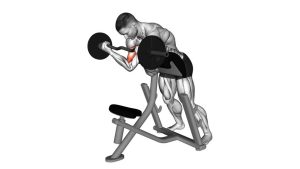
Tip: Think of this as a standing preacher-style curl using an incline bench instead of a preacher pad.
Execution (Step-by-Step)
- Lock in the upper arm: Keep the back of the upper arm in contact with the bench throughout the rep.
- Initiate the curl: Flex the elbow and curl the dumbbell upward in a smooth arc.
- Keep the wrist steady: Avoid curling the wrist back or forward; let the biceps do the work.
- Lift without cheating: Do not swing the torso, twist the hips, or let the shoulder roll forward.
- Squeeze at the top: Pause briefly when the dumbbell reaches peak contraction near shoulder height.
- Lower under control: Slowly extend the elbow and return the dumbbell to the starting position.
- Repeat evenly: Complete all reps on one arm, then switch sides or alternate by program preference.
Pro Tips & Common Mistakes
- Keep the upper arm pinned: This is the key detail that makes the exercise strict and effective.
- Use a full controlled range: Lower to near full elbow extension without losing tension or bench contact.
- Lead with the pinky side: A fully supinated position can improve biceps involvement for many lifters.
- Control the lowering phase: The eccentric should be smooth, not dropped.
- Do not twist the torso: Rotating the body is a common way to fake extra reps.
- Avoid excessive wrist flexion: Letting the forearm dominate can reduce biceps tension.
- Do not rush the top: A short squeeze at peak contraction makes the rep more productive.
- Match both arms: Use the weaker side to set the rep quality and loading standard.
FAQ
What muscles does the Dumbbell Standing One-Arm Curl Over Incline Bench work?
It primarily targets the biceps brachii, while the brachialis, brachioradialis, and forearm stabilizers assist. The supported position helps isolate elbow flexion more than many standing curl variations.
Is this exercise better than a regular standing dumbbell curl?
It can be better for strict isolation because the incline bench limits body English and shoulder involvement. A regular standing curl allows heavier loading, but this version usually provides cleaner biceps-focused reps.
Should I curl one side at a time or alternate arms?
Either works, but doing one side at a time often improves focus and control. It also makes it easier to compare strength and form between arms.
How heavy should I go on this movement?
Use a load that allows complete control. If you need to swing, shrug, twist, or lose contact with the bench, the dumbbell is too heavy for this variation.
Where should I feel this exercise most?
You should feel the working biceps doing most of the effort, especially through the mid-range and peak contraction. Some forearm involvement is normal, but the curl should not feel dominated by the wrist or shoulder.
Recommended Equipment
- Adjustable Weight Bench — essential for creating the supported incline position used in this exercise
- Rubber Hex Dumbbells — durable and stable for unilateral curling work
- Weight Lifting Gloves with Wrist Support — can improve grip comfort and reduce hand fatigue during higher-rep arm training
- Wrist Wraps — useful if you want extra wrist stability while keeping the curl path strict
- Bench with Preacher Curl Attachment — a strong optional upgrade if you enjoy supported arm isolation work
Choose equipment that helps you stay stable and controlled. For this exercise, strict positioning matters more than chasing maximum load.