Barbell Standing Wide-Grip Curl: Proper Form, Muscles Worked, Sets & Tips
Learn how to perform the Barbell Standing Wide-Grip Curl with proper form. Discover muscles worked, setup, execution, sets and reps by goal, common mistakes, FAQs, and recommended equipment.
Barbell Standing Wide-Grip Curl
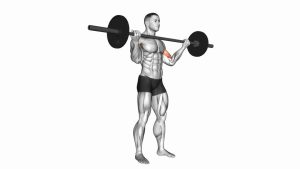
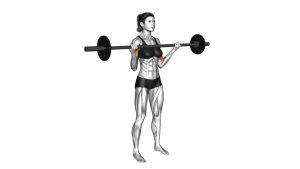
This variation is excellent for lifters who want to build fuller-looking upper arms while keeping the movement simple and effective. A wide grip slightly changes the line of pull compared with a standard barbell curl, making it a useful variation for targeting the biceps from a different angle. Focus on strict reps, a stable torso, and smooth control through the entire range of motion.
Quick Overview
| Body Part | Biceps |
|---|---|
| Primary Muscle | Biceps brachii (short head emphasis) |
| Secondary Muscle | Brachialis, brachioradialis, forearm flexors |
| Equipment | Straight barbell and weight plates |
| Difficulty | Beginner to Intermediate |
Sets & Reps (By Goal)
- Muscle growth: 3–4 sets × 8–12 reps, 60–90 seconds rest
- Strength-focused arm work: 4–5 sets × 5–8 reps, 90–120 seconds rest
- Technique and control: 2–3 sets × 10–15 reps, light-to-moderate load, 45–75 seconds rest
- Finisher / pump work: 2–3 sets × 12–15 reps, controlled tempo, short rest
Progression rule: Increase load only when you can complete all prescribed reps without swinging the torso, letting the elbows drift excessively, or losing the controlled lowering phase.
Setup / Starting Position
- Stand tall: Place your feet about hip-width apart and brace your core.
- Take a wide grip: Hold the barbell with an underhand grip wider than shoulder width.
- Start with the bar low: Let the bar rest in front of the thighs with the arms fully extended.
- Set the shoulders: Keep the chest up and shoulders back without shrugging.
- Fix the elbows: Keep the elbows close to your sides and slightly in front of the torso if that feels more natural.
Tip: Use a load you can control cleanly. This exercise works best when the biceps move the bar, not momentum.
Execution (Step-by-Step)
- Brace and lock in: Tighten your core and keep your torso upright.
- Curl the bar upward: Bend the elbows and move the bar in a smooth arc toward the upper abdomen or lower chest.
- Keep the upper arms steady: Minimize shoulder swing and avoid letting the elbows travel too far forward.
- Squeeze at the top: Pause briefly when the biceps are fully contracted.
- Lower with control: Slowly return the bar to the starting position until the arms are fully extended.
- Repeat cleanly: Maintain the same posture and tempo on every repetition.
Pro Tips & Common Mistakes
- Use a true wide grip: A wider hand position shifts the feel compared with a standard curl and can increase short-head emphasis.
- Keep wrists neutral: Do not let the wrists bend backward excessively during the curl.
- Control the negative: Lowering slowly improves tension and reduces sloppy reps.
- Do not swing: Leaning back turns the movement into a cheat curl and reduces biceps isolation.
- Avoid elbow flare: Small elbow movement is normal, but large forward drift shifts the exercise away from a strict curl.
- Train through full range: Fully extend at the bottom and contract hard at the top without bouncing.
- Match load to form: Better technique usually produces better arm training than heavier, rushed reps.
FAQ
What does the wide grip change in a barbell curl?
A wide grip changes the arm position and typically makes the exercise feel more focused on the short head of the biceps, which can help build fuller upper-arm development.
Is this better than a regular barbell curl?
It is not necessarily better; it is simply a different variation. A regular grip, close grip, and wide grip all have value. Wide-grip curls are useful when you want variety and a slightly different biceps emphasis.
Should I use heavy weight on wide-grip curls?
Use challenging weight, but not so much that you have to swing your body or shorten the range of motion. Strict technique usually gives better results for biceps training.
Can beginners do barbell standing wide-grip curls?
Yes. Beginners can use this exercise effectively as long as they start with a manageable load and learn to keep the torso stable, wrists comfortable, and elbows controlled.
What if a straight bar hurts my wrists?
If a straight bar feels uncomfortable, try reducing load, adjusting grip width slightly, or using an EZ curl bar instead. Some lifters find angled grips more joint-friendly.
Recommended Equipment
- EZ Curl Bar — useful alternative if a straight bar feels harsh on the wrists
- Wrist Wraps — can help support wrist stability during heavier curl sets
- Elbow Sleeves / Elbow Wraps — helpful for warmth and joint comfort during arm training
- Lifting Straps — optional support if grip fatigue limits higher-volume pulling and arm sessions
- Barbell Collars — keeps plates secure and balanced while curling
Tip: For most lifters, good technique and a manageable load matter more than extra gear. Use accessories to improve comfort and consistency, not to hide poor form.