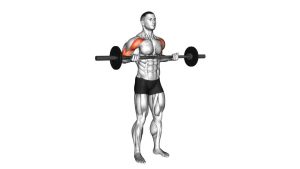
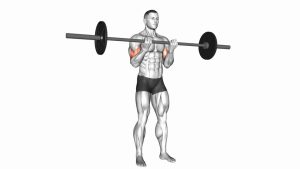
Cable Drag Curl: Proper Form, Muscles Worked, Sets, Tips & FAQ
Learn how to do the Cable Drag Curl with proper form to target the biceps through a close-body curl path. Includes muscles worked, setup, execution, sets and reps by goal, common mistakes, FAQs, and recommended equipment.
Cable Drag Curl
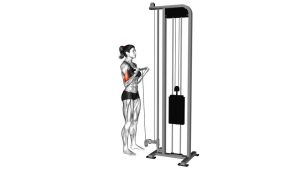
This exercise works best when every rep is controlled and close to the body. The cable provides steady tension, while the drag-style path encourages a stricter curl than many free-weight variations. You should feel the effort mainly in the front of the upper arms, with minimal help from the shoulders or lower back. If the bar drifts away from the torso or the chest leans back hard, the movement loses its purpose.
Quick Overview
| Body Part | Biceps |
|---|---|
| Primary Muscle | Biceps brachii, with strong emphasis on the long head |
| Secondary Muscle | Brachialis, brachioradialis, forearm flexors |
| Equipment | Cable machine with straight bar or EZ-bar attachment |
| Difficulty | Beginner to Intermediate |
Sets & Reps (By Goal)
- Muscle growth: 3–4 sets × 8–12 reps with controlled tempo and 60–90 sec rest
- Strength-focused arm work: 3–5 sets × 6–8 reps with heavier resistance and 90–120 sec rest
- Mind-muscle connection / pump: 2–4 sets × 12–15 reps with constant tension and 45–75 sec rest
- Finisher after compound pulls: 2–3 sets × 10–15 reps without cheating the last reps
Progression rule: First improve control, then add reps, then add weight. If you cannot keep the bar close to the body or you start leaning back, the load is too heavy.
Setup / Starting Position
- Attach the handle: Use a straight bar or EZ-bar on a low cable pulley.
- Take your grip: Grab the bar with an underhand grip about shoulder-width apart.
- Stand tall: Keep feet hip- to shoulder-width apart, chest up, and core lightly braced.
- Start with arms extended: Let the bar rest near the upper thighs with the elbows close to the torso.
- Set the drag path: Pull the shoulders gently back and think about keeping the bar brushing close to your body throughout the curl.
Tip: A slightly narrower grip often helps lifters keep the elbows in a better path and feel the biceps more clearly.
Execution (Step-by-Step)
- Brace and stay tall: Begin with your torso upright, wrists straight, and eyes forward.
- Drag the bar upward: Curl the bar while keeping it close to your torso instead of letting it arc out in front.
- Move the elbows slightly back: As the bar rises, allow the elbows to travel subtly behind the body rather than drifting forward.
- Squeeze at the top: When the bar reaches the upper abdomen or lower chest area, contract the biceps hard without shrugging the shoulders.
- Lower under control: Reverse the motion slowly along the same close-body path until the arms are fully extended again.
Pro Tips & Common Mistakes
- Keep the bar close: The closer the bar stays to your torso, the more the movement looks and feels like a true drag curl.
- Don’t swing: Avoid using your hips, chest, or lower back to start the rep.
- Use a smooth tempo: Curl with intent, pause briefly, then lower slower than you lifted.
- Don’t let elbows shoot forward: Forward elbows shift the movement toward a standard curl pattern.
- Keep wrists neutral: Excessive wrist curling can reduce clean biceps tension and irritate the forearms.
- Choose the right load: This exercise rewards strict execution more than heavy cheating reps.
- Pair it wisely: Cable drag curls fit well after rows, pulldowns, or chin-up variations when the biceps are already warm.
FAQ
What is the main benefit of the Cable Drag Curl?
The main benefit is stricter biceps tension with a close-body curl path. Many lifters use it to better target the biceps—especially the long head—while reducing momentum.
Is the Cable Drag Curl better than a regular cable curl?
Not necessarily better for everyone, but it is different. A regular cable curl usually allows a more standard arc, while the drag curl changes elbow position and can create a stronger contraction for some lifters.
Should my elbows stay pinned the whole time?
No. In a drag curl, the elbows usually move slightly backward as the bar travels up the torso. What you want to avoid is letting them flare out or shoot forward.
Where should I feel this exercise most?
You should feel it mainly in the biceps on the front of the upper arms. Some forearm involvement is normal, but you should not feel the shoulders doing most of the work.
Can beginners use the Cable Drag Curl?
Yes. Beginners can use it effectively as long as they keep the weight moderate and focus on learning the close-body path without leaning back or rushing the eccentric.
Recommended Equipment
- EZ Curl Cable Attachment — a comfortable angled grip that can reduce wrist stress during cable curls
- Straight Bar Cable Attachment — ideal for a classic drag-curl setup on a low pulley machine
- Cable Attachment Set — useful if you want multiple handle options for arm training
- Lifting Straps — optional for lifters whose grip fatigues before the biceps do
- Elbow Sleeves — optional support for warmth and comfort during arm-focused sessions
Tip: For most lifters, the best starting setup is a low cable with either a straight bar or EZ-bar attachment and a weight light enough to keep every rep strict.