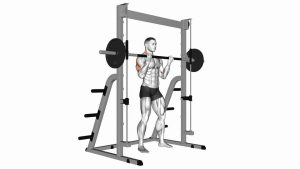
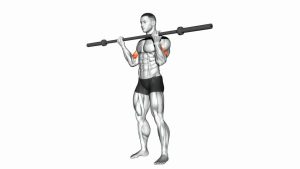
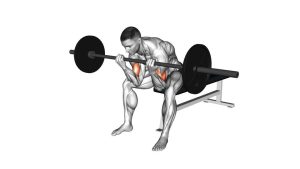
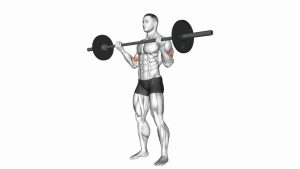
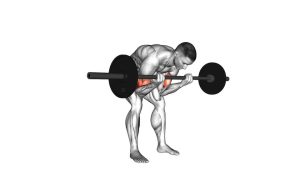
Barbell Standing Wide-Grip Curl: Proper Form, Sets, Muscles Worked & FAQ
Learn how to do the Barbell Standing Wide-Grip Curl with proper form to target the inner biceps. Includes muscles worked, setup, execution, sets by goal, mistakes to avoid, FAQs, and recommended equipment.
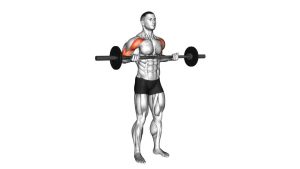
Barbell Standing Wide-Grip Curl
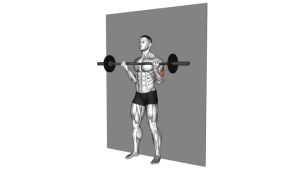
This exercise works best when performed with strict form and a controlled tempo. The wider grip shifts the feel slightly toward the inner biceps, while the barbell allows you to load both arms evenly. You should feel the biceps doing the work—not the lower back, shoulders, or hips. If you have to lean back or swing the bar up, the weight is too heavy.
Quick Overview
| Body Part | Biceps |
|---|---|
| Primary Muscle | Biceps brachii (short head emphasis) |
| Secondary Muscle | Brachialis, brachioradialis, forearm flexors |
| Equipment | Barbell (optional: weight plates, collars) |
| Difficulty | Beginner to Intermediate |
Sets & Reps (By Goal)
- Muscle growth: 3–4 sets × 8–12 reps with 60–90 seconds rest
- Strength focus: 4–5 sets × 5–8 reps with 90–120 seconds rest
- Technique / beginner practice: 2–3 sets × 10–15 reps with light-to-moderate weight
- Arm-finisher / pump work: 2–3 sets × 12–15 reps with slow lowering
Progression rule: Add reps first while maintaining strict form. Increase load only when you can complete all target reps without leaning back or swinging the bar.
Setup / Starting Position
- Stand tall: Place your feet about shoulder-width apart and brace your core lightly.
- Grip the bar wide: Hold the barbell with an underhand grip slightly wider than shoulder width.
- Start with arms extended: Let the bar hang in front of your thighs with elbows close to your sides.
- Set your shoulders: Keep the chest up, shoulders back, and avoid shrugging.
- Align the wrists: Keep them straight and stacked over the bar to reduce unnecessary strain.
Tip: Use a weight that allows you to keep the elbows controlled throughout the set. The wider the grip, the more important clean form becomes.
Execution (Step-by-Step)
- Start the curl: Flex the elbows and bring the bar upward in a smooth arc.
- Keep the upper arms steady: Your elbows should stay close to your torso with only minimal natural movement.
- Lift under control: Raise the bar until your biceps are fully contracted and the bar reaches upper-ab level or slightly higher.
- Squeeze at the top: Briefly pause and contract the biceps without letting the shoulders take over.
- Lower slowly: Bring the bar back down under control until the arms are fully extended.
- Repeat smoothly: Maintain posture and tempo for every rep without bouncing or swinging.
Pro Tips & Common Mistakes
- Use a true wide grip: Hands slightly wider than shoulder width is usually enough. Too wide can stress the wrists.
- Keep your elbows controlled: A little movement is natural, but don’t let them drift too far forward.
- Don’t lean back: Excessive torso movement turns the exercise into a cheat curl.
- Control the eccentric: Lowering the bar slowly increases tension and improves muscle-building stimulus.
- Keep wrists neutral: Avoid bending them backward to protect the joints and maintain better force transfer.
- Don’t rush the top: A short squeeze improves biceps engagement and keeps reps cleaner.
- Avoid ego loading: The goal is biceps tension, not just moving the heaviest weight possible.
FAQ
What does the wide grip change in a barbell curl?
A wider grip generally increases emphasis on the short head of the biceps, which can help create a fuller, thicker look in the upper arm.
Is the Barbell Standing Wide-Grip Curl good for beginners?
Yes. It is a beginner-friendly biceps exercise as long as the weight stays manageable and the reps are performed without body swing.
Should I use heavy weight on wide-grip curls?
You can use moderate to heavy weight, but only if you can maintain clean technique. Most lifters get better biceps results from strict reps than from cheating heavy loads.
How is this different from a regular shoulder-width barbell curl?
A standard shoulder-width grip is more balanced across the biceps, while a wider grip tends to shift more tension toward the inner biceps or short head.
Can I use an EZ bar instead of a straight bar?
Yes, but the feel will be slightly different. A straight bar often gives a stronger traditional curl feel, while an EZ bar may feel more comfortable for lifters with wrist discomfort.
Recommended Equipment
- Olympic Barbell — the main tool for performing standing wide-grip curls with balanced loading
- Weight Plates Set — lets you progress gradually as your biceps strength improves
- Barbell Collars — helps keep plates secure during standing barbell movements
- Weightlifting Gloves — can improve grip comfort and reduce palm irritation during higher-volume arm sessions
- Home Gym Mirror — useful for checking elbow position, torso alignment, and overall curl technique
Tip: The best results come from pairing quality equipment with controlled form, steady progression, and full-range reps.