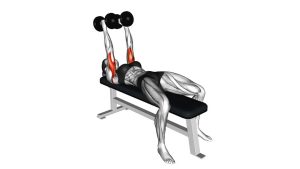
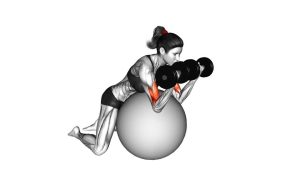
Dumbbell 21s: Form, Muscles Worked, Sets, Tips & FAQ
Learn how to do Dumbbell 21s with proper form to build biceps size, tension, and control. Includes muscles worked, setup, step-by-step execution, sets by goal, mistakes, FAQs, and recommended equipment.
Dumbbell 21s
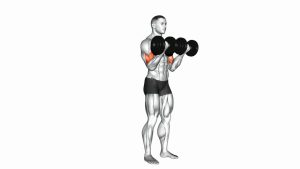
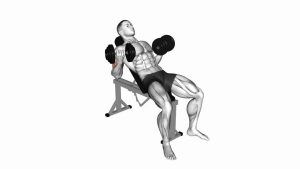
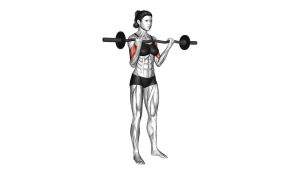
Dumbbell 21s are best used as a biceps finisher, a hypertrophy-focused main exercise, or a high-burn accessory movement on arm day. Because each set includes partial reps and full reps without rest, the exercise creates deep fatigue in the biceps while reinforcing control through the lower, upper, and complete range of motion.
Quick Overview
| Body Part | Biceps |
|---|---|
| Primary Muscle | Biceps brachii |
| Secondary Muscle | Brachialis, brachioradialis, forearm flexors |
| Equipment | Dumbbells |
| Difficulty | Intermediate |
Sets & Reps (By Goal)
- Muscle growth: 2–4 sets of 21 reps total (60–90 sec rest)
- Finisher / pump work: 1–3 sets of 21 reps total (45–75 sec rest)
- Arm-focused workout: 3–4 sets of 21 reps total after your main curl movement
- Light metabolic stress work: 2–3 sets with slightly lighter dumbbells and strict tempo
Progression rule: Increase the dumbbell weight only when you can complete all 21 reps with clean form, stable elbows, and controlled lowering on the full-range reps.
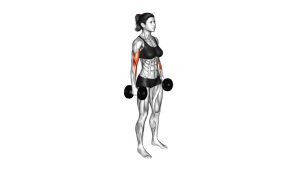
Setup / Starting Position
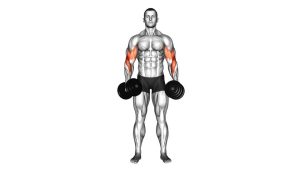
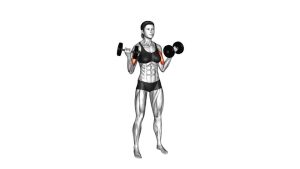
- Stand tall: Keep your feet about hip-width apart and your chest lifted.
- Hold the dumbbells at your sides: Let your arms hang fully extended with a supinated grip (palms facing forward).
- Tuck the elbows in: Keep them close to your torso to limit shoulder involvement.
- Brace your core: Stay upright and avoid leaning back as fatigue builds.
- Set the wrist position: Keep wrists neutral and firm throughout the set.
Tip: Choose a lighter weight than you would use for standard dumbbell curls. The continuous tension makes 21s much harder than regular reps.
Execution (Step-by-Step)
- Bottom-half reps (first 7): Curl the dumbbells from full extension up to about halfway, then lower back down under control.
- Top-half reps (second 7): Start from the halfway point, curl up toward shoulder level, then lower only to halfway.
- Full-range reps (final 7): Perform 7 full curls from full extension all the way up and back down.
- Keep tension on the biceps: Move smoothly and avoid relaxing completely between reps.
- Finish with control: Lower the last rep carefully instead of dropping the dumbbells or using momentum.
Pro Tips & Common Mistakes
- Use strict range targets: Keep the first 7 reps in the lower half and the second 7 reps in the upper half.
- Control the lowering phase: Don’t let gravity drop the dumbbells, especially during the final 7 full reps.
- Don’t lean back: Swinging turns the movement into a cheat curl and reduces direct biceps tension.
- Keep wrists neutral: Excessive wrist bending can reduce comfort and shift tension away from the target muscles.
- Use moderate weight: Going too heavy usually ruins the range structure before the set is finished.
- Expect a strong burn: That deep biceps fatigue is normal, but sharp elbow or wrist pain is not.
FAQ
What are Dumbbell 21s good for?
Dumbbell 21s are excellent for biceps hypertrophy, increasing time under tension, and creating a strong muscle pump. They are especially useful as a finisher or accessory exercise.
Why is the exercise called 21s?
Each set contains 21 total reps: 7 bottom-half reps, 7 top-half reps, and 7 full-range reps. The sequence challenges the biceps through different portions of the curl.
Should beginners do Dumbbell 21s?
Beginners can do them, but they should start with light dumbbells and focus on learning the range structure first. If form breaks down quickly, standard dumbbell curls may be a better starting point.
Where should I feel Dumbbell 21s?
You should feel the exercise mainly in the biceps, with some assistance from the brachialis, brachioradialis, and forearms. The set usually produces a very noticeable arm burn and pump.
When should I use Dumbbell 21s in a workout?
They work best near the end of an upper-body or arm session, after heavier compound pulling or standard curl variations. They can also be used as a main hypertrophy move if the focus is biceps fatigue and tension.
Recommended Equipment
- Adjustable Dumbbells — versatile for progressing your curl variations without needing a full rack
- Weightlifting Bench — useful for pairing Dumbbell 21s with seated or incline curl variations
- Wrist Wraps — can help improve wrist comfort during high-volume arm training
- Foam Grip Handles — useful if you want a thicker grip challenge or extra hand comfort
- Home Gym Floor Mat — protects your training space and provides a more stable lifting area
Tip: The best equipment upgrade for this exercise is usually a quality set of adjustable dumbbells, since precise load selection makes it easier to keep all 21 reps strict.