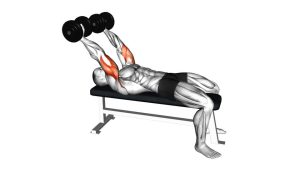
Band Skull Crusher: Safe Form, Triceps Tips, Sets & FAQ
Learn how to perform the Band Skull Crusher with proper triceps form, controlled elbow extension, setup tips, common mistakes, sets by goal, FAQs, and recommended equipment.
Band Skull Crusher
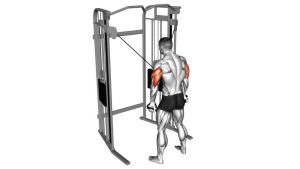
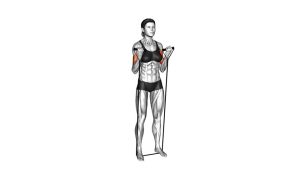
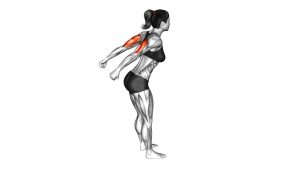
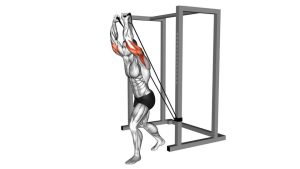
This movement works best when the band is anchored securely behind you and the elbows remain stable throughout the full repetition. Because the band pulls backward, your triceps must work hard to extend the elbows while your shoulders and core keep the body steady. Therefore, the exercise is excellent for home arm workouts, upper-arm isolation, triceps endurance, and controlled lockout strength.
Unlike heavy free-weight skull crushers, this variation gives you constant resistance while also allowing a joint-friendly path. However, the movement still requires discipline. If you rush the lowering phase, flare the elbows, or lean your torso forward and back, tension shifts away from the triceps. For best results, use a moderate band, move slowly, and keep the elbows aimed forward.
Quick Overview
| Body Part | Arms |
|---|---|
| Primary Muscle | Triceps brachii, especially the long head and lateral head |
| Secondary Muscle | Shoulder stabilizers, forearms, core, and upper-back stabilizers |
| Equipment | Resistance band and a secure anchor point |
| Difficulty | Beginner to Intermediate |
Sets & Reps (By Goal)
- Muscle growth: 3–4 sets × 10–15 reps with a controlled 2–3 second lowering phase.
- Triceps endurance: 2–4 sets × 15–25 reps using a lighter band and constant tension.
- Strength control: 3–5 sets × 8–12 reps with a stronger band and strict elbow position.
- Warm-up activation: 1–2 sets × 12–20 reps before pressing, push-ups, dips, or arm training.
- Finisher: 2–3 sets × 20–30 reps near the end of an arm workout, stopping before form breaks.
Progression rule: First, increase control and rep quality. Then, add reps. After that, progress to a stronger band or step farther away from the anchor to increase tension.
Setup / Starting Position
- Anchor the band behind you: Secure the resistance band at about lower-to-mid height, depending on your setup and comfort.
- Face away from the anchor: Step forward until the band has light tension before the first rep begins.
- Stand tall: Place your feet hip-width to shoulder-width apart, soften the knees, and brace your core.
- Raise the elbows: Bring the upper arms forward and slightly upward so the elbows point ahead rather than out to the sides.
- Set the wrists: Hold the band handles or band ends with neutral wrists. Avoid bending the wrists backward.
- Create tension: Before moving, pull gently against the band so the triceps are already engaged.
Setup note: The farther you stand from the anchor, the harder the movement becomes. Therefore, start close enough that you can keep clean elbow control.
Execution (Step-by-Step)
- Begin with bent elbows: Let the forearms angle back while the upper arms stay fixed. Your hands should be near the sides or slightly behind the head.
- Brace your body: Keep the ribs down, glutes lightly engaged, and neck neutral.
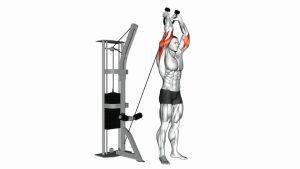
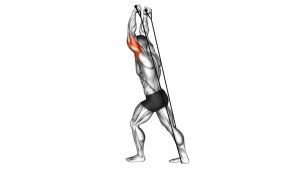
- Extend the elbows: Push the hands forward and upward by squeezing the triceps. The movement should happen mostly at the elbows.
- Reach full extension: Straighten the arms without snapping or aggressively locking the elbows.
- Pause briefly: Hold the top position for a moment and feel the triceps contract.
- Lower slowly: Bend the elbows under control and allow the hands to travel back toward the head.
- Repeat smoothly: Continue the next rep without losing band tension or letting the shoulders take over.
Pro Tips & Common Mistakes
Pro Tips
- Keep constant tension: Do not let the band go slack at the bottom or top of the rep.
- Control the negative: Lowering slowly makes the triceps work harder and improves elbow control.
- Use a slight forward lean if needed: A small athletic lean can help balance the band pull, but the torso should not swing.
- Think “forearms only”: The elbows act like hinges while the upper arms stay locked in place.
- Match the band to the goal: Use a lighter band for high reps and a stronger band for controlled strength work.
Common Mistakes
- Elbows flaring out: This reduces triceps isolation and may stress the shoulders.
- Using momentum: Swinging the body turns the exercise into a full-body pull instead of a triceps extension.
- Arching the lower back: Keep the ribs stacked over the pelvis to protect the spine.
- Letting the wrists collapse: Neutral wrists help transfer force cleanly into the band.
- Locking out aggressively: Finish each rep with control rather than snapping the elbows.
- Standing too far from the anchor: Excessive band tension often causes compensation, especially in the shoulders and lower back.
FAQ
What muscles does the Band Skull Crusher work?
The Band Skull Crusher mainly works the triceps brachii, especially the long head and lateral head. Additionally, the shoulders, forearms, upper back, and core help stabilize your body while the elbows extend against band tension.
Is the Band Skull Crusher good for building triceps?
Yes. It is a strong triceps isolation exercise because it keeps tension on the muscle through the full range of motion. For muscle growth, use controlled reps, moderate resistance, and a slow lowering phase.
Where should I feel this exercise?
You should feel it mostly in the back of the upper arms. If you feel it mainly in your shoulders, neck, or lower back, the band may be too heavy, your elbows may be moving too much, or your torso may be swinging.
Should my elbows stay completely still?
They should stay as stable as possible. A tiny amount of natural movement is normal, but the main action should come from bending and straightening the elbows, not from swinging the shoulders.
Can beginners do Band Skull Crushers?
Yes. Beginners can use a light resistance band and perform slow reps with a short range of motion at first. As control improves, they can increase the range, reps, or band resistance.
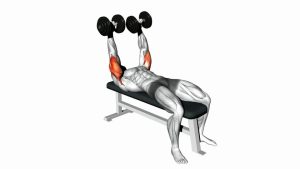
Is this better than dumbbell skull crushers?
It depends on your goal. Dumbbells provide a fixed free-weight load, while bands provide variable tension that gets harder as the band stretches. Therefore, bands are useful for home training, joint-friendly volume, and high-rep triceps work.
How do I make the exercise harder?
Step farther from the anchor, use a stronger band, slow down the lowering phase, pause at full extension, or add more reps. However, only progress when your elbows stay controlled.
Recommended Equipment
- Resistance Bands with Handles — ideal for comfortable grip and controlled band skull crusher repetitions.
- Door Anchor for Resistance Bands — useful for creating a secure anchor point behind your body.
- Loop Resistance Bands Set — helpful for different resistance levels and upper-body accessory work.
- Resistance Band Wall Anchor — a more permanent option for home gym triceps and cable-style exercises.
- Exercise Mat — useful for warm-ups, kneeling band work, stretching, and home arm sessions.
Equipment note: Choose a band that allows full elbow extension without shoulder compensation. In most cases, a medium or light band works better than a band that forces you to swing.