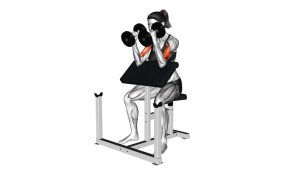
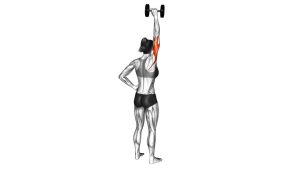
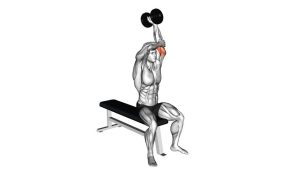
Dumbbell Pronated Grip Triceps Extension: Proper Form, Sets, Tips & FAQ
Learn the Dumbbell Pronated Grip Triceps Extension with proper form, setup, execution, sets by goal, common mistakes, FAQs, and recommended equipment for stronger upper arms.
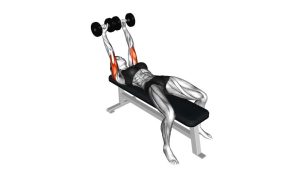
Dumbbell Pronated Grip Triceps Extension
This variation works best when performed with a controlled tempo, a stable elbow position, and a full but comfortable range of motion. You should feel the triceps doing most of the work, especially during the extension phase and at the top of each rep. Avoid using momentum, flaring the elbows excessively, or shifting the load into the shoulders.
Quick Overview
| Body Part | Triceps |
|---|---|
| Primary Muscle | Triceps brachii |
| Secondary Muscle | Anconeus, forearm stabilizers, anterior deltoid (stabilizing) |
| Equipment | Dumbbells, flat bench |
| Difficulty | Intermediate |
Sets & Reps (By Goal)
- Muscle growth: 3–4 sets × 8–12 reps with 60–90 seconds rest
- Strength-focused triceps work: 4–5 sets × 5–8 reps with 90–120 seconds rest
- Technique and control: 2–3 sets × 10–15 reps with slow tempo and 45–75 seconds rest
- Accessory after pressing workouts: 2–4 sets × 10–12 reps with moderate load
Progression rule: Increase the weight only when you can keep the elbows steady, control the eccentric, and fully extend without using momentum.
Setup / Starting Position
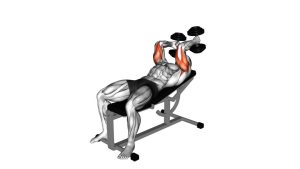
- Lie flat on a bench: Keep your head, upper back, and glutes supported with both feet planted on the floor.
- Hold the dumbbells with a pronated grip: Your palms should face away from you, with wrists straight and firm.
- Bring the dumbbells above the upper chest or shoulder line: Start with the arms extended, then allow a slight elbow bend before the first rep.
- Set the elbows: Keep them pointed mostly upward and shoulder-width apart rather than flaring wide.
- Brace your body: Keep the core tight and shoulders stable against the bench throughout the set.
Tip: A moderate elbow tuck usually feels stronger and safer than letting the elbows drift too far outward.
Execution (Step-by-Step)
- Start from the top: Hold the dumbbells above your upper chest with the elbows nearly straight and the wrists neutral.
- Lower the dumbbells slowly: Bend at the elbows and guide the weights down toward the sides of your forehead or just behind the head, depending on comfort and mobility.
- Keep the upper arms mostly fixed: The main movement should come from elbow flexion, not excessive shoulder motion.
- Reach the stretch position: Pause briefly when the triceps are fully loaded and stretched without losing joint control.
- Extend the elbows: Press the dumbbells back up by contracting the triceps until the arms are nearly straight again.
- Repeat smoothly: Maintain the same elbow path and tempo for every rep.
Pro Tips & Common Mistakes
- Use a controlled lowering phase: The eccentric portion helps build size and protects the elbows when done properly.
- Do not swing the weights: Momentum reduces triceps tension and makes the exercise less effective.
- Keep wrists neutral: Avoid bending the wrists backward under the load.
- Don’t flare the elbows too much: Excessive flare can stress the joints and shift tension away from the triceps.
- Avoid turning it into a press: Too much shoulder movement changes the exercise entirely.
- Use a weight you can control: Heavier is not better if range of motion and elbow position break down.
- Lock out with control: Finish the rep by squeezing the triceps, not by snapping the elbows into hard lockout.
FAQ
What does the pronated grip change in this triceps extension?
The pronated grip changes the hand and forearm position, which can make the exercise feel more stable for some lifters. It also slightly changes how the wrists and elbows track during the movement, but the main target remains the triceps.
Where should I feel this exercise most?
You should feel it mainly in the triceps, especially during the upward extension and near the top of the rep. A deep stretch at the bottom is normal, but sharp elbow pain is not.
Is this the same as a dumbbell skull crusher?
Yes, this is a skull crusher-style movement. The main difference here is the pronated grip, which slightly changes the hand position and feel of the exercise.
Should the dumbbells go to the forehead or behind the head?
Either path can work, depending on your arm length, mobility, and comfort. Going slightly behind the head can increase the stretch, but only use that range if you can stay in control without shoulder compensation.
Can beginners use this exercise?
Beginners can use it, but it is usually better once basic elbow control and dumbbell stability are developed. Start light and focus on form before increasing load.
Recommended Equipment
- Adjustable Dumbbells — ideal for progressive overload and convenient triceps training at different strength levels
- Flat Weight Bench — provides stable support for lying triceps extension variations
- Wrist Wraps for Weightlifting — helpful for lifters who need extra wrist support during dumbbell isolation work
- Exercise Mat — useful for setup comfort, home training space, and accessory arm work
- Elbow Sleeves — optional support for warmth and comfort during higher-volume arm sessions
Tip: Prioritize a solid bench and controllable dumbbells first. Good stability matters more than adding unnecessary accessories.