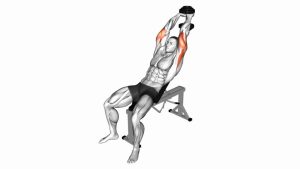
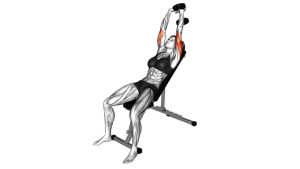
Cable Lying Triceps Extension (Low Pulley): Form, Muscles Worked, Sets, Tips & FAQ
Learn how to do the Cable Lying Triceps Extension (Low Pulley) with proper form. Discover muscles worked, setup, step-by-step execution, sets and reps by goal, common mistakes, FAQs, and recommended equipment.
Cable Lying Triceps Extension (Low Pulley)
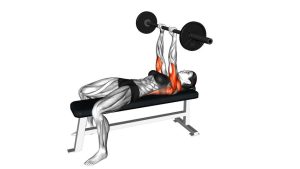
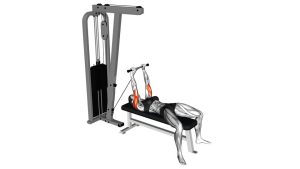
This exercise is similar to a skull crusher, but the cable changes the resistance profile and helps maintain tension at both the stretched position and near lockout. It works best when you focus on strict elbow movement, a controlled tempo, and a range of motion that challenges the triceps without turning the exercise into a press. If done correctly, you should feel a deep stretch and strong contraction in the back of the upper arms.
Quick Overview
| Body Part | Triceps |
|---|---|
| Primary Muscle | Triceps brachii |
| Secondary Muscle | Anconeus, forearms, shoulder stabilizers |
| Equipment | Low cable machine, flat bench, straight bar or short bar attachment |
| Difficulty | Intermediate |
Sets & Reps (By Goal)
- Muscle growth: 3–4 sets × 8–12 reps with 60–90 sec rest
- Strength-focused triceps work: 4–5 sets × 6–8 reps with 90–120 sec rest
- Technique and control: 2–3 sets × 10–15 reps with slow eccentric reps
- Finisher / pump work: 2–3 sets × 12–15 reps with short rest and strict form
Progression rule: Add reps first while keeping the elbows steady and the eccentric controlled. Increase load only when you can maintain full control without flaring the elbows or turning the rep into a press.
Setup / Starting Position
- Set the pulley low: Attach a straight bar or short bar to the low cable pulley.
- Place a flat bench in front of the machine: Position it so the cable lines up naturally with your arms while lying down.
- Lie flat on the bench: Keep your head supported, chest up slightly, and feet planted firmly on the floor.
- Grip the handle overhand: Use a shoulder-width grip with wrists neutral and secure.
- Start with arms extended upward and slightly back: The upper arms should be angled slightly toward the cable source to keep tension on the triceps.
Tip: Your setup should allow the cable to pull continuously on the triceps. If the line of pull feels awkward, adjust the bench distance slightly.
Execution (Step-by-Step)
- Lock in your upper arms: Keep them mostly fixed as you brace your core and maintain a stable body position on the bench.
- Lower the handle by bending the elbows: Bring the bar down toward your forehead or slightly behind your head in a slow, controlled arc.
- Pause briefly in the stretched position: Feel the triceps lengthen while keeping tension on the cable.
- Extend the elbows to return to the start: Press the handle back up by contracting the triceps, not by swinging the shoulders.
- Finish just short of a relaxed lockout: Squeeze the triceps at the top while keeping continuous tension before beginning the next rep.
Pro Tips & Common Mistakes
- Keep the upper arms steady: Too much shoulder movement reduces direct triceps loading.
- Use a controlled eccentric: Lowering too fast reduces tension and can stress the elbows.
- Do not flare the elbows excessively: Moderate elbow tuck usually feels stronger and safer.
- Do not turn it into a press: If the shoulders and chest start helping too much, the weight is likely too heavy.
- Stay neutral at the wrists: Avoid bending the wrists backward to keep force directed through the triceps.
- Use the cable advantage: Let the constant tension work for you by keeping reps smooth and deliberate.
FAQ
What muscles does the Cable Lying Triceps Extension work?
It primarily targets the triceps brachii, with strong emphasis on the long head. The forearms and shoulder stabilizers also assist in controlling the movement.
Is this better than dumbbell skull crushers?
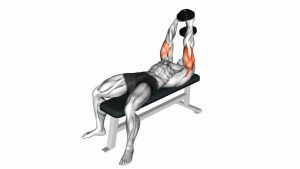
It can be better for some lifters because the cable provides more constant tension throughout the rep. Many people also find it easier to control the resistance curve and feel the triceps working from stretch to lockout.
Should I lower the bar to my forehead or behind my head?
Either can work. Lowering slightly behind the head often creates a deeper stretch, but only use the range you can control without elbow discomfort or loss of upper-arm stability.
How heavy should I go on this exercise?
Use a load that lets you keep the elbows steady and complete smooth reps. This is usually best performed with strict form and moderate weight rather than maximum load.
Can beginners do Cable Lying Triceps Extensions?
Yes, but beginners should start light and focus on technique first. Learning how to keep the upper arms still and move only at the elbows is more important than using a lot of weight.
Recommended Equipment
- Straight Bar Cable Attachment — a classic attachment for stable two-hand triceps extensions
- Short Cable Bar Attachment — useful for comfortable grip width and smooth cable tracking
- Flat Weight Bench — provides the stable body position needed for strict lying extensions
- Cable Machine / Functional Trainer — the main training station for consistent resistance and precise loading
- Wrist Wraps — optional support if your wrists get fatigued during triceps isolation work
Choose attachments that let you keep a natural wrist position and smooth elbow path. Comfort and control matter more than using the fanciest handle.