Air Twisting Crunch: Form, Benefits, Sets, Tips & FAQ
Learn how to do the Air Twisting Crunch with proper form to target obliques, abs, and core stability. Includes setup, execution, sets by goal, mistakes, FAQs, and equipment.
Air Twisting Crunch
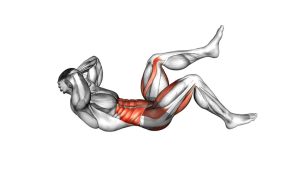
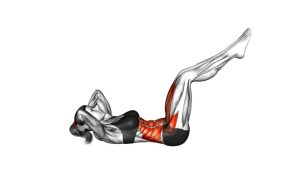
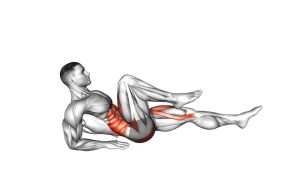
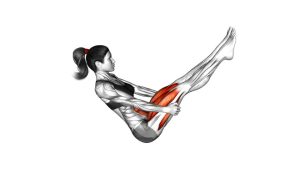
The Air Twisting Crunch is especially useful for people who want a simple floor-based exercise that trains the front and sides of the waist without equipment. In the video, the movement starts with the athlete lying on her back, knees bent and lifted in the air, hands placed lightly near the head, and elbows opened wide. From there, she performs alternating crunches with rotation, bringing one side of the upper body toward the opposite knee before returning under control and switching sides.
Because the legs stay elevated, the core never fully relaxes between repetitions. This makes the exercise more demanding than a basic floor crunch. However, the exercise should still feel controlled. You should feel the abs and obliques working, not your neck, jaw, or hip flexors taking over. Keep the movement smooth, breathe with each repetition, and avoid rushing the twisting action.
Quick Overview
| Body Part | Core |
|---|---|
| Primary Muscle | Obliques |
| Secondary Muscle | Rectus abdominis, transverse abdominis, hip flexors, deep core stabilizers |
| Equipment | No equipment required; exercise mat optional |
| Difficulty | Beginner to Intermediate |
Sets & Reps (By Goal)
- Beginner core control: 2–3 sets × 8–12 reps per side with a slow, controlled tempo.
- Oblique strengthening: 3–4 sets × 12–16 reps per side, keeping the shoulder blades lifted on each twist.
- Core endurance: 3–5 sets × 30–45 seconds of alternating reps with steady breathing.
- Home abs finisher: 2–3 rounds × 20–30 total reps after your main workout.
- Technique practice: 1–2 sets × 6–10 reps per side, focusing only on clean rotation and neck relaxation.
Progression rule: First improve control, breathing, and range of motion. Then add more reps or time. Do not progress by swinging faster, pulling harder on the head, or letting the lower back arch off the floor.
Setup / Starting Position
- Lie on your back: Start on a mat or comfortable floor surface. Keep your head, shoulders, and back aligned before beginning.
- Lift your legs: Bring both knees above your hips with the knees bent. Your shins can stay roughly parallel to the floor, or slightly angled depending on your comfort.
- Brace your core: Gently draw the ribs down and keep the lower back controlled against the floor. Avoid letting the belly relax or the spine arch excessively.
- Place your hands lightly near your head: Keep the fingertips near the temples or behind the ears. Do not interlock the fingers and yank the head forward.
- Open the elbows: Let the elbows stay wide so the rotation comes from the torso, not from the arms closing inward.
- Set your neck position: Keep the chin slightly tucked, as if holding a small space between the chin and chest. Your gaze can stay slightly upward rather than straight into the knees.
Good setup makes the entire exercise safer. If your lower back lifts or your hip flexors dominate before you start, place your feet lightly on the floor and master a basic twisting crunch first.
Execution (Step-by-Step)
- Brace before moving: Tighten your abs gently and keep both legs lifted. The core should feel active before the first crunch begins.
- Lift the shoulder blades: Curl the upper back off the floor using your abs. Avoid sitting all the way up or pulling the neck forward.
- Rotate toward one side: Turn your rib cage so one elbow travels toward the opposite knee. The elbow does not need to touch the knee; the rotation matters more than the contact.
- Reach peak contraction: At the top, squeeze the obliques for a brief moment. Keep the movement small, controlled, and focused through the waist.
- Return through center: Lower slightly and unwind the torso without dropping the legs or fully relaxing the abs.
- Twist to the opposite side: Repeat the same action in the other direction, rotating the upper body toward the opposite knee.
- Continue alternating: Move side to side with a steady rhythm. Each rep should look smooth, not rushed or jerky.
- Control the finish: When the set ends, lower your shoulders and legs carefully instead of dropping them suddenly.
Pro Tips & Common Mistakes
Pro Tips
- Exhale as you twist: Breathing out during the crunch helps the ribs come down and improves abdominal contraction.
- Keep the legs stable: Small knee movement is normal, but avoid swinging the legs to create momentum.
- Rotate from the rib cage: Your upper torso should turn. Do not simply move the elbow across the body.
- Keep constant tension: Do not fully collapse between reps. Return just enough to reset and switch sides.
- Use a slower tempo: A slower Air Twisting Crunch is usually more effective than a fast, sloppy one.
Common Mistakes
- Pulling the neck: If your hands are dragging your head forward, your abs are not doing enough work. Keep the hands light.
- Letting the lower back arch: This reduces core control and may irritate the back. Keep the ribs down and reduce leg height if needed.
- Moving too fast: Speed often turns the exercise into momentum instead of muscle control.
- Closing the elbows: Bringing the elbow inward can fake rotation. Keep the elbows open and rotate the torso.
- Chasing elbow-to-knee contact: Touching is not required. Clean rotation and abdominal contraction are more important.
- Holding the breath: Breath-holding increases tension in the neck and makes the exercise harder to control.
FAQ
What muscles does the Air Twisting Crunch work?
The Air Twisting Crunch mainly targets the obliques, which help rotate and side-bend the torso. It also trains the rectus abdominis, deep core stabilizers, and hip flexors because the legs stay elevated throughout the movement.
Is the Air Twisting Crunch good for abs?
Yes. It is a strong bodyweight abs exercise because it combines spinal flexion with rotation. This makes it useful for training both the front of the abs and the side-waist muscles.
Should my elbow touch my knee?
No. The elbow does not have to touch the knee. Forcing contact often causes neck pulling or shoulder rounding. Focus on lifting the shoulder blade and rotating the rib cage toward the opposite side.
Why do I feel this exercise in my neck?
Neck tension usually happens when you pull on the head, tuck the chin too hard, or fatigue before the set ends. Keep your hands light, slow down, and reduce the number of reps. You can also support the head gently without pulling.
Can beginners do the Air Twisting Crunch?
Beginners can do it, but they should start slowly. If the elevated-leg version feels too difficult, place the feet on the floor and perform a basic twisting crunch first. Progress to the air version when you can keep the lower back stable.
How is this different from a bicycle crunch?
A bicycle crunch usually includes a more active pedaling motion of the legs. The Air Twisting Crunch keeps the knees bent and lifted with less leg cycling, placing more focus on controlled crunching and torso rotation.
Can I do Air Twisting Crunches every day?
You can practice them frequently if the volume is low and your form stays clean. However, for harder sets taken close to fatigue, give your abs recovery time just like any other muscle group.
Recommended Equipment
- Exercise Mat — adds comfort for your spine, hips, and shoulders during floor-based core exercises.
- Thick Yoga Mat — useful if regular mats feel too thin for crunches and repeated floor contact.
- Ab Exercise Mat — supports the lower back and can help improve comfort during crunch variations.
- Workout Interval Timer — helpful for timed core sets, circuits, and endurance-focused ab workouts.
- Resistance Bands Set — useful for pairing this exercise with anti-rotation drills, dead bugs, and full core routines.
Tip: The Air Twisting Crunch does not require equipment, but a comfortable mat makes it easier to maintain quality reps without irritation from the floor.