Crunch (Hands Overhead): Proper Form, Benefits, Sets, Tips & FAQ
Learn how to do the Crunch (Hands Overhead) with proper form. Build stronger abs with step-by-step execution, sets by goal, common mistakes, FAQs, and equipment tips.
Crunch (Hands Overhead)
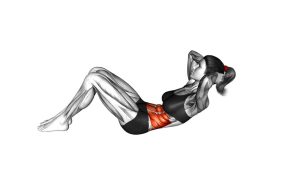
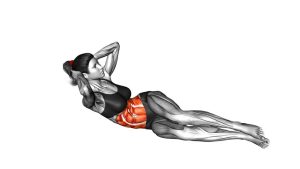
This exercise is best used when you want a stricter and slightly harder version of the regular crunch. Because the arms stay overhead, the body has less chance to swing or pull with the hands. That makes the movement excellent for building clean abdominal tension, improving trunk control, and strengthening the upper portion of the abs.
The goal is not to sit all the way up. Instead, focus on lifting the shoulder blades from the floor, squeezing the abs at the top, then lowering slowly. A good rep feels smooth, controlled, and deliberate. If the neck, hip flexors, or lower back take over, reduce the range of motion and slow the movement down.
Quick Overview
| Body Part | Abs |
|---|---|
| Primary Muscle | Rectus abdominis |
| Secondary Muscle | Deep core stabilizers, transverse abdominis, obliques |
| Equipment | No equipment required; optional exercise mat |
| Difficulty | Beginner to Intermediate |
Sets & Reps (By Goal)
- Core activation: 2–3 sets × 10–12 reps with slow, clean form.
- Muscle endurance: 3–4 sets × 15–25 reps with controlled breathing.
- Ab hypertrophy: 3–5 sets × 10–20 reps with a 1–2 second squeeze at the top.
- Beginner practice: 2 sets × 8–10 reps using a smaller range of motion.
- Finisher: 2–3 rounds × 20–30 seconds, keeping every rep strict.
Progression rule: First improve control, tempo, and top-position squeeze. After that, progress by adding reps, increasing time under tension, or lightly holding a small weight overhead only when your form remains stable.
Setup / Starting Position
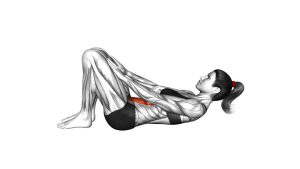
- Lie on your back: Use a comfortable floor surface or exercise mat. Keep your body flat, relaxed, and aligned before starting.
- Bend your knees: Place both feet flat on the floor about hip-width apart. Your knees should point upward without collapsing inward or outward.
- Extend the arms overhead: Reach both arms behind your head in line with your torso. Keep the elbows mostly straight without locking them aggressively.
- Brace the core lightly: Pull the ribs down and gently tighten the abs before lifting. The lower back should feel controlled, not excessively arched.
- Keep the neck neutral: Avoid forcing the chin into the chest. Think about lifting the chest and shoulders with the abs, not pulling the head forward.
Tip: If the overhead arm position feels too difficult, start with a regular crunch first, then return to the hands-overhead version once you can control the movement without neck or back compensation.
Execution (Step-by-Step)
- Set your brace: Before moving, exhale slightly and create light abdominal tension. Keep your feet grounded and your hips still.
- Begin the curl: Lift your head, shoulders, and upper back from the floor by curling the ribs toward the pelvis.
- Keep the arms overhead: Let the arms travel naturally with the torso, but do not swing them forward to create momentum.
- Pause at the top: Stop when your shoulder blades are lifted and your abs are fully contracted. Hold for 1–2 seconds.
- Lower with control: Slowly return the upper back, shoulders, and head to the floor. Keep tension in the abs instead of dropping suddenly.
- Reset and repeat: Let the arms return overhead, keep the knees stable, and begin the next rep with the same smooth tempo.
Pro Tips & Common Mistakes
Pro Tips
- Think “ribs to pelvis”: This cue helps you curl from the abs instead of lifting with the neck or shoulders.
- Use a slow tempo: Try 2 seconds up, 1 second squeeze, and 2–3 seconds down.
- Keep the range short: A crunch does not need a huge lift. Quality tension matters more than height.
- Exhale as you lift: Breathing out helps the ribs come down and improves abdominal contraction.
- Keep the feet quiet: If your feet move, you may be using momentum or hip flexors too much.
Common Mistakes
- Swinging the arms: The arms should stay long and controlled, not whip forward to help the torso lift.
- Pulling the neck: Even though the hands are overhead, many people still strain the neck. Keep the head moving with the torso.
- Turning it into a sit-up: Do not come all the way up. Keep the movement focused on the abs.
- Rushing the lowering phase: Dropping down removes tension and reduces the benefit of the exercise.
- Overarching the lower back: Keep the ribs down and abs engaged so the lower back does not take over.
FAQ
What muscles does the Crunch (Hands Overhead) work?
The main muscle worked is the rectus abdominis, especially the upper and mid-ab region. The obliques and deeper core muscles also help stabilize the torso during the movement.
Is the hands-overhead crunch harder than a regular crunch?
Yes. Extending the arms overhead increases the lever length, which makes the abs work harder to lift the upper body. It is a good progression after you can perform regular crunches with control.
Should I lift all the way into a sit-up?
No. This is a crunch, not a sit-up. Lift only until the shoulder blades come off the floor and the abs are strongly contracted. Going too high often shifts tension into the hip flexors.
Why do I feel this exercise in my neck?
Neck strain usually happens when you lead with the head instead of curling with the ribs. Reduce the range, slow down, and keep the chin relaxed. If discomfort continues, use an easier crunch variation.
Can beginners do the Crunch (Hands Overhead)?
Beginners can do it, but it may feel more challenging than a basic crunch. Start with fewer reps and a short range of motion. If form breaks down, practice regular crunches first.
Can I do this exercise every day?
You can train it frequently if volume is moderate and recovery feels good. For most people, 2–4 times per week is enough for strength and muscle development.
Recommended Equipment
- Exercise Mat — provides comfort for the spine, shoulders, and hips during floor crunches.
- Ab Mat — supports the lower back and can help improve abdominal range of motion.
- Ankle Weights — useful for future lower-ab and core progressions, not required for this basic version.
- Small Medicine Ball — can be held overhead later to increase resistance once bodyweight reps are easy.
- Resistance Bands Set — helpful for pairing this exercise with anti-extension and anti-rotation core work.
Tip: Start with bodyweight first. Only add external resistance when you can perform every rep without neck strain, arm swinging, or lower-back arching.