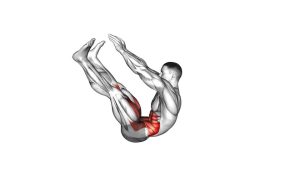
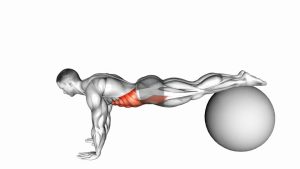
Butt-Up Exercise: Core Pike Plank Form, Benefits, Sets, Tips & FAQ
Learn the Butt-Up Exercise to build stronger abs, shoulders, and plank control. Step-by-step form, sets by goal, mistakes, FAQs, and gear tips.
Butt-Up
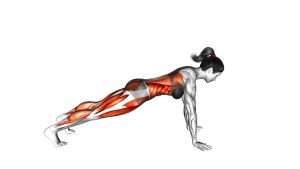
The Butt-Up Exercise is useful for building stronger plank control because it combines two important core skills: resisting lower-back sag and moving the hips while the shoulders stay stable. Unlike a basic forearm plank, this movement adds a controlled hip lift. That makes the abs work harder through both the upward and downward phases. It also teaches you how to keep tension through the ribs, pelvis, legs, and shoulders at the same time.
This exercise works best when the movement is smooth and deliberate. You should feel the front of your core tighten as the hips rise. You may also feel your shoulders, serratus anterior, hip flexors, and quads assisting. However, your lower back should not take over. If your hips drop too low on the return, reduce the range of motion and focus on a stronger plank line before adding speed or extra reps.
Quick Overview
| Body Part | Core |
|---|---|
| Primary Muscle | Rectus abdominis |
| Secondary Muscle | Obliques, transverse abdominis, shoulders, serratus anterior, hip flexors, quadriceps |
| Equipment | No equipment required; optional exercise mat or sliders |
| Difficulty | Intermediate |
Sets & Reps (By Goal)
- Core control: 2–3 sets × 6–10 slow reps, using a 2-second lift and 2-second return.
- Muscle endurance: 3–4 sets × 10–15 reps, keeping each rep smooth and consistent.
- Beginner progression: 2–3 sets × 5–8 partial-range reps, stopping before the low back sags.
- Workout finisher: 2–3 rounds × 20–30 seconds, using steady reps instead of fast bouncing.
- Advanced core training: 3–5 sets × 8–12 reps with a longer top squeeze or slider variation.
Progression rule: First improve control, then increase reps, then increase range of motion. Only add advanced versions when you can return to plank without dropping the hips, arching the lower back, or shrugging the shoulders.
Setup / Starting Position
- Start on the floor: Place your forearms on an exercise mat with elbows under your shoulders.
- Set your hands: Keep the forearms parallel or lightly clasp the hands if that feels more stable.
- Extend your legs: Step both feet back until your body forms a straight forearm plank position.
- Brace your core: Pull the ribs down slightly and tighten your abs as if preparing for a light punch.
- Set your pelvis: Squeeze the glutes lightly to prevent your lower back from dipping.
- Relax your neck: Look down toward the floor and keep the head aligned with the spine.
- Find your plank line: Shoulders, hips, knees, and ankles should stay connected in one strong line before the first rep.
Tip: If the floor feels uncomfortable on your elbows, use a thicker mat. If your feet slide poorly, wear socks on a smooth surface or use sliders for a more fluid version.
Execution (Step-by-Step)
- Begin in forearm plank: Press your forearms gently into the floor and keep your shoulders stacked over your elbows.
- Brace before moving: Tighten your abs, keep the ribs controlled, and avoid letting your stomach hang toward the floor.
- Lift the hips: Drive your hips upward toward the ceiling while keeping your legs mostly straight.
- Create the pike shape: Allow your body to move into an inverted V position. Keep the motion controlled rather than jerky.
- Keep pressure through the forearms: Your shoulders should stabilize the movement without collapsing or shrugging.
- Pause briefly at the top: Squeeze your abs for a moment when the hips reach the highest controlled point.
- Return slowly: Lower your hips back toward plank while resisting gravity with your core.
- Stop in a clean plank: Finish each rep with the body straight. Do not allow the lower back to sag below neutral.
Pro Tips & Common Mistakes
- Move from the core, not momentum: The abs should lift and control the pelvis. Avoid bouncing the hips.
- Keep the return slow: The lowering phase is where many people lose tension. Control it carefully.
- Do not let the lower back sag: A sagging plank reduces core tension and may irritate the lumbar spine.
- Avoid shrugging: Keep the shoulders stable and away from the ears. Push the floor gently through your forearms.
- Keep the legs active: Straight, engaged legs help transfer force through the whole body.
- Do not overreach the top: Lift only as high as you can while keeping control through the shoulders and trunk.
- Use a smaller range if needed: Partial reps are better than sloppy full reps.
- Breathe with control: Exhale as the hips lift, then inhale lightly as you return to plank.
FAQ
What muscles does the Butt-Up Exercise work?
The Butt-Up Exercise mainly works the rectus abdominis, which is the front abdominal muscle. It also trains the obliques, transverse abdominis, shoulders, serratus anterior, hip flexors, and quads. Because the movement starts from a plank, it challenges full-body stability as well as direct core strength.
Is the Butt-Up Exercise good for abs?
Yes. It is a strong abs exercise because the core must lift the hips, control the spine, and prevent the lower back from sagging during the return. It is especially useful for people who want a bodyweight core exercise that feels harder than a standard plank but does not require gym equipment.
Is this exercise beginner-friendly?
It can be beginner-friendly if you use a smaller range of motion and move slowly. However, the full version is usually more intermediate because it requires shoulder stability and good plank control. Beginners should master a basic forearm plank first.
Why does my lower back hurt during Butt-Ups?
Lower-back discomfort usually happens when the hips drop too low, the abs relax, or the movement becomes too fast. Keep your ribs down, squeeze the glutes lightly, and stop the return at a strong plank position. If pain continues, choose an easier core variation and avoid pushing through discomfort.
Should I do Butt-Ups fast or slow?
Slow is better for most goals. A controlled tempo keeps tension on the abs and improves plank mechanics. Fast reps often turn into bouncing, which reduces the training effect and increases the chance of losing form.
Can I make the Butt-Up Exercise harder?
Yes. You can pause longer at the top, slow the lowering phase, place your feet on sliders, or perform the movement from a longer plank position. Only progress when your regular reps stay clean and your lower back remains stable.
Recommended Equipment
- Thick Exercise Mat — provides elbow comfort and better floor support during forearm plank work.
- Core Sliders — useful for smoother plank-to-pike variations and advanced core progressions.
- Ab Wheel — helps build stronger anti-extension core strength that carries over to plank pike control.
- Resistance Bands Set — helpful for shoulder warm-ups, serratus activation, and upper-body stability training.
- Foam Roller — useful for warm-ups, mobility work, and relaxing tight hips or upper-back muscles before core training.
Tip: You do not need equipment to perform the Butt-Up Exercise, but a quality mat can make the exercise more comfortable, especially when training on hard flooring.