Suspender Single-Leg Plank: Core Stability, Form, Sets & Tips
Learn the Suspender Single-Leg Plank for core stability, anti-rotation strength, glute control, and suspension training. Includes form, sets, tips, FAQs, and gear.
Suspender Single-Leg Plank
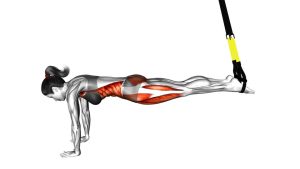
This movement is best used when you already understand a basic plank and can hold it without sagging through the lower back. Since the suspension straps create instability, every small shift demands more control from the core. In addition, the single-leg lift increases the anti-rotation challenge because the body naturally wants to twist toward the side of support.
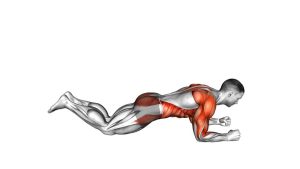
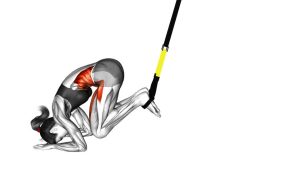
During the exercise, the athlete begins in a strong forearm plank with both feet secured in the straps. Then, one leg lifts slightly behind the body while the torso remains stable. After a brief controlled hold, the leg lowers back into the starting position. Therefore, this exercise is excellent for building core stiffness, glute strength, pelvic control, and shoulder stability.
Quick Overview
| Body Part | Core |
|---|---|
| Primary Muscle | Rectus abdominis, transverse abdominis, and obliques |
| Secondary Muscle | Glutes, hamstrings, hip stabilizers, shoulders, serratus anterior, and spinal stabilizers |
| Equipment | Suspension trainer, suspender straps, or TRX-style straps |
| Difficulty | Intermediate to advanced |
Sets & Reps (By Goal)
- Core stability: Perform 3–4 sets of 6–10 controlled reps per leg. Rest 45–75 seconds between sets.
- Anti-rotation strength: Perform 3 sets of 5–8 reps per side with a 2–3 second hold at the top of each lift.
- Glute and hip control: Perform 2–4 sets of 8–12 slow reps per leg. Keep the lift small and strict.
- Suspension training conditioning: Perform 2–3 rounds of 20–30 total alternating reps while keeping the tempo smooth.
- Advanced core finisher: Perform 2 sets near technical fatigue, but stop before your hips drop or your spine loses position.
Progression rule: First, improve control and reduce strap movement. Then, add more reps, longer pauses, or slower lowering phases. Do not progress by lifting the leg higher if your lower back starts to arch.
Setup / Starting Position
- Adjust the straps: Set the suspension handles or foot cradles low enough so your body can form a straight plank line when your feet are inside them.
- Place your feet in the straps: Secure both feet evenly. Make sure the straps are not twisted before you start.
- Move into a forearm plank: Place your elbows under your shoulders. Keep your forearms on the floor and your hands relaxed.
- Lengthen your body: Extend your legs behind you. Then, create one straight line from your head to your heels.
- Brace your core: Gently tuck the ribs down, tighten the abs, and squeeze the glutes before lifting one leg.
- Set your head position: Keep your neck neutral and look down at the floor. Avoid looking forward because that can create neck tension.
- Stabilize before moving: Pause for a moment in the plank. The straps should be quiet before the first rep begins.
Tip: If the straps swing before you lift the leg, your setup is not stable yet. Reset your plank, slow your breathing, and begin only when your body feels controlled.
Execution (Step-by-Step)
- Start in a strong suspended forearm plank: Keep your elbows stacked under your shoulders and press gently through the forearms.
- Brace before lifting: Tighten your abs as if you are preparing to resist a push from the side. This helps prevent rotation.
- Lift one leg slowly: Raise one leg slightly behind you by squeezing the glute. Keep the knee extended and avoid bending the leg.
- Keep the hips square: Do not let one side of the pelvis rotate upward. Your hip bones should stay facing the floor.
- Pause with control: Hold the lifted leg position briefly. During the pause, keep breathing and maintain a long body line.
- Lower the leg slowly: Return the foot to the same level as the other foot without dropping or swinging.
- Reset your plank: Stabilize both straps again before lifting the opposite leg or repeating on the same side.
Pro Tips & Common Mistakes
Pro Tips
- Think “long body” first: Reach your heels back and the crown of your head forward to avoid collapsing through the plank.
- Lift from the glute: The working leg should rise because the glute contracts, not because the lower back arches.
- Keep the lift small: A small, clean lift is more effective than a high lift with poor control.
- Control the straps: Smooth reps show good stability. Excessive swinging usually means you are rushing.
- Breathe behind the brace: Keep the abs tight, but do not hold your breath through every rep.
- Push the floor away: Gentle pressure through the forearms helps activate the shoulders and serratus anterior.
Common Mistakes
- Arching the lower back: This shifts the work away from the core and can irritate the lumbar spine.
- Rotating the hips: Turning the pelvis makes the exercise easier and reduces the anti-rotation benefit.
- Lifting the leg too high: Excessive height usually creates lower-back extension instead of clean hip extension.
- Letting the shoulders sink: When the chest drops between the shoulders, the upper body loses stability.
- Moving too fast: Momentum reduces core engagement and makes the straps swing more.
- Holding the neck tense: Looking forward can strain the neck. Keep your gaze down and your head neutral.
FAQ
What muscles does the Suspender Single-Leg Plank work?
The exercise mainly works the abs, transverse abdominis, and obliques. However, it also trains the glutes, hamstrings, shoulders, serratus anterior, and deep spinal stabilizers because the body must stay rigid while one leg lifts.
Is the Suspender Single-Leg Plank good for abs?
Yes. It is excellent for abs because the suspension straps increase instability. In addition, the single-leg lift forces the core to resist rotation, extension, and unwanted shifting.
Is this exercise beginner-friendly?
Not usually. Beginners should first master a regular forearm plank, then a suspended plank with both feet in the straps. After that, they can progress to the single-leg version.
How high should I lift the leg?
Lift only as high as you can without arching your lower back or twisting your hips. For most people, a small lift is enough to create strong glute and core activation.
Why do my straps swing during the movement?
Strap swinging usually happens when the reps are too fast or the core is not braced enough. Slow down, reduce the leg lift range, and pause between reps until the straps become more stable.
Can I use this exercise in a core workout?
Yes. It fits well after easier plank variations or near the end of a core session. Because it is demanding, place it before high-fatigue exercises if you want better form and control.
Recommended Equipment
- Suspension Trainer Straps — the main tool needed for suspended plank and single-leg plank variations.
- TRX-Style Suspension Trainer — a durable option for bodyweight core, upper-body, and lower-body suspension training.
- Thick Exercise Mat — helps protect the elbows and forearms during longer plank sets.
- Door Anchor for Suspension Trainer — useful for setting up suspension straps safely at home.
- Core Sliders — a helpful alternative for building plank control before progressing to suspended variations.
Tip: Choose suspension straps with secure foot cradles and strong anchors. A stable setup makes the exercise safer and helps you focus on clean core control.