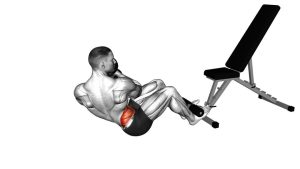
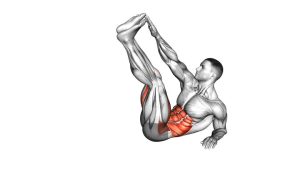
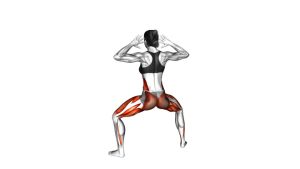
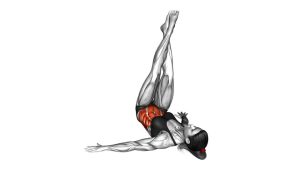
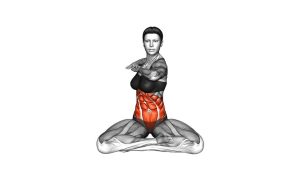
Saw Pilates Exercise: Form, Benefits, Sets, Tips & FAQ
Learn the Saw Pilates exercise for obliques, spinal rotation, hamstring mobility, posture control, and core strength with step-by-step form tips.
Saw Pilates Exercise
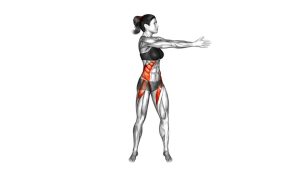
The Saw is especially useful for improving oblique strength, spinal mobility, postural control, and hamstring flexibility. It teaches the body how to rotate with control while keeping the pelvis stable. Because the arms stay extended, the shoulders also work lightly to maintain alignment. This makes the exercise a strong choice for Pilates routines, mobility sessions, warm-ups, and core-focused training days.
Quick Overview
| Body Part | Core |
|---|---|
| Primary Muscle | Obliques |
| Secondary Muscle | Rectus abdominis, transverse abdominis, spinal erectors, hamstrings, shoulders |
| Equipment | Exercise mat only |
| Difficulty | Beginner to Intermediate |
Sets & Reps (By Goal)
- Beginner control: 2 sets × 4–6 reps per side with a slow tempo.
- Core endurance: 2–3 sets × 8–10 reps per side with steady breathing.
- Mobility focus: 2 sets × 5–8 reps per side with a longer reach and controlled return.
- Pilates flow: 1–3 rounds for 30–60 seconds, alternating sides smoothly.
Progression rule: Improve posture, reach quality, and breathing before adding more reps. A clean Saw with a smaller range is better than a deep reach with collapsed form.
Setup / Starting Position
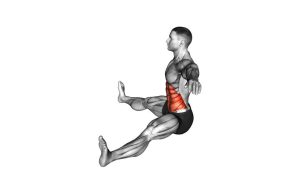
- Sit on the mat: Extend both legs forward and open them wider than hip width.
- Flex the feet: Point the toes upward and gently press the backs of the legs into the mat.
- Lengthen the spine: Sit tall through the crown of the head without arching the lower back.
- Open the arms: Extend both arms out to the sides at shoulder height.
- Set the shoulders: Keep the shoulders relaxed, away from the ears, and aligned with the arms.
- Brace lightly: Draw the lower ribs in and keep the pelvis grounded before you rotate.
Tip: If your hamstrings are tight, sit on a folded towel or yoga block. This helps you keep the spine taller and reduces lower-back rounding.
Execution (Step-by-Step)
- Inhale to prepare: Sit tall, widen the collarbones, and keep both arms extended in one long line.
- Rotate the torso: Turn your chest toward one leg while keeping both sit bones grounded.
- Reach across: Exhale and fold forward diagonally, reaching the opposite hand toward the outside of the foot or little toe.
- Extend the back arm: Keep the other arm reaching behind you to maintain a long shoulder line.
- Control the end range: Pause briefly without bouncing, pulling, or forcing the spine deeper.
- Restack the spine: Inhale and return to an upright rotated position with control.
- Return to center: Rotate back to the starting position and repeat on the opposite side.
Pro Tips & Common Mistakes
- Rotate before reaching: Turn through the ribs and upper spine before folding toward the leg.
- Keep the hips heavy: Avoid lifting one hip off the mat as you twist.
- Do not yank the foot: The hand reaches toward the foot, but it should not pull aggressively.
- Keep both legs active: Press the heels away and keep the knees pointing upward.
- Avoid shoulder shrugging: Let the arms stay long while the neck remains relaxed.
- Control the return: Do not rush back to center. The lifting phase trains the core as much as the reach.
- Use your breath: Inhale tall, exhale into the reach, then inhale to rebuild the spine.
FAQ
What muscles does the Saw Pilates exercise work?
The Saw mainly works the obliques because the torso rotates and flexes under control. It also involves the deep core, spinal stabilizers, shoulders, and hamstrings.
Is the Saw good for beginners?
Yes, but beginners should use a smaller range of motion. Sitting on a folded towel can make the exercise easier if tight hamstrings cause the lower back to round.
Should my back round during the Saw?
A small amount of controlled spinal flexion is normal during the reach. However, you should avoid collapsing, slumping, or dropping the chest heavily toward the leg.
Why do I feel the Saw mostly in my hamstrings?
Tight hamstrings can dominate the movement, especially in the wide seated position. Elevate your hips, soften the knees slightly if needed, and focus on rotating through the torso before reaching.
How can I make the Saw harder?
Slow the tempo, increase the pause at the end range, keep the legs more active, and improve the height of your seated posture. Do not make it harder by forcing the reach.
Recommended Equipment
- Pilates Exercise Mat — gives cushioning and grip for seated Pilates movements.
- Yoga Block — useful for elevating the hips if hamstrings are tight.
- Pilates Stretch Strap — helps with hamstring mobility and flexibility work.
- Pilates Ring — helpful for adding light core and posture-focused Pilates drills.
- Foam Roller — useful for upper-back mobility before Pilates rotation exercises.
Tip: For the Saw, the best equipment is simple. A good mat and a small hip-elevation tool are usually enough to improve comfort, posture, and movement quality.