Long Arm Crunch: Proper Form, Abs Benefits, Sets, Tips & FAQ
Learn the Long Arm Crunch for stronger abs with step-by-step form, sets by goal, common mistakes, FAQs, and equipment tips for core training.
Long Arm Crunch
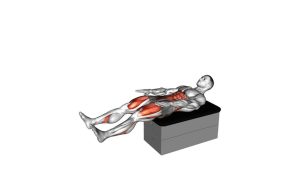
This exercise is useful when you want a simple, no-equipment movement for building abdominal strength and better core control. Because the arms stay long and steady, the movement encourages a clean upward reach rather than a fast neck-pulling crunch. However, the exercise should still feel smooth, focused, and controlled from start to finish.
Quick Overview
| Body Part | Core |
|---|---|
| Primary Muscle | Rectus abdominis |
| Secondary Muscle | Deep core stabilizers, hip flexors lightly, neck flexors lightly for head control |
| Equipment | No equipment required; optional exercise mat for comfort |
| Difficulty | Beginner to intermediate |
Sets & Reps (By Goal)
- Beginner core control: 2–3 sets × 8–12 reps with a slow, steady tempo.
- Muscle endurance: 3–4 sets × 12–20 reps while keeping each rep controlled.
- Abs activation warm-up: 1–2 sets × 8–15 reps before a core or full-body workout.
- Bodyweight core finisher: 2–3 sets × 15–25 reps with short rest periods.
Progression rule: Add reps first, then add slower tempo or a longer squeeze at the top. Do not progress by pulling the neck or rushing the movement.
Setup / Starting Position
- Lie on your back: Position yourself flat on the floor with your knees bent.
- Plant your feet: Keep both feet stable on the ground so the lower body does not shift during the crunch.
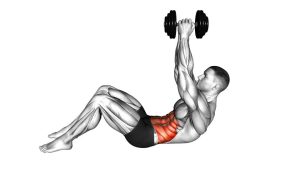
- Extend your arms upward: Reach both arms toward the ceiling with the elbows straight.
- Set your head position: Keep the head aligned with the torso and avoid aggressively tucking or pulling the neck.
- Brace lightly: Prepare the abs before lifting so the movement starts from the core, not from momentum.
Tip: Use an exercise mat if the floor feels uncomfortable under your back or head.
Execution (Step-by-Step)
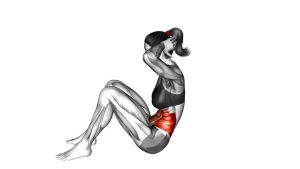
- Begin from the floor: Keep your knees bent, feet grounded, and arms extended upward.
- Curl the upper torso: Lift your head, shoulders, and upper back slightly off the floor.
- Reach upward: Keep the arms straight and allow them to travel with the torso instead of swinging them.
- Squeeze the abs: Pause briefly at the top when the abdominal contraction is strongest.
- Lower with control: Return your upper back toward the floor slowly without dropping suddenly.
- Repeat smoothly: Keep each repetition short, clean, and consistent.
Pro Tips & Common Mistakes
- Keep the arms steady: Do not swing the arms to create momentum.
- Lift through the abs: Focus on curling the ribs toward the pelvis instead of yanking the head forward.
- Use a small range: A controlled crunch does not require a high sit-up motion.
- Control the lowering phase: The descent should be slow enough to keep tension on the abs.
- Avoid neck strain: Keep the neck relaxed and avoid forcing the chin hard into the chest.
- Keep the feet grounded: If the feet lift or slide, reduce speed and reset your position.
- Breathe with rhythm: Exhale as you crunch upward and inhale as you return to the floor.
FAQ
What muscles does the Long Arm Crunch work?
The Long Arm Crunch mainly works the rectus abdominis, which is the front abdominal muscle. It also requires light support from the deeper core muscles to keep the movement controlled.
Is the Long Arm Crunch good for beginners?
Yes. It can be beginner-friendly when performed slowly with a small range of motion. However, beginners should avoid rushing the movement or lifting too high.
Should my arms move during the exercise?
Your arms should stay extended and steady. They move naturally with the torso, but they should not swing forward to help you lift.
Is this exercise the same as a full sit-up?
No. The Long Arm Crunch uses a shorter range of motion. The upper back lifts from the floor, but the hips and lower body remain stable.
Why do I feel this in my neck?
Neck tension often happens when you lead with the head instead of curling through the abs. Reduce the range, slow down, and keep the neck relaxed.
Recommended Equipment (Optional)
- Exercise Mat — adds comfort and support for floor-based crunches.
- Thick Fitness Mat — helpful if you need extra cushioning under the spine.
- Ab Mat — supports controlled abdominal training and floor core work.
- Non-Slip Yoga Mat — helps keep your body stable during repeated crunch reps.
- Core Sliders — useful for adding other bodyweight core variations to your routine.
Tip: Equipment is optional for this exercise. A comfortable, non-slip floor surface is usually enough.