Shoulder Tap Exercise: Proper Form, Core Benefits, Sets & Tips
Learn the Shoulder Tap exercise for core stability, anti-rotation control, stronger abs, and better plank strength with form tips and FAQs.
Shoulder Tap
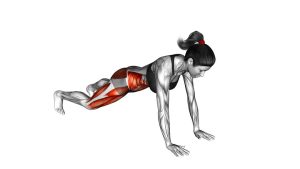
This exercise works best when the body stays long, firm, and controlled. Since one hand leaves the floor on every rep, your core must resist twisting while your supporting shoulder keeps the plank stable. Therefore, a wider foot position can help beginners reduce hip sway and learn the movement with better control.
Quick Overview
| Body Part | Core |
|---|---|
| Primary Muscle | Abs, especially transverse abdominis and rectus abdominis |
| Secondary Muscle | Obliques, shoulders, chest, triceps, glutes, and hip stabilizers |
| Equipment | No equipment required |
| Difficulty | Beginner to intermediate, depending on plank control and tempo |
Sets & Reps (By Goal)
- Beginner core control: 2–3 sets × 6–10 taps per side with slow, stable reps.
- Core endurance: 3–4 sets × 10–16 taps per side with a steady rhythm.
- Anti-rotation strength: 3–5 sets × 6–12 taps per side with a 1–2 second pause on each tap.
- Workout finisher: 2–4 rounds × 20–40 total taps while keeping the hips controlled.
Progression rule: First improve control, then add reps. After that, narrow your foot stance or slow the tempo to increase difficulty.
Setup / Starting Position
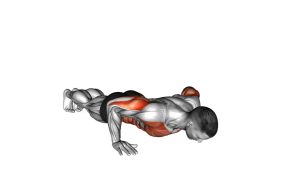
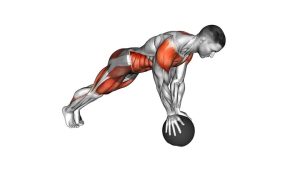
- Start in a high plank: Place your hands on the floor under your shoulders with your arms straight.
- Extend your legs back: Keep both legs long and place your feet slightly apart for balance.
- Brace your core: Tighten your abs gently as if you are preparing to resist movement through your torso.
- Set your body line: Keep your head, ribs, hips, knees, and heels aligned in one strong plank position.
- Relax your neck: Look down toward the floor so your head stays neutral instead of lifted forward.
Tip: A slightly wider foot stance makes the exercise easier because it gives your body a more stable base.
Execution (Step-by-Step)
- Hold the plank: Press both hands into the floor and keep your shoulders stacked over your wrists.
- Shift gently: Move your weight slightly into one supporting hand without letting your hips swing.
- Lift one hand: Raise one hand from the floor and bring it across your body.
- Tap the opposite shoulder: Touch the opposite shoulder lightly while keeping your torso steady.
- Return with control: Place the hand back under the shoulder without dropping your chest or hips.
- Switch sides: Repeat the same movement with the other hand and continue alternating.
Pro Tips & Common Mistakes
- Keep your hips quiet: Avoid rotating your pelvis every time one hand leaves the floor.
- Do not rush the taps: Fast reps often hide poor control, so use a smooth tempo.
- Press through the supporting hand: This helps keep the shoulder stable during each tap.
- Avoid sagging: Keep your ribs and hips lifted so the lower back does not collapse.
- Do not hike the hips too high: Stay in a strong plank rather than turning the movement into a pike.
- Use light shoulder contact: Tap the shoulder gently instead of pulling or twisting your upper body.
- Breathe steadily: Exhale lightly during the tap and avoid holding your breath for the entire set.
FAQ
What muscles do shoulder taps work?
Shoulder taps mainly train the abs and deep core because your trunk must resist rotation. In addition, they work the obliques, shoulders, chest, triceps, glutes, and hip stabilizers.
Are shoulder taps good for beginners?
Yes, shoulder taps can be beginner-friendly when performed slowly with the feet wider apart. However, beginners should stop the set when the hips start rocking or the lower back begins to sag.
Should my feet be wide or narrow?
A wider stance is easier and more stable. Meanwhile, a narrow stance is harder because the core must work more to prevent rotation. Start wide, then narrow your stance only after your form stays clean.
Why do my hips move during shoulder taps?
Hip movement usually happens when the core is not resisting rotation well enough or when the feet are too close together. Therefore, widen your stance, slow the reps, and focus on keeping your pelvis level.
Can shoulder taps replace regular planks?
Shoulder taps are a dynamic plank variation, so they can complement regular planks. However, both exercises are useful: regular planks build static control, while shoulder taps add anti-rotation and shoulder stability.
Recommended Equipment (Optional)
- Non-Slip Exercise Mat — gives your hands and feet better grip during plank-based movements.
- Push-Up Handles — useful if flat-hand plank positions bother your wrists.
- Core Sliders — helpful for adding advanced plank and core variations later.
- Workout Wrist Wraps — provide light wrist support during high-plank exercises.
- Resistance Bands Set — useful for pairing shoulder taps with upper-body and core stability work.
Tip: Equipment is optional for this exercise. However, a stable mat can improve comfort and reduce slipping during longer sets.