Negative Dragon Flag: Core Strength Form, Sets, Tips & FAQ
Learn the Negative Dragon Flag for advanced core strength, body control, and anti-extension stability with step-by-step form, sets, tips, FAQs, and gear.
Negative Dragon Flag
This exercise works best when every rep is performed with strict control. Because the body is lowered from a high position toward horizontal, the abs must resist spinal extension while the lats, shoulders, glutes, and hip flexors help maintain a stable bodyline. As a result, the Negative Dragon Flag is much more demanding than most floor-based ab exercises.
However, quality matters more than range. If your hips drop, your lower back arches, or your body folds at the waist, shorten the lowering range and rebuild control. Additionally, keep the legs together, brace before the descent, and lower slowly without bouncing or collapsing.
Quick Overview
| Body Part | Core |
|---|---|
| Primary Muscle | Rectus abdominis, especially the lower abdominal region during anti-extension control |
| Secondary Muscle | Obliques, hip flexors, glutes, lats, serratus anterior, and shoulder stabilizers |
| Equipment | Flat bench or strong fixed support to grip behind the head |
| Difficulty | Advanced; best for trained users with strong core control and good shoulder stability |
Sets & Reps (By Goal)
- Strength skill practice: 3–5 sets × 1–3 slow negatives with 2–3 minutes rest
- Eccentric core strength: 3–4 sets × 2–5 reps with a 4–8 second lowering phase
- Advanced core control: 2–4 sets × 3–6 partial-range negatives with clean alignment
- Progression work: 3 sets × 2–4 reps using bent knees or a shorter range if needed
Progression rule: First improve control, then increase lowering time, and only then increase range. For example, progress from a short negative to a longer negative before attempting a full dragon flag rep.
Setup / Starting Position
- Lie on your back: Position yourself on a flat bench or firm surface with your head near a stable support.
- Grip the support: Hold the bench edge or fixed object behind your head firmly without pulling your neck into strain.
- Brace your upper body: Keep your shoulders anchored and your upper back stable because this area acts as the main pivot point.
- Lift into position: Raise your legs and hips until your body forms a long line from shoulders to feet.
- Lock in tension: Squeeze your glutes, keep your ribs down, point or lightly extend the legs, and prepare to lower slowly.
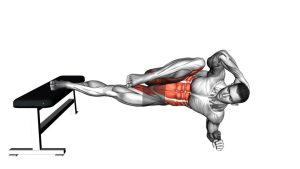
In the video, the body stays straight through the lowering phase. Therefore, your setup should create full-body stiffness before the negative begins.
Execution (Step-by-Step)
- Start from the raised dragon flag position: Keep your legs together, hips lifted, and torso aligned. Your upper back and shoulders should remain firmly supported.
- Brace before moving: Pull your ribs down, tighten your abs, squeeze your glutes, and create one straight line from shoulders to ankles.
- Begin the negative slowly: Lower your body as one unit. Do not let your legs fall faster than your hips.
- Resist extension: As you approach the harder middle range, keep your lower back from arching and avoid folding at the hips.
- Control the bottom range: Lower only as far as you can maintain a rigid bodyline. If your form breaks, stop the rep before the collapse.
- Reset with control: After the negative, return safely to the starting position or reset before the next rep. Do not bounce into another repetition.
Pro Tips & Common Mistakes
- Lower slowly: The negative phase is the exercise. Therefore, avoid dropping quickly just to complete the rep.
- Keep the body straight: Maintain a line from shoulders to feet instead of bending at the hips.
- Brace before the descent: Set your abs first, because trying to brace after you start lowering is usually too late.
- Use partial range when needed: A shorter clean negative is better than a full-range rep with a sagging back.
- Do not pull with the neck: Grip hard with the hands, but keep the neck neutral and the pressure away from the cervical spine.
- Avoid loose legs: Keep your legs together and active so the body moves as one controlled unit.
- Control the hardest zone: The lower half of the descent is usually the most difficult, so slow down before form breaks.
- Rest enough between sets: Because this is a high-tension skill, longer rest helps preserve quality.
FAQ
What is the Negative Dragon Flag?
The Negative Dragon Flag is the lowering-only version of the dragon flag. Instead of lifting and lowering repeatedly, you begin from the raised position and focus on a slow, controlled descent.
Is the Negative Dragon Flag good for abs?
Yes. It strongly challenges the rectus abdominis and deep core stabilizers because the abs must resist spinal extension while the body lowers under control.
Why does my lower back arch during the movement?
Your current range may be too difficult. Therefore, reduce the lowering distance, bend your knees slightly, or practice hollow-body holds and reverse crunch progressions first.
Should beginners do this exercise?
Most beginners should not start here. Instead, they should build strength with reverse crunches, hollow holds, hanging knee raises, and easier dragon flag progressions before attempting negatives.
How slow should the lowering phase be?
A strong target is 4–8 seconds. However, if you can only control 2–3 seconds with perfect alignment, start there and gradually increase the time.
What equipment do I need?
You need a stable bench, sturdy floor setup, or fixed support that you can grip behind your head. The support must not move during the exercise.
Recommended Equipment
- Flat Weight Bench — provides a stable surface and strong edge support for dragon flag negatives
- Adjustable Workout Bench — useful for core training, strength work, and progression-based exercises
- Thick Exercise Mat — adds cushioning for floor-based regressions and core warm-up drills
- Ab Straps — useful for related hanging core progressions such as knee raises and leg raises
- Resistance Bands Set — helpful for assisted core progressions, mobility work, and warm-up activation
Tip: Choose equipment that stays stable under tension. Because this movement uses strong pulling and bracing, unstable benches or loose supports can make the exercise unsafe.