Front Plank with Arm and Leg Lift: Core Stability, Form & Tips
Learn the Front Plank with Arm and Leg Lift for core strength, shoulder stability, glute control, anti-rotation, proper form, sets, tips, FAQs, and equipment.
Front Plank with Arm and Leg Lift
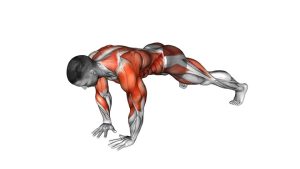
This movement should look slow, clean, and controlled. The goal is not to lift the arm and leg as high as possible. The real goal is to keep the body still while the opposite limbs move away from the floor. When performed correctly, the abs brace hard, the glutes support the hips, and the shoulders resist shifting from side to side.
Because the exercise removes two points of contact from the floor, your body must fight rotation, sagging, and weight shifting. That is why this plank variation is more advanced than a basic front plank. It is especially useful for athletes, home workouts, calisthenics training, posture control, and anyone who wants stronger core stability without using machines.
Quick Overview
| Body Part | Core |
|---|---|
| Primary Muscle | Rectus abdominis, transverse abdominis, obliques |
| Secondary Muscle | Glutes, shoulders, serratus anterior, lower back stabilizers, hip stabilizers |
| Equipment | No equipment required; optional exercise mat or push-up handles |
| Difficulty | Intermediate |
Sets & Reps (By Goal)
- Core stability: 3–4 sets × 6–10 reps per side, using a slow tempo and strict control.
- Anti-rotation strength: 3 sets × 5–8 reps per side, holding each lift for 2–4 seconds.
- Bodyweight conditioning: 2–4 sets × 20–40 seconds, alternating sides with steady breathing.
- Beginner progression: 2–3 sets × 4–6 reps per side, lifting only the arm or only the leg first.
- Advanced control: 3–5 sets × 6–8 reps per side, with a 3-second pause at the top of every rep.
Progression rule: Add control before adding speed. First improve your ability to keep the hips level. Then increase hold time, reps, or total sets.
Setup / Starting Position
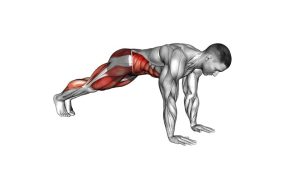
- Start in a high plank: Place your hands on the floor under your shoulders, similar to the top position of a push-up.
- Set your feet: Keep your feet about hip-width apart. A slightly wider stance makes the movement easier and more stable.
- Brace your core: Pull your ribs down slightly, tighten your abs, and avoid letting your lower back arch.
- Engage your glutes: Squeeze the glutes lightly to help keep the pelvis stable.
- Keep your neck neutral: Look slightly ahead of your hands, not straight forward or tucked too hard.
- Press the floor away: Keep your shoulder blades stable and avoid sinking between the shoulders.
Your starting position should feel strong before the first lift. If the basic high plank already feels unstable, build more control there before adding the arm and leg raise.
Execution (Step-by-Step)
- Brace first: Tighten your abs and glutes before moving. Your torso should feel locked in place.
- Lift one arm: Slowly reach one arm forward until it lines up with your shoulder. Keep the elbow straight but not stiff.
- Lift the opposite leg: At the same time, raise the opposite leg slightly behind you. Keep the leg straight and the toes pointing down.
- Hold the top position: Pause briefly while keeping the shoulders and hips square to the floor.
- Control the return: Lower the hand and foot back to the floor without dropping, twisting, or rushing.
- Reset your plank: Re-brace your core before switching to the opposite arm and leg.
- Alternate sides: Continue side to side while keeping every rep smooth and controlled.
Pro Tips & Common Mistakes
Pro Tips
- Think “long,” not “high”: Reach the hand forward and the heel backward instead of trying to lift both limbs too high.
- Use a slow tempo: A slower lift forces the core to stabilize instead of relying on momentum.
- Keep your hips quiet: Imagine balancing a glass of water on your lower back.
- Push through the supporting hand: This keeps the shoulder active and prevents upper-body collapse.
- Breathe through the brace: Do not hold your breath for the whole set. Use short, controlled breaths.
Common Mistakes
- Rotating the hips: This reduces the anti-rotation benefit and usually means the lift is too big.
- Sagging the lower back: This shifts stress away from the core and into the lumbar spine.
- Lifting the leg too high: Excessive leg height often causes back extension instead of glute control.
- Rushing side to side: Fast reps usually hide poor stability.
- Shrugging the shoulders: Keep the neck long and press the floor away with control.
FAQ
What muscles does the Front Plank with Arm and Leg Lift work?
It mainly works the core, especially the abs, obliques, and transverse abdominis. It also trains the glutes, shoulders, serratus anterior, lower back stabilizers, and hip stabilizers.
Is this exercise good for core strength?
Yes. It is excellent for core strength because your abs must resist rotation while one arm and the opposite leg leave the floor. This makes it more demanding than a basic high plank.
Should beginners do this plank variation?
Beginners can use it as a progression, but they should master the standard high plank first. A good starting option is lifting only one arm or only one leg before combining both.
How do I stop my hips from twisting?
Widen your feet, reduce the height of the lift, slow down the tempo, and brace your abs before each rep. You can also practice with only leg lifts until your hips stay more stable.
Is this exercise better than a regular plank?
It is not always better, but it is more challenging. A regular plank builds basic endurance, while this version adds balance, anti-rotation control, shoulder stability, and glute coordination.
Why does my lower back hurt during this exercise?
Lower back discomfort usually happens when the hips sag, the leg lifts too high, or the core loses tension. Lower the leg less, squeeze the glutes, and keep your ribs pulled down.
Recommended Equipment
- Thick Exercise Mat — provides wrist, knee, and floor comfort during plank-based core training.
- Push-Up Handles — useful if regular floor planks bother your wrists or limit hand comfort.
- Core Sliders — helpful for progressing plank variations, mountain climbers, body saws, and controlled core drills.
- Resistance Bands Set — excellent for pairing this exercise with shoulder stability, glute activation, and upper-back work.
- Non-Slip Yoga Towel — helps improve grip and reduce slipping during sweaty plank workouts.
Tip: This exercise does not require equipment. Use accessories only to improve comfort, grip, or progression quality.