Plank Shoulder Tap: Core Stability, Anti-Rotation Form, Sets, Tips & FAQ
Learn the Plank Shoulder Tap for stronger abs, shoulders, and anti-rotation control. Includes setup, step-by-step form, sets, tips, FAQs, and gear.
Plank Shoulder Tap
This exercise works best when the movement stays slow, stable, and controlled. Although the hand reaches toward the opposite shoulder, the real challenge is keeping the ribs, hips, and pelvis steady. Therefore, avoid rushing the tap or twisting the torso just to complete more reps.
Quick Overview
| Body Part | Core |
|---|---|
| Primary Muscle | Rectus abdominis and deep core stabilizers |
| Secondary Muscle | Obliques, transverse abdominis, shoulders, chest, triceps, glutes |
| Equipment | No equipment required; optional exercise mat |
| Difficulty | Beginner to intermediate, depending on stance width and tempo |
Sets & Reps (By Goal)
- Core control: 2–3 sets × 8–12 taps per side with slow, steady movement.
- Beginner stability: 2 sets × 6–8 taps per side with feet wider than hip-width.
- Muscular endurance: 3–4 sets × 12–20 total taps with clean plank alignment.
- Warm-up activation: 1–2 sets × 8–10 total taps before push-ups, planks, or upper-body training.
Progression rule: First improve control. Then narrow your foot stance, slow the tempo, or add more total taps only when your hips stay quiet.
Setup / Starting Position
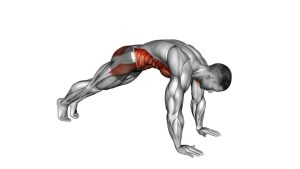
- Start in a high plank: Place both hands on the floor under your shoulders.
- Set your feet: Keep the feet slightly wider than hip-width for better balance, as shown in the video.
- Brace your core: Pull the ribs down gently and keep the stomach firm without holding your breath.
- Align your body: Keep a mostly straight line from head to heels.
- Relax your neck: Look down toward the floor so the head stays neutral.
Tip: A wider foot stance makes the exercise easier. A narrower stance makes the anti-rotation demand harder.
Execution (Step-by-Step)
- Shift weight gently: Press one hand into the floor and prepare to lift the opposite hand.
- Lift one hand: Raise the hand without letting the hips swing sharply.
- Tap the opposite shoulder: Touch the opposite shoulder with control, not speed.
- Return the hand: Place the hand back under the shoulder and regain a balanced plank.
- Alternate sides: Repeat the same pattern with the other hand.
- Stay steady: Continue alternating while keeping the ribs, hips, and shoulders as square as possible.
Pro Tips & Common Mistakes
- Keep the hips quiet: Slight movement is normal, but excessive rocking reduces core control.
- Do not rush: Fast taps often turn the exercise into momentum instead of stability training.
- Push the floor away: Keep the supporting shoulder active so the chest does not sink.
- Avoid sagging: Keep the glutes and abs engaged to protect the lower back.
- Keep hands under shoulders: Returning too wide or too far forward can disturb alignment.
- Breathe steadily: Exhale lightly during the tap and inhale as you reset.
- Use a mat if needed: A supportive surface can reduce wrist and hand discomfort.
FAQ
What muscles do plank shoulder taps work?
Plank shoulder taps mainly train the abs, obliques, and deep core stabilizers. In addition, they involve the shoulders, chest, triceps, and glutes because the body must stay supported in a high plank.
Are plank shoulder taps good for beginners?
Yes, they can be beginner-friendly when performed slowly with the feet wide. However, beginners should focus on stability first instead of trying to complete many fast reps.
Why do my hips move during shoulder taps?
Your hips move because lifting one hand removes one point of support. As a result, the core must resist rotation. To improve control, widen your feet, slow down, and brace before each tap.
Should I do plank shoulder taps fast or slow?
Slow is better for core stability. A controlled tempo helps you feel the anti-rotation challenge and prevents the movement from becoming sloppy.
Can plank shoulder taps replace regular planks?
They can be used as a more dynamic plank variation. However, regular planks are still useful for basic endurance, while shoulder taps add more shoulder and anti-rotation demand.
Recommended Equipment
- Exercise Mat — adds comfort for hands, wrists, and feet during plank work.
- Push-Up Handles — may help keep the wrists more neutral during high plank exercises.
- Wrist Support Wraps — useful for extra wrist support during bodyweight floor training.
- Core Sliders — helpful for progressing into more advanced plank and anti-rotation drills.
- Resistance Bands Set — useful for pairing shoulder taps with upper-back and shoulder stability work.
Tip: Equipment is optional. For this exercise, the most important training tool is a stable floor surface and a controlled tempo.