Resistance Band Air Bike: Core Form, Sets, Tips & FAQ
Learn the Resistance Band Air Bike for stronger abs, controlled hip flexors, and better core endurance with form cues, sets, mistakes, FAQs, and gear.
Resistance Band Air Bike
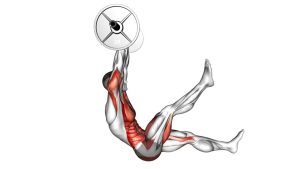
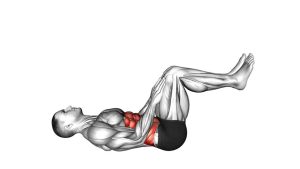
This exercise is best performed with slow, steady control. The goal is not to pedal as fast as possible. Instead, keep the shoulders slightly lifted, maintain band tension, and alternate the legs without letting the lower back arch away from the floor.
Quick Overview
| Body Part | Core |
|---|---|
| Primary Muscle | Rectus abdominis |
| Secondary Muscle | Obliques, hip flexors, transverse abdominis, and deep core stabilizers |
| Equipment | Resistance band and exercise mat |
| Difficulty | Intermediate because the band increases core demand and coordination |
Sets & Reps (By Goal)
- Core control: 2–3 sets × 8–12 reps per side with slow, clean movement
- Ab endurance: 3–4 sets × 12–20 total alternating reps
- Strength focus: 3 sets × 6–10 reps per side using a slightly stronger band
- Finisher: 2–3 rounds × 20–30 seconds while keeping the lower back stable
Progression rule: First improve control, then increase reps, and only after that use a stronger band.
Setup / Starting Position
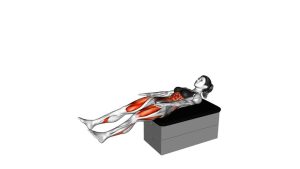
- Lie on your back: Place your body on a mat with your spine long and your core lightly braced.
- Attach the band: Loop the resistance band around both feet and hold the band ends with your hands.
- Raise the legs: Bring both knees up so the hips and knees are bent in a tabletop-style position.
- Lift the upper body: Slightly raise your head and shoulders while keeping the neck relaxed.
- Create tension: Pull the band enough to feel resistance, but not so much that your form breaks.
Execution (Step-by-Step)
- Brace first: Tighten your abs gently and keep the lower back controlled against the floor.
- Extend one leg: Push one foot forward until the leg is nearly straight while the opposite knee stays bent.
- Control the band: Keep your hands steady so the band does not snap or pull your body out of position.
- Switch sides: Bring the extended leg back in as the opposite leg extends forward.
- Repeat smoothly: Continue alternating legs in a slow bicycle rhythm while maintaining core tension.
Pro Tips & Common Mistakes
- Move with control: A slower tempo keeps tension on the abs and prevents band recoil.
- Keep the ribs down: Avoid flaring the ribs as the leg extends.
- Do not rush the bicycle motion: Fast reps usually reduce core tension and increase hip flexor dominance.
- Maintain band tension: Keep the band active through the full range instead of letting it go slack.
- Avoid pulling with the neck: Keep the chin slightly tucked and the shoulders lifted through the abs.
- Control the pelvis: Do not let the hips rock from side to side during the alternating pattern.
- Choose the right band: Use light-to-moderate resistance so the abs can control every rep.
FAQ
What muscles does the Resistance Band Air Bike work?
It mainly works the rectus abdominis, while the obliques, hip flexors, and deep core stabilizers assist during the alternating leg motion.
Is the Resistance Band Air Bike good for lower abs?
Yes. Because each leg extends against band tension, the lower abdominal area must help control the pelvis and prevent the lower back from arching.
Should my lower back stay on the floor?
Your lower back should stay controlled. If it arches strongly, raise your legs higher, reduce band tension, or shorten the range of motion.
Is this exercise beginner-friendly?
It can be challenging for beginners. However, you can make it easier by using a lighter band, moving slower, and keeping the legs higher above the floor.
How fast should I perform the movement?
Use a moderate-to-slow rhythm. Better control creates better abdominal tension and reduces unwanted pulling from the hip flexors or neck.
Recommended Equipment
- Resistance Bands with Handles — ideal for controlled band tension during floor-based core exercises
- Thick Exercise Mat — provides comfort and support for the spine during supine ab work
- Ankle Straps for Resistance Bands — useful if you want a more secure band setup around the feet or ankles
- Mini Loop Resistance Bands — helpful for lower-body activation and core variations
- Core Sliders — useful for adding more core stability variations to home workouts
Tip: Choose a light or medium band first. Stronger resistance is only useful when you can keep your pelvis stable and your reps clean.