Plank Alternate Anti-Gravity Pull-Up: Core Form, Sets, Tips & FAQ
Learn the Plank Alternate Anti-Gravity Pull-Up to train core stability, shoulder control, and anti-rotation strength with clear form tips.
Plank Alternate Anti-Gravity Pull-Up
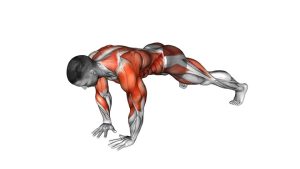
This exercise works best when your body stays firm and quiet. Because one arm leaves the floor at a time, your core must resist twisting, sagging, and shifting. Therefore, the goal is not to pull the dumbbell aggressively. Instead, move with control, keep your hips level, and return to a strong forearm plank after every pull.
Quick Overview
| Body Part | Core |
|---|---|
| Primary Muscle | Rectus abdominis, obliques, deep core stabilizers |
| Secondary Muscle | Shoulders, chest, triceps, forearms, glutes, quads |
| Equipment | Dumbbell and exercise mat |
| Difficulty | Intermediate |
Sets & Reps (By Goal)
- Core stability: 3 sets × 6–10 pulls per side, slow tempo, 45–75 sec rest
- Anti-rotation control: 3–4 sets × 5–8 pulls per side, 2-sec pause after each reset
- Strength endurance: 2–3 sets × 10–14 total alternating reps, controlled pace
- Beginner modification: 2 sets × 4–6 pulls per side with a wider foot stance
Progression rule: First improve control and hip stability. Then, gradually increase reps, reach distance, or dumbbell weight.
Setup / Starting Position
- Place the dumbbell in front: Set one dumbbell slightly in front of your head and between your reaching lines.
- Enter a forearm plank: Keep your elbows under your shoulders and your forearms flat on the floor.
- Set your feet: Use a slightly wider foot stance to help resist rotation.
- Brace your core: Pull your ribs down, squeeze your glutes lightly, and keep your body long from head to heels.
- Keep your neck neutral: Look down toward the floor instead of lifting your head.
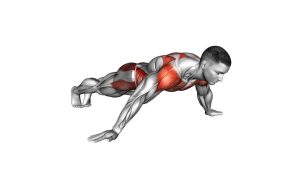
The video shows a controlled forearm plank position with the dumbbell placed forward. Because of that setup, the exercise demands strong shoulder support and steady trunk control.
Execution (Step-by-Step)
- Start in a stable plank: Keep both forearms grounded and your hips level.
- Reach one arm forward: Lift one forearm from the floor and extend the hand toward the dumbbell.
- Grip the dumbbell: Hold it firmly without twisting your torso or dropping your hips.
- Pull the dumbbell toward you: Bend the elbow and drag or pull the dumbbell closer to your upper body.
- Return the dumbbell forward: Extend the arm again and place the dumbbell back under control.
- Reset your forearm: Bring the working arm back to the floor and rebuild your plank position.
- Switch sides: Repeat the same reach-and-pull pattern with the opposite arm.
Pro Tips & Common Mistakes
- Move slowly: A slower pull creates more core tension and reduces sloppy rotation.
- Keep the hips square: Avoid letting one hip open upward as the arm reaches forward.
- Do not sag: If your lower back arches, reset your ribs and squeeze your glutes.
- Avoid shrugging: Keep the supporting shoulder strong, but do not let it climb toward your ear.
- Use a manageable dumbbell: Heavy weight can turn the drill into a twisting pull instead of a core-control exercise.
- Reset after each rep: Briefly stabilize in plank before switching arms.
- Keep the neck neutral: Looking forward may strain the neck and disturb body alignment.
FAQ
What muscles does the Plank Alternate Anti-Gravity Pull-Up work?
It mainly trains the abs, obliques, and deep core stabilizers. In addition, the shoulders, chest, triceps, forearms, glutes, and legs help stabilize the plank position.
Is this exercise the same as a pull-up?
No. Based on the visible movement, this is not a vertical pull-up. It is a forearm plank variation where you alternate arms to reach forward and pull a dumbbell toward the body.
Why do my hips rotate during the movement?
Hip rotation usually happens when the core cannot resist the one-arm reach. Therefore, use a wider stance, lighter dumbbell, and slower tempo until your trunk stays stable.
Can beginners do this exercise?
Beginners can try a modified version with a very light dumbbell, wider feet, and fewer reps. However, a basic forearm plank should feel stable before adding the alternating pull.
Should the dumbbell be lifted or dragged?
In the video, the dumbbell moves close to the floor in a controlled pull or drag pattern. Therefore, avoid yanking it high. Keep the movement smooth and controlled.
Recommended Equipment
- Hex Dumbbell — stable shape that is useful for controlled plank pulling drills
- Thick Exercise Mat — supports the forearms and improves comfort during plank work
- Adjustable Dumbbells — allows easy weight progression as core control improves
- Non-Slip Workout Mat — helps keep the body steady while alternating arms
- Push-Up Handles — optional tool for related plank and shoulder-stability progressions
Tip: Start with a light dumbbell. If the weight causes hip rotation or shoulder discomfort, reduce the load and focus on cleaner control.