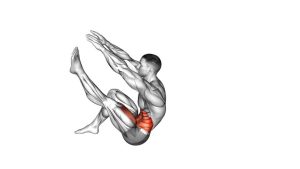
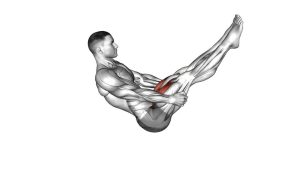
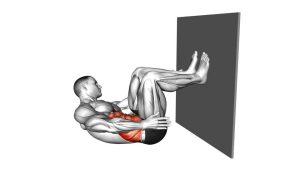
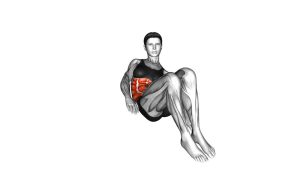
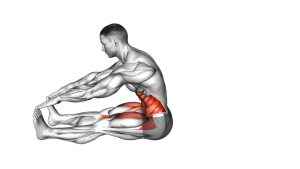
Overhead Sit-Up with Legs on Bench: Form, Benefits, Sets & Tips
Learn the Overhead Sit-Up with Legs on Bench to strengthen abs, improve core control, and build strict sit-up strength with proper form.
Overhead Sit-Up with Legs on Bench
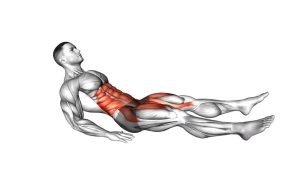
This exercise is best used when you want to build stronger, cleaner sit-up mechanics with more abdominal demand. Because the arms remain overhead, the abs must work harder to lift the torso from the floor. The bench-supported leg position also creates a stable base, helping you focus on controlled trunk flexion instead of excessive lower-body movement.
Quick Overview
| Body Part | Abs |
|---|---|
| Primary Muscle | Rectus abdominis |
| Secondary Muscle | Hip flexors, transverse abdominis, obliques, deep core stabilizers |
| Equipment | Flat bench or stable elevated surface |
| Difficulty | Intermediate |
Sets & Reps (By Goal)
- Core strength: 3–4 sets × 6–10 controlled reps with 60–90 seconds rest.
- Muscle endurance: 2–4 sets × 10–15 reps with a steady tempo and 45–75 seconds rest.
- Strict form practice: 2–3 sets × 5–8 slow reps, focusing on smooth lifting and lowering.
- Abs finisher: 2–3 sets × 8–12 reps near the end of a core session.
Progression rule: First improve control, then add reps. Only progress to harder variations when you can keep the arms overhead without swinging and lower your torso slowly.
Setup / Starting Position
- Lie on your back: Position yourself on the floor with your hips close enough to the bench so your lower legs can rest comfortably on top.
- Place legs on the bench: Rest your calves or lower legs on the bench with your knees bent around 90 degrees.
- Set your arms overhead: Extend both arms behind your head, keeping them long and close to your ears.
- Brace the core: Lightly tighten your abs before moving so your lower back does not arch aggressively.
- Keep the neck neutral: Avoid yanking the head forward. Let the torso rise as one controlled unit.
Tip: A stable bench is important. If the bench moves or feels too high, use a lower box, step, or firm platform.
Execution (Step-by-Step)
- Start from the floor: Keep your back on the ground, legs supported, and arms fully extended overhead.
- Brace before lifting: Exhale gently and tighten your abs to prepare for the sit-up.
- Lift the head and shoulders: Begin curling your upper back away from the floor without pulling on the neck.
- Continue into the sit-up: Raise your torso toward an upright position while keeping the arms overhead.
- Reach the top with control: Pause briefly when your torso is upright or slightly forward.
- Lower slowly: Reverse the movement with control, placing your spine back down gradually.
- Reset at the bottom: Let the shoulders return to the floor, keep the arms overhead, then begin the next rep.
Pro Tips & Common Mistakes
- Keep arms overhead: This is what makes the variation harder. Do not bring the arms forward to cheat the rep.
- Control the lowering phase: The eccentric part builds strength. Avoid falling back onto the floor.
- Use your abs, not momentum: If your feet, hips, or arms swing, slow down and reduce reps.
- Avoid neck pulling: Keep the head aligned with the torso and do not force the chin toward the chest.
- Keep legs relaxed but stable: The bench supports the lower body, but the abs should drive the movement.
- Do not overarch at the bottom: Brace lightly before each rep to protect the lower back.
- Use a smooth tempo: Lift in 1–2 seconds, pause briefly, then lower in 2–3 seconds.
FAQ
What muscles does the Overhead Sit-Up with Legs on Bench work?
It mainly targets the rectus abdominis, the front abdominal muscle responsible for trunk flexion. The obliques, transverse abdominis, hip flexors, and deep core stabilizers also assist during the movement.
Is this harder than a normal sit-up?
Yes. Keeping the arms overhead creates a longer lever, which makes the torso harder to lift. This increases the demand on the abs and requires better control than a standard sit-up.
Why are the legs placed on a bench?
The bench creates a stable lower-body position and keeps the knees bent. This setup helps you focus on abdominal contraction and controlled torso movement.
Should beginners do this exercise?
Complete beginners may want to start with basic crunches, regular sit-ups, or dead bugs first. This variation is better for people who already have basic core strength and can control their spine through the full range.
How do I make this exercise easier?
Bring the arms slightly forward, reduce the range of motion, or perform regular sit-ups with arms across the chest. Once your control improves, return to the full overhead arm position.
How do I make it harder?
Slow down the lowering phase, pause at the top, or hold a very light medicine ball overhead. Do not add load until your bodyweight reps are smooth and pain-free.
Recommended Equipment
- Flat Weight Bench — provides stable leg support for this exercise and many other strength movements.
- Thick Exercise Mat — cushions the spine and improves comfort during floor-based ab work.
- Adjustable Weight Bench — useful if you want one bench for core training, pressing, rows, and full-body workouts.
- Medicine Ball — optional progression tool for advanced overhead sit-up variations.
- Ab Wheel Roller — pairs well with sit-up training to build stronger anterior core control.
Tip: For this exercise, the most important items are a stable bench and a comfortable mat. Add loading tools only when your bodyweight form is consistent.