Surrender Side Bend: Bodyweight Oblique Exercise for Core Control
Learn the Surrender Side Bend to train obliques, improve lateral core control, and build better trunk stability with step-by-step form tips.
Surrender Side Bend
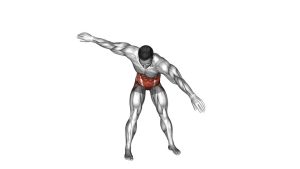
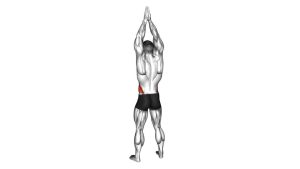
This exercise works best when the torso moves in a clean lateral path. Therefore, keep your chest open, elbows wide, and hips steady throughout the movement. You should feel one side of the waist shorten while the opposite side lengthens. However, the motion should stay controlled, moderate, and pain-free.
Quick Overview
| Body Part | Core |
|---|---|
| Primary Muscle | Obliques |
| Secondary Muscle | Rectus abdominis, transverse abdominis, spinal stabilizers |
| Equipment | No equipment required |
| Difficulty | Beginner |
Sets & Reps (By Goal)
- Beginner control: 2–3 sets × 8–10 reps per side
- Core endurance: 3–4 sets × 12–15 reps per side
- Warm-up activation: 1–2 sets × 8–12 slow reps per side
- Posture-focused training: 2–3 sets × 10–12 reps with a slow, upright tempo
Progression rule: First improve control and range quality. Then add reps or slow the tempo before adding external resistance.
Setup / Starting Position
- Stand tall: Place your feet about shoulder-width apart and keep your weight balanced.
- Raise your arms: Bend your elbows and hold your hands near head level in a surrender position.
- Open your chest: Keep your elbows wide without shrugging your shoulders.
- Brace lightly: Engage your core enough to control your spine, but do not hold your breath.
- Set your gaze: Look forward and keep your neck neutral before starting the side bend.
Execution (Step-by-Step)
- Start from center: Stand upright with your arms fixed in the surrender position.
- Bend to one side: Move your torso laterally while keeping your hips mostly steady.
- Control the range: Stop when you feel a clear side-waist contraction and stretch without pain.
- Return to center: Use your obliques to bring your torso back upright smoothly.
- Repeat on the other side: Bend in the opposite direction with the same controlled tempo.
- Continue alternating: Maintain even reps, steady breathing, and a tall posture.
Pro Tips & Common Mistakes
- Keep the elbows wide: This helps maintain the surrender shape and reduces the urge to collapse forward.
- Avoid twisting: Rotate neither the chest nor the hips. Instead, bend directly to the side.
- Do not rush: A slower tempo improves oblique control and makes each rep more effective.
- Keep the hips quiet: Some natural shifting may happen, but excessive hip movement reduces core focus.
- Do not pull the head: Your hands should stay near the head, but they should not yank the neck.
- Breathe naturally: Exhale during the bend and inhale as you return to center.
- Use moderate range: Going too far may irritate the lower back, especially if control is poor.
FAQ
What muscles does the Surrender Side Bend work?
The Surrender Side Bend mainly works the obliques. Additionally, the transverse abdominis, rectus abdominis, and spinal stabilizers assist by keeping the trunk controlled and upright.
Is the Surrender Side Bend good for beginners?
Yes. Since it uses bodyweight only, it is beginner-friendly. However, beginners should keep the range small, move slowly, and focus on clean side bending before increasing reps.
Should I feel this exercise in my lower back?
You may feel light stabilizing effort around the trunk, but the main work should come from the sides of the waist. If your lower back feels pinched or strained, reduce the range and slow the movement.
Can I add weight to the Surrender Side Bend?
You can progress later with light resistance, but the version shown is bodyweight only. First, master posture, tempo, and side-to-side control without twisting.
How is this different from a regular standing side bend?
The surrender arm position makes the movement stricter. As a result, it limits swinging and encourages a taller, more controlled trunk position.
Recommended Equipment
- Exercise Mat — useful for warm-ups, mobility drills, and floor-based core work
- Full-Length Workout Mirror — helps check whether your torso bends sideways without twisting
- Resistance Bands Set — useful for progressing core and posture training after mastering bodyweight control
- Foam Roller — helpful for thoracic mobility and warm-up preparation
- Adjustable Dumbbells — optional for advanced side-bend variations once form is consistent
Tip: This exercise does not require equipment. However, simple tools can help with warm-up, posture feedback, and future progression.