Dumbbell Side Plank Row: Form, Core Benefits, Sets & Tips
Learn the Dumbbell Side Plank Row to build core stability, oblique strength, lats, and shoulder control with proper form, sets, tips, and FAQs.
Dumbbell Side Plank Row
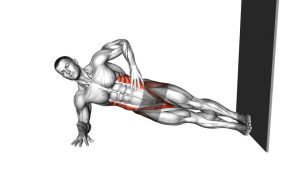
This exercise is best performed with a moderate dumbbell and strict control. The side plank position challenges the core isometrically, while the row adds a pulling pattern that strengthens the upper back and improves full-body coordination. Because the body must stay stacked while the dumbbell moves, this exercise is especially useful for athletes, lifters, and anyone wanting stronger anti-rotation control.
Quick Overview
| Body Part | Core |
|---|---|
| Primary Muscle | Obliques, lats, and deep core stabilizers |
| Secondary Muscle | Rear deltoids, rhomboids, traps, glutes, shoulders, and forearms |
| Equipment | Dumbbell and exercise mat |
| Difficulty | Intermediate to advanced |
Sets & Reps (By Goal)
- Core stability: 2–3 sets × 6–8 reps per side with slow control.
- Strength and upper-back development: 3–4 sets × 8–10 reps per side using a moderate dumbbell.
- Anti-rotation training: 3 sets × 5–8 reps per side with a 1–2 second pause at the top.
- Conditioning circuit: 2–3 rounds × 30–40 seconds per side with light weight.
Progression rule: Master the side plank first, then add a light dumbbell. Increase weight only when you can row without twisting, sagging, or rushing the movement.
Setup / Starting Position
- Place your forearm on the floor: Keep the elbow directly under the shoulder for a strong base.
- Stack your body: Align your head, ribs, hips, knees, and ankles in one long line.
- Set your feet: Stack the feet for more challenge or stagger them slightly for better balance.
- Hold the dumbbell: Grip the dumbbell with the top hand and let it hang under the shoulder.
- Brace your core: Lift the hips and squeeze the glutes so the body does not rotate or collapse.
Tip: Start with a light dumbbell. This exercise becomes difficult quickly because the core must stabilize while the arm rows.
Execution (Step-by-Step)
- Begin in a strong side plank: Keep the supporting shoulder packed and the hips lifted.
- Start the row: Pull the dumbbell upward by driving the elbow toward your ribs.
- Keep the elbow close: Avoid flaring the elbow too wide; row in a controlled path beside the torso.
- Pause at the top: Squeeze the lat and upper back without rotating the chest open too much.
- Lower slowly: Extend the arm back down under control until the dumbbell returns near the floor.
- Repeat cleanly: Maintain the side plank position for every rep, then switch sides.
Pro Tips & Common Mistakes
- Keep hips high: Sagging hips reduce core tension and place stress on the lower back.
- Do not rush the row: Use a smooth pull and a controlled lowering phase.
- Keep the support shoulder stable: Push the floor away slightly and avoid sinking into the shoulder joint.
- Use the back, not only the arm: Think about pulling the elbow back instead of curling the dumbbell up.
- Limit torso rotation: A small amount is normal, but the goal is anti-rotation control.
- Choose the right weight: Heavy dumbbells often cause twisting, hip dropping, and poor shoulder mechanics.
- Breathe with control: Exhale during the row and inhale as you lower the dumbbell.
FAQ
What muscles does the Dumbbell Side Plank Row work?
It works the obliques, deep core stabilizers, and lats. It also trains the rear delts, rhomboids, traps, glutes, shoulders, and forearms.
Is the Dumbbell Side Plank Row good for abs?
Yes. It is excellent for abs and obliques because the core must resist rotation while the dumbbell moves. It is more of a stability-based core exercise than a crunching movement.
Should beginners do this exercise?
Beginners should first master the regular side plank and a standard dumbbell row. Once both movements feel controlled, they can try this exercise with a light dumbbell.
Why do my hips drop during the movement?
Hip dropping usually means the weight is too heavy, the obliques are fatigued, or the side plank position is not stable yet. Reduce the dumbbell weight or perform shorter sets.
Can I do this exercise from my hand instead of my forearm?
Yes, but the high side plank version is more demanding on the wrist and shoulder. The forearm version is usually more stable and easier to control.
Recommended Equipment
- Adjustable Dumbbells — ideal for changing resistance as your side plank row strength improves.
- Thick Exercise Mat — supports the forearm and improves comfort during side plank positions.
- Hex Dumbbells — stable dumbbells that are useful for rows, plank variations, and strength training.
- Wrist Wraps — optional support if you perform the high plank version or other dumbbell plank movements.
- Resistance Bands Set — helpful for warm-up rows, shoulder activation, and upper-back stability drills.
Choose equipment that lets you move with control. For this exercise, stability and clean technique matter more than heavy loading.