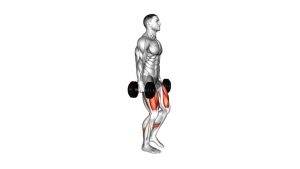
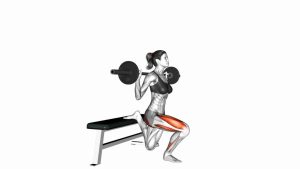
Barbell Lunge: Proper Form, Muscles Worked, Sets, Tips & FAQ
Learn the Barbell Lunge for stronger legs, glutes, balance, and lower-body control with proper form, sets, tips, mistakes, FAQs, and gear.
Barbell Lunge
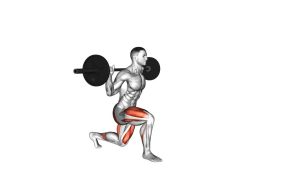
This exercise works best when the movement is controlled from start to finish. The barbell should stay balanced across the upper back, the core should remain braced, and each rep should feel smooth rather than rushed. A good Barbell Lunge is not about stepping as far as possible; it is about keeping the front leg strong, the hips stable, and the knee tracking naturally over the foot.
Quick Overview
| Body Part | Legs |
|---|---|
| Primary Muscle | Quadriceps and gluteus maximus |
| Secondary Muscle | Hamstrings, calves, adductors, core stabilizers, spinal erectors |
| Equipment | Barbell, weight plates, squat rack recommended |
| Difficulty | Intermediate |
Sets & Reps (By Goal)
- Strength: 3–5 sets × 4–8 reps per leg, using controlled heavy loading and full rest.
- Muscle growth: 3–4 sets × 8–12 reps per leg with a steady tempo and strong front-leg drive.
- Balance and control: 2–4 sets × 8–10 reps per leg using lighter weight and slower reps.
- Conditioning: 2–3 sets × 12–16 total reps with moderate weight and strict form.
Progression rule: Add reps first, then increase the barbell load gradually. Do not increase weight if your step becomes unstable or your front knee collapses inward.
Setup / Starting Position
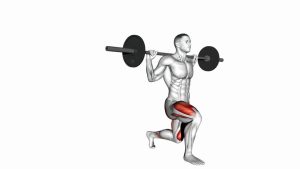
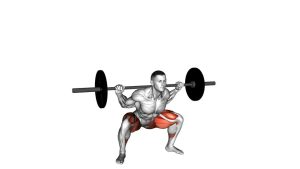
- Set the bar: Place the barbell across your upper traps, similar to a high-bar squat position.
- Grip firmly: Hold the bar slightly wider than shoulder width and pull your elbows slightly down to create upper-back tension.
- Stand tall: Keep your chest lifted, ribs controlled, core braced, and eyes forward.
- Set your feet: Start with feet about hip-width apart so you can step without crossing the midline.
- Brace before moving: Take a controlled breath, tighten your midsection, and prepare to step with balance.
Tip: If you are new to barbell lunges, practice bodyweight lunges or dumbbell lunges first before placing a loaded barbell on your back.
Execution (Step-by-Step)
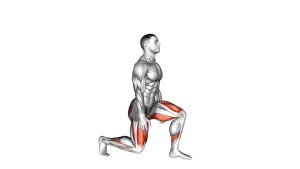
- Step forward with control: Take a stable step forward, keeping your foot pointed mostly straight ahead.
- Lower your body: Bend both knees and descend until the rear knee moves close to the floor.
- Keep the torso stable: Maintain a tall chest and avoid excessive leaning, twisting, or barbell shifting.
- Track the front knee: Let the front knee travel naturally over the foot while keeping it aligned with the toes.
- Drive through the front foot: Push through the mid-foot and heel of the front leg to rise back up.
- Return to start: Step back carefully to the starting position, reset your balance, and repeat on the opposite side.
Pro Tips & Common Mistakes
- Use a controlled step: A step that is too short can overload the knee, while a step that is too long can reduce power and stability.
- Keep the knee aligned: Do not let the front knee cave inward during the descent or drive phase.
- Do not rush reps: Fast lunges often reduce balance and increase barbell movement.
- Brace your core: Treat every rep like a loaded squat variation and keep your trunk tight.
- Avoid bouncing: Lower with control instead of dropping into the bottom position.
- Keep hips square: Do not rotate the pelvis as you step or push back up.
- Use the rack safely: Start and finish the set near a squat rack if the load is challenging.
FAQ
What muscles does the Barbell Lunge work?
The Barbell Lunge mainly works the quadriceps and glutes. It also trains the hamstrings, calves, adductors, core, and upper-back stabilizers because the body must control the barbell while moving one leg at a time.
Is the Barbell Lunge better for quads or glutes?
It can target both. A slightly shorter, more upright lunge usually emphasizes the quads more. A slightly longer stride with strong hip control can increase glute involvement. In both cases, the front leg should remain stable and controlled.
Should my back knee touch the floor?
The rear knee can come close to the floor, but it should not slam down. Light contact is acceptable only if you can maintain control, tension, and balance.
Why do I lose balance during Barbell Lunges?
Balance issues usually come from stepping too narrow, using too much weight, rushing the rep, or failing to brace the core. Start lighter, step hip-width, and pause briefly before each repetition.
Can beginners do Barbell Lunges?
Beginners should usually master bodyweight lunges and dumbbell lunges first. The barbell version requires more balance, spinal stability, and coordination.
Recommended Equipment
- Olympic Barbell — essential for loading the Barbell Lunge safely and progressively.
- Olympic Weight Plates — useful for gradual strength progression and balanced loading.
- Squat Rack — helps you unrack and rerack the barbell safely.
- Barbell Pad — optional comfort support if the bar feels uncomfortable on the upper back.
- Weightlifting Shoes — improve foot stability and lower-body force transfer during loaded lunges.
Tip: Equipment should support better technique, not hide poor control. Use a load that allows clean reps on both legs.