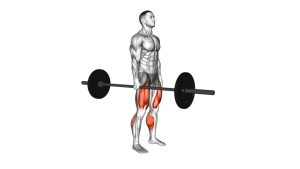
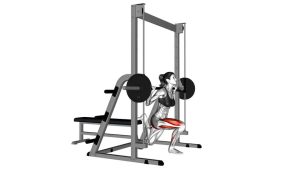
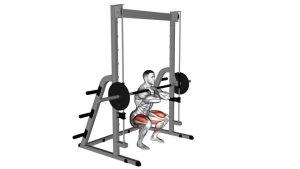
Barbell Wide Stance Squat: Form, Muscles, Sets, Tips & FAQ
Learn the Barbell Wide Stance Squat for stronger glutes, quads, and inner thighs with safe form, sets, tips, common mistakes, FAQs, and gear.
Barbell Wide Stance Squat
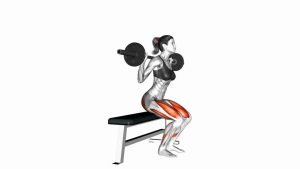
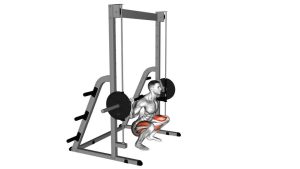
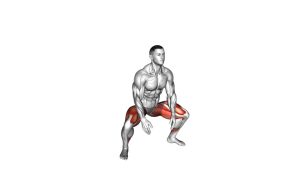
This squat variation is useful for lifters who want stronger legs, better hip control, and more inner-thigh development. The movement should feel controlled through the hips and thighs, not forced through the lower back or knees. A good rep uses a stable brace, a balanced mid-foot pressure, and a smooth descent before driving upward with the glutes and quads.
Quick Overview
| Body Part | Legs |
|---|---|
| Primary Muscle | Quadriceps, gluteus maximus, adductors |
| Secondary Muscle | Hamstrings, calves, core, spinal erectors, upper back stabilizers |
| Equipment | Barbell, weight plates, squat rack, optional lifting belt |
| Difficulty | Intermediate |
Sets & Reps (By Goal)
- Strength: 4–5 sets × 3–6 reps with heavier load and 2–3 minutes rest.
- Muscle growth: 3–4 sets × 8–12 reps with controlled tempo and 60–120 seconds rest.
- Technique practice: 3–5 sets × 5–8 reps with light-to-moderate load and perfect knee tracking.
- Glute and adductor focus: 3–4 sets × 10–15 reps with a smooth descent and strong hip drive.
Progression rule: Add load only when every rep stays balanced, your knees track outward, and your torso does not collapse forward.
Setup / Starting Position
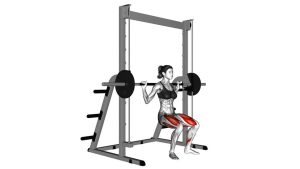
- Set the rack height: Position the bar around upper-chest height so you can unrack it without standing on your toes.
- Place the bar securely: Rest the bar across your upper traps for a high-bar position or slightly lower if you use a stable low-bar setup.
- Grip the bar firmly: Keep your hands even on both sides and pull your elbows slightly down to create upper-back tightness.
- Step out carefully: Take one small step back, then set your feet wider than shoulder width.
- Turn the toes out: Angle the toes slightly outward so the knees can follow the same line during the squat.
- Brace before descending: Take a breath into your midsection, tighten your core, and keep your chest lifted.
Your stance should feel wide but not extreme. The best width is the position where you can squat deep enough while keeping your feet flat, knees stable, and hips comfortable.
Execution (Step-by-Step)
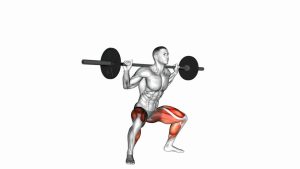
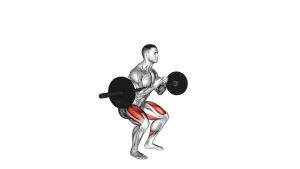
- Brace your core: Create tension through your abs, upper back, and hips before starting the rep.
- Start the descent: Bend at the hips and knees together while keeping the bar over the middle of your feet.
- Push the knees outward: Track your knees in the same direction as your toes to keep the hips open and stable.
- Lower under control: Descend until your thighs reach around parallel or slightly below, depending on mobility and control.
- Pause briefly if needed: Stay tight at the bottom without relaxing your hips, knees, or core.
- Drive upward: Push through the mid-foot and heel while extending the knees and hips together.
- Finish tall: Stand fully upright without leaning back, overextending the lower back, or losing upper-back tightness.
Pro Tips & Common Mistakes
- Do not go too wide: An extreme stance can limit depth, irritate the hips, and make the knees harder to control.
- Keep the knees aligned: Avoid letting the knees cave inward during the descent or ascent.
- Control the bottom: Do not bounce aggressively out of the lowest position, especially with heavy weight.
- Stay balanced: Keep pressure through the mid-foot instead of shifting fully into the toes or heels.
- Keep your chest proud: A collapsed chest usually causes the bar to drift and increases lower-back stress.
- Use the glutes: Think about driving the floor apart with your feet as you stand up.
- Match toe angle to knee path: Your toes should point where your knees naturally travel.
FAQ
What muscles does the Barbell Wide Stance Squat work?
The Barbell Wide Stance Squat mainly trains the quadriceps, glutes, and adductors. The hamstrings, calves, core, spinal erectors, and upper back also help stabilize the movement.
Is the wide stance squat the same as a sumo squat?
They are similar because both use a wide stance and outward knee tracking. However, a barbell wide stance squat is usually performed as a back squat, while a sumo squat may be done with a dumbbell, kettlebell, or different loading style.
Should I use a high-bar or low-bar position?
Both can work. A high-bar position usually keeps the torso more upright and may feel better for controlled leg-focused squats. A low-bar position may allow heavier loading but often requires more hip hinge and torso lean.
How wide should my stance be?
Start slightly wider than shoulder width, then adjust until your knees can track comfortably over your toes. Your stance is too wide if you cannot reach depth, keep your feet flat, or avoid hip discomfort.
Why do I feel this exercise in my inner thighs?
That is normal. The wide stance increases the demand on the adductors, which are the inner-thigh muscles. They help control the descent and assist hip extension as you stand up.
Recommended Equipment
- Olympic Barbell — essential for loading the wide stance squat safely and progressively.
- Squat Rack — provides safe unracking, reracking, and adjustable bar height.
- Olympic Weight Plates — useful for progressive overload and strength development.
- Weightlifting Belt — helps support bracing during heavier squat sets.
- Squat Shoes — provide a stable base and can improve squat depth and balance.
Choose equipment based on your training level and available space. For heavy barbell squats, a stable rack, secure plates, and proper footwear are the most important priorities.