Dumbbell Lateral Step-Up: Form, Muscles Worked, Sets, Tips & FAQ
Learn the Dumbbell Lateral Step-Up for stronger glutes, quads, balance, and hip stability. Includes form steps, sets, mistakes, FAQs, and equipment.
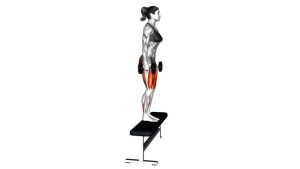
Dumbbell Lateral Step-Up
This movement is especially useful for building single-leg strength, improving glute medius activation, and correcting left-to-right strength differences. Because the body moves from the side, the exercise challenges hip stability more than a standard forward step-up.
Quick Overview
| Body Part | Legs |
|---|---|
| Primary Muscle | Glutes, especially gluteus maximus and gluteus medius |
| Secondary Muscle | Quadriceps, hamstrings, calves, adductors, core stabilizers |
| Equipment | Dumbbells and a stable bench, box, or aerobic step platform |
| Difficulty | Intermediate |
Sets & Reps (By Goal)
- Strength: 3–5 sets × 5–8 reps per side using controlled heavy dumbbells.
- Muscle growth: 3–4 sets × 8–12 reps per side with a slow lowering phase.
- Balance and control: 2–4 sets × 10–15 reps per side using lighter dumbbells.
- Warm-up or activation: 2 sets × 8–10 reps per side with bodyweight or very light dumbbells.
Progression rule: Master clean reps before increasing load. Add weight only when the working knee tracks well, the hips stay level, and the descent remains controlled.
Setup / Starting Position
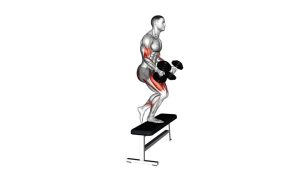
- Stand beside a stable bench, box, or step platform.
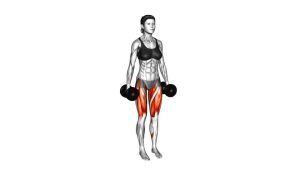
- Hold one dumbbell in each hand with a neutral grip and arms hanging naturally by your sides.
- Place the working foot fully on the box so the heel, midfoot, and toes are supported.
- Keep your chest tall, ribs controlled, shoulders relaxed, and core braced.
- Position the floor leg slightly away from the box so you can step up vertically without twisting.
Execution (Step-by-Step)
- Brace first: Tighten your core lightly and keep the dumbbells still at your sides.
- Load the elevated leg: Shift your weight into the foot on the box.
- Drive upward: Push through the elevated foot and extend the hip and knee to lift your body up.
- Avoid jumping: Let the floor leg assist as little as possible.
- Stand tall at the top: Finish with hips extended and posture upright.
- Lower with control: Step the non-working leg back down first while the elevated leg controls the descent.
- Reset and repeat: Keep the same working foot on the box until all reps are completed, then switch sides.
Pro Tips & Common Mistakes
- Use the full foot: Keep the working foot flat on the box to improve force and balance.
- Drive through the heel and midfoot: This helps target the glutes and quads without shifting too far forward.
- Keep the knee aligned: The knee should track in the same direction as the toes.
- Do not push hard off the floor: The top leg should do most of the work.
- Control the descent: Lower slowly instead of dropping to the floor.
- Choose the right box height: A very high box can cause hip shifting, knee collapse, or excessive momentum.
- Keep dumbbells quiet: Swinging weights usually means the load is too heavy or the tempo is too fast.
FAQ
What muscles does the Dumbbell Lateral Step-Up work?
It mainly works the glutes and quadriceps. It also trains the glute medius, hamstrings, calves, adductors, and core because the body must stabilize during the side step-up motion.
Is the lateral step-up better than a regular step-up?
It is not automatically better, but it is different. A regular step-up trains more forward movement, while the lateral step-up places more demand on hip stability and side-to-side control.
How high should the box be?
Use a height that allows your working knee to stay controlled and your torso to remain upright. For most people, a lower to moderate box is better than a very high box.
Should I do all reps on one side first?
Yes. For best control and muscle focus, complete all reps on one side, then switch to the other side.
Why do I feel this exercise in my balance more than my legs?
That is common at first. Reduce the dumbbell weight, use a lower box, and slow down the movement. As your stability improves, your glutes and quads will become easier to target.
Recommended Equipment
- Adjustable Dumbbells — useful for gradually increasing resistance as your step-up strength improves.
- Aerobic Step Platform — allows adjustable height for safer lateral step-up progressions.
- Plyometric Box — provides a stable surface for step-ups, box squats, and lower-body training.
- Non-Slip Exercise Mat — helps improve floor grip and setup stability during home workouts.
- Mini Resistance Bands — useful for glute activation drills before lateral step-ups.
Tip: Prioritize a stable step surface before adding heavier dumbbells. Stability and control make this exercise more effective.