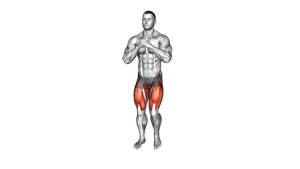
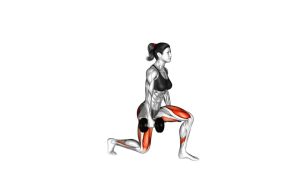
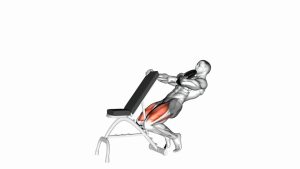
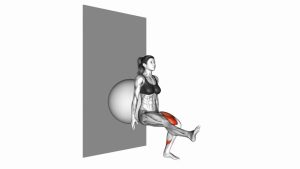
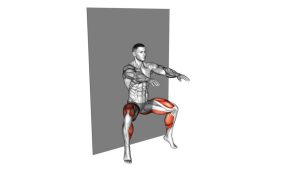
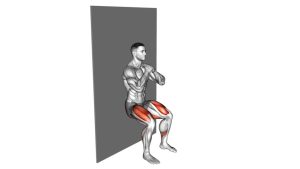
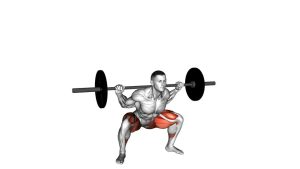
Narrow Squat from Deficit: Quad-Focused Form, Benefits, Sets & Tips
Learn the Narrow Squat from Deficit to build quads, improve knee control, and train deep squat strength with proper setup, form cues, mistakes, and equipment.
Narrow Squat from Deficit
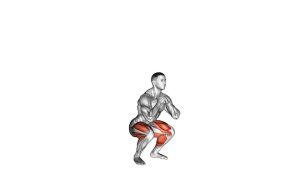
The Narrow Squat from Deficit is best used as a quad-focused lower-body drill, a squat mobility builder, or a controlled accessory exercise for improving knee tracking. Because the stance is narrow, the hips cannot open as much as they do in a wider squat. This makes the movement more knee-dominant and places more training demand on the front of the thighs.
Quick Overview
| Body Part | Legs |
|---|---|
| Primary Muscle | Quadriceps |
| Secondary Muscle | Glutes, calves, tibialis anterior, adductors, and core stabilizers |
| Equipment | Stable platform, step, weight plate, slant board, or squat wedge |
| Difficulty | Beginner to Intermediate |
Sets & Reps (By Goal)
- Technique practice: 2–3 sets × 6–10 reps using slow, controlled movement.
- Quad strength: 3–4 sets × 8–12 reps with a steady descent and strong controlled ascent.
- Mobility and knee control: 2–4 sets × 6–8 reps with a 2–3 second pause in the bottom position.
- Warm-up activation: 1–2 sets × 8–12 reps before squats, lunges, leg presses, or lower-body training.
- Bodyweight conditioning: 3–5 sets × 12–20 reps with smooth rhythm and no bouncing.
Progression rule: Improve balance, depth, and knee tracking first. Then progress by adding pauses, slower tempo, or light external resistance.
Setup / Starting Position
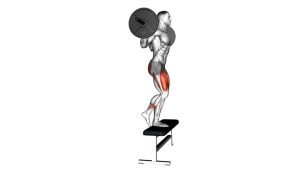
- Choose a stable deficit: Use a secure platform, step, slant board, or weight plate that does not slide.
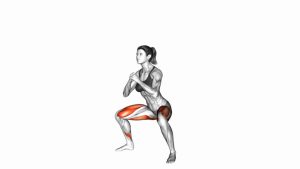
- Place your feet narrow: Stand with the feet close together, usually hip-width or slightly narrower.
- Keep the torso tall: Lift your chest, stack the ribs over the pelvis, and keep your eyes forward.
- Brace lightly: Engage your core enough to protect posture without becoming stiff or locked.
- Set foot pressure: Keep balanced pressure through the midfoot while maintaining full contact with the surface.
- Prepare the knees: Let the knees track in line with the toes before starting the descent.
Execution (Step-by-Step)
- Start tall: Stand upright on the deficit surface with your feet narrow and stable.
- Initiate with the knees: Begin the squat by allowing the knees to travel forward while the torso stays upright.
- Lower under control: Drop the hips straight down rather than pushing them far backward.
- Maintain alignment: Keep the knees tracking over the toes and avoid letting them collapse inward.
- Reach your best depth: Lower as far as you can while staying balanced, controlled, and pain-free.
- Pause briefly: Hold the bottom position for a moment if you are training mobility or control.
- Drive upward: Push through the midfoot and extend the knees to return to standing.
- Finish stacked: Stand tall with the hips under the torso before beginning the next repetition.
Pro Tips & Common Mistakes
- Stay upright: A tall torso keeps the movement focused on the quads instead of turning it into a hip-dominant squat.
- Do not force depth: Deep range is useful only when you can control it without pain or collapse.
- Let the knees travel: Forward knee movement is expected in this variation and helps create the quad-focused effect.
- Avoid bouncing: Dropping quickly into the bottom position can reduce control and increase joint stress.
- Control the knees: Keep the knees aligned with the toes instead of letting them cave inward.
- Use the right surface: A slippery or unstable platform can make the exercise unsafe.
- Start without weight: Master bodyweight reps before adding dumbbells, kettlebells, or a loaded vest.
- Slow the eccentric: A 2–4 second lowering phase improves control and increases quad tension.
FAQ
What is the Narrow Squat from Deficit?
The Narrow Squat from Deficit is a squat variation performed with the feet close together on a raised surface. It increases knee bend, encourages an upright torso, and places more emphasis on the quadriceps.
What muscles does this exercise work?
It primarily works the quadriceps. The glutes, calves, tibialis anterior, adductors, and core help with balance, stability, and control.
Is the Narrow Squat from Deficit good for quads?
Yes. The narrow stance and forward knee travel make it a strong quad-focused exercise, especially when performed with slow tempo and full control.
Should my knees go past my toes?
In this variation, controlled knee travel past the toes is normal. The key is to keep the movement pain-free, balanced, and aligned with the toes.
Is this exercise beginner-friendly?
It can be beginner-friendly when performed with a small deficit, slow tempo, and support nearby. Beginners should avoid forcing depth too early.
Can I add weight to the Narrow Squat from Deficit?
Yes. Once bodyweight reps are smooth, you can progress with a kettlebell, dumbbell, weight vest, or goblet hold.
Why does this feel harder than a normal squat?
The narrow stance and upright position reduce hip involvement and increase demand on the quads, knees, and ankle mobility.
Recommended Equipment
- Squat Slant Board — helps create heel elevation and improves quad-focused squat mechanics.
- Aerobic Step Platform — provides a stable surface for deficit squat practice.
- Squat Wedge Blocks — useful for heel elevation, ankle support, and knee-dominant squat variations.
- Kettlebell — allows progression into a loaded goblet-style narrow squat.
- Non-Slip Exercise Mat — improves traction and helps make lower-body training safer at home.
Tip: Choose equipment that keeps your feet secure. Stability matters more than height when performing deficit squat variations.