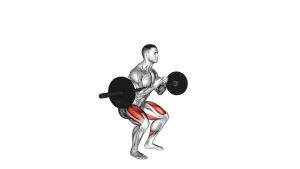
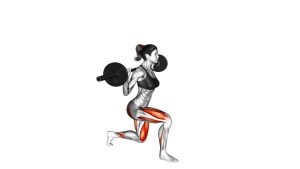
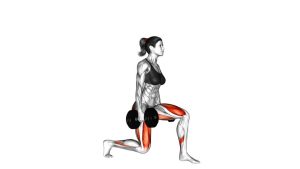
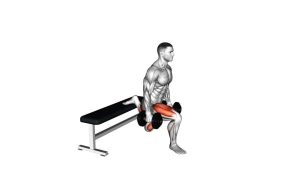
Barbell Deficit Reverse Lunge: Form, Benefits, Sets & Tips
Learn the Barbell Deficit Reverse Lunge for stronger legs, glutes, balance, and control with setup, form cues, sets, mistakes, FAQs, and gear.
Barbell Deficit Reverse Lunge
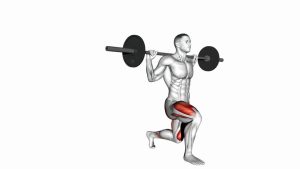
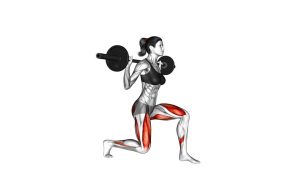
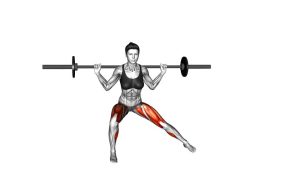
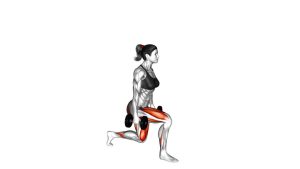
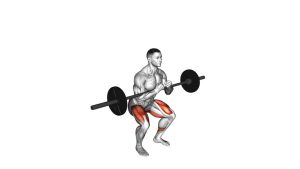
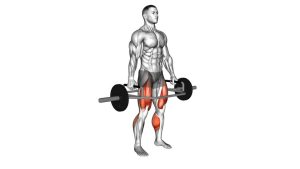
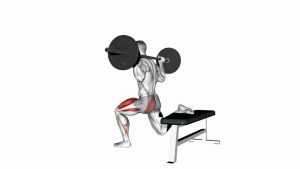
This exercise is more demanding than a standard reverse lunge because the front leg starts elevated. The extra depth increases the stretch on the working glute and creates a stronger strength demand through the front quad. The barbell adds axial load, so the movement should be performed with strict balance, controlled tempo, and clean alignment.
Quick Overview
| Body Part | Legs |
|---|---|
| Primary Muscle | Quadriceps, gluteus maximus |
| Secondary Muscle | Hamstrings, adductors, calves, glute medius, core stabilizers |
| Equipment | Barbell, weight plates, stable step or low platform |
| Difficulty | Intermediate |
Sets & Reps (By Goal)
- Strength: 3–5 sets × 4–6 reps per leg with a controlled descent and full reset between reps.
- Muscle growth: 3–4 sets × 8–12 reps per leg using moderate load and steady tempo.
- Glute focus: 3–4 sets × 8–10 reps per leg with a slightly longer step-back and strong front-foot drive.
- Balance and control: 2–3 sets × 10–14 reps per leg using lighter load and slower reps.
Progression rule: Increase load only when both legs can control the same depth, balance, and knee tracking. Never add weight if the front heel lifts, the torso collapses, or the rear foot pushes too much.
Setup / Starting Position
- Set the platform: Use a stable step that allows extra depth without making balance unsafe.
- Position the barbell: Place the bar across the upper traps in a secure high-bar back squat position.
- Stand tall: Place both feet on the platform or keep the working foot elevated, depending on your setup.
- Brace the core: Keep ribs stacked, chest lifted, and spine neutral before stepping back.
- Focus on the front foot: Keep pressure through the heel and midfoot of the elevated working leg.
The front leg should do most of the work. The rear leg is mainly for balance and light assistance.
Execution (Step-by-Step)
- Start tall: Brace your core and keep the barbell stable across your upper back.
- Step backward: Move one leg behind you in a controlled reverse-lunge step.
- Lower with control: Bend the front knee and drop the rear knee toward the floor while keeping the front foot planted.
- Reach full depth: Descend until the rear knee is close to the floor and the front leg reaches a strong, stable position.
- Drive upward: Push through the front heel and midfoot to extend the hip and knee.
- Return to standing: Bring the rear foot forward and reset your balance before the next rep.
Pro Tips & Common Mistakes
- Keep the torso tall: A slight forward lean is normal, but do not collapse over the front thigh.
- Control the step length: A longer step increases glute demand, while a shorter step increases quad demand.
- Keep the front heel down: Losing heel pressure usually means the step is too short, the load is too heavy, or balance is poor.
- Do not bounce: Pause briefly near the bottom and drive up with control.
- Keep the knee tracking clean: The front knee should follow the toes without collapsing inward.
- Use the rear leg lightly: The back leg should stabilize, not dominate the lift.
- Start light: The deficit increases range of motion, so use less weight than a standard reverse lunge at first.
FAQ
What is the Barbell Deficit Reverse Lunge good for?
It is excellent for building unilateral leg strength, glute activation, quad control, hip mobility, and balance. The elevated front foot increases the range of motion, making the movement more challenging than a regular reverse lunge.
Is this exercise more for glutes or quads?
It can train both. A longer step-back and slight hip hinge usually increase glute emphasis. A more upright torso and shorter step usually increase quad emphasis.
How high should the platform be?
Start with a low, stable platform. The goal is to increase range of motion without losing control. If the rear knee cannot descend smoothly or the front heel lifts, the platform may be too high.
Should beginners do this exercise?
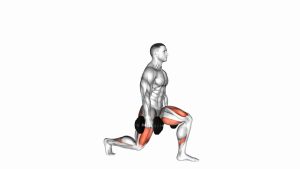
Complete beginners should first master bodyweight reverse lunges, dumbbell reverse lunges, and regular barbell reverse lunges. The deficit version is better for lifters who already have good balance and lunge control.
What are the most common mistakes?
Common mistakes include stepping too far or too short, pushing too much from the rear leg, letting the front knee cave inward, losing front-foot pressure, rushing the descent, and using more weight than the movement can control.
Recommended Equipment
- Olympic Barbell — the main loading tool for the barbell deficit reverse lunge.
- Weight Plates Set — allows progressive overload as strength and control improve.
- Aerobic Step Platform — provides a stable front-foot elevation for deficit lunges.
- Barbell Pad — optional comfort support for lifters sensitive to bar pressure.
- Weightlifting Shoes — helps improve foot stability and lower-body force transfer.
Tip: Choose a non-slip platform and secure footwear before adding heavy barbell load. Stability is more important than height or weight.