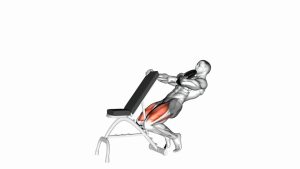
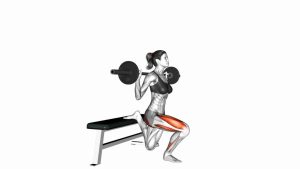
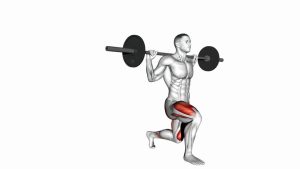
Dumbbell Front-Foot Elevated Split Squat: Form, Benefits, Sets & Tips
Learn the dumbbell front-foot elevated split squat for stronger quads, glutes, balance, and deeper leg strength with proper form, tips, sets, and equipment.
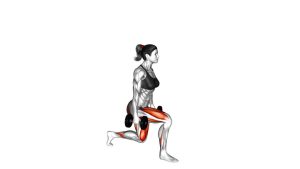
Dumbbell Front-Foot Elevated Split Squat
This movement is especially useful for lifters who want stronger legs without relying only on bilateral squats. Because each leg works independently, the exercise helps correct side-to-side strength differences, improve balance, and build better control through the hips, knees, and ankles.
Quick Overview
| Body Part | Legs |
|---|---|
| Primary Muscle | Quadriceps |
| Secondary Muscle | Glutes, hamstrings, adductors, calves, and core stabilizers |
| Equipment | Dumbbells and a low step, plate, or platform |
| Difficulty | Intermediate |
Sets & Reps (By Goal)
- Muscle growth: 3–4 sets × 8–12 reps per leg with controlled tempo.
- Strength focus: 4–5 sets × 5–8 reps per leg using heavier dumbbells.
- Balance and control: 2–3 sets × 10–15 reps per leg with lighter weight.
- Leg endurance: 2–4 sets × 12–20 reps per leg with steady pacing.
Progression rule: Add reps first, then increase dumbbell weight. Do not increase load if balance, knee tracking, or full-foot pressure is lost.
Setup / Starting Position
- Place a low platform: Use a stable weight plate, step, or small box that raises the front foot slightly.
- Step into split stance: Put the front foot on the elevation and place the rear foot behind you on the floor.
- Hold dumbbells at your sides: Keep your arms long, shoulders relaxed, and grip neutral.
- Set your posture: Keep the chest lifted, ribs stacked, and torso slightly forward without rounding the back.
- Load the front leg: Most of your weight should stay over the front foot, while the rear leg acts mainly as support.
Execution (Step-by-Step)
- Brace your core: Take a controlled breath and tighten your midsection before lowering.
- Lower under control: Bend the front knee and hip as the rear knee moves toward the floor.
- Let the front knee travel: Allow the knee to move forward naturally while keeping the heel planted.
- Reach a deep but stable bottom: Lower until you feel strong tension in the front quad and glute without losing control.
- Drive through the front foot: Push through the heel and midfoot to return to the starting position.
- Repeat all reps on one side: Finish the set, then switch legs and match the same reps with the opposite side.
Pro Tips & Common Mistakes
- Use a controlled descent: Lower for 2–3 seconds to keep tension on the quads and reduce joint stress.
- Keep the front heel down: A lifting heel usually means the stance, elevation, or ankle control needs adjustment.
- Do not bounce at the bottom: Pause briefly or stay smooth to keep the muscles loaded safely.
- Avoid knee collapse: Track the front knee in line with the toes throughout the rep.
- Do not overuse the rear leg: The back foot is only for balance, not for pushing the body up.
- Keep dumbbells quiet: Avoid swinging the weights forward or backward during the movement.
- Choose the right elevation: A low platform is enough. Too much height can reduce balance and make the movement awkward.
FAQ
What muscles does the dumbbell front-foot elevated split squat work?
It mainly targets the quadriceps, while also training the glutes, hamstrings, adductors, calves, and core stabilizers. The front-foot elevation increases knee range of motion, which makes the quads work harder.
Is this exercise better than a regular split squat?
It is not always better, but it is more range-of-motion focused. The elevated front foot allows deeper knee bend and stronger quad emphasis compared with a standard split squat.
Should my front knee go past my toes?
Yes, it can. In this exercise, forward knee travel is normal and useful for quad development, as long as the heel stays planted and the knee tracks in line with the toes.
How high should the front foot be elevated?
A small elevation is best for most lifters. Start with a low plate or step, usually 2–6 inches high, and only increase height if your balance and control remain strong.
Can beginners do this exercise?
Beginners can do it with bodyweight or very light dumbbells, but they should first learn a regular split squat. Once balance and knee control are solid, the front-foot elevated version can be added.
Recommended Equipment
- Adjustable Dumbbells — ideal for progressive overload and home leg training.
- Aerobic Step Platform — provides a stable front-foot elevation for split squat variations.
- Rubber Grip Weight Plates — useful as a low front-foot platform and for general strength training.
- Weightlifting Shoes — can improve foot stability and knee tracking during quad-focused leg work.
- Non-Slip Exercise Mat — helps create a safer training surface and protects the floor.