Dumbbell Press Squat: Proper Form, Muscles & Tips
Master the Dumbbell Press Squat with a chest-height forward press. Learn proper form, muscles worked, recommended sets, safety tips, and common mistakes.
Dumbbell Press Squat
The Dumbbell Press Squat challenges the legs through both dynamic and isometric muscle contractions. First, the quadriceps and glutes control the downward squat movement. Next, the lower body maintains a stable position while the arms press the dumbbell forward. Consequently, the exercise requires continuous cooperation between the legs, shoulders, and abdominal muscles.
Additionally, extending the dumbbell away from the chest increases the forward loading demand on the trunk. Therefore, maintaining a stable spine and balanced foot pressure becomes especially important. Because this variation combines a squat hold with repeated arm movements, beginners should master an unloaded squat before introducing resistance.
Quick Overview
| Body Part | Legs |
|---|---|
| Primary Muscle | Quadriceps (vastus lateralis, vastus medialis, vastus intermedius, and rectus femoris); gluteus maximus |
| Secondary Muscle | Anterior deltoids, triceps brachii, hamstrings, hip adductors, gluteus medius, calves, abdominal muscles, and spinal stabilizers |
| Equipment | One dumbbell held vertically with both hands; optional non-slip exercise mat |
| Difficulty | Intermediate — requires adequate squat mobility, lower-body endurance, shoulder control, and trunk stability |
Sets & Reps (By Goal)
- Technique and coordination: Perform 2–3 sets of 4–6 squat cycles using a light dumbbell. Begin with one controlled forward press during each squat. Rest for approximately 60 seconds between sets.
- Lower-body strength: Complete 3–4 sets of 6–8 squat cycles with a manageable load. Include 1–2 controlled presses per squat while maintaining steady knee alignment. Rest for 90–120 seconds.
- Muscle hypertrophy: Perform 3–4 sets of 8–10 squat cycles with controlled tempo. Use one forward press per squat initially. Additionally, maintain consistent depth and avoid rushing the standing phase. Rest for 60–90 seconds.
- Isometric muscular endurance: Complete 2–3 sets of 15–25-second squat holds. During each hold, perform 2–4 slow forward presses. However, reduce the hold duration whenever your squat position begins to deteriorate.
- Full-body conditioning: Perform 2–3 rounds lasting 30–40 seconds. Use a light dumbbell and alternate controlled squat cycles with forward presses. Rest for 60–90 seconds between rounds.
Progression rule: First improve squat depth, balance, and pressing control. Next, gradually increase repetitions or the number of presses performed during each squat hold. Only add dumbbell weight when your lower back stays stable and your shoulders remain comfortable. Because this variation includes a sustained squat position, quality matters more than total repetitions.
Setup / Starting Position
- Choose an appropriate dumbbell: Select a weight you can comfortably hold at chest height and press forward without leaning backward. Beginners should start with a light resistance.
- Establish your stance: Stand with your feet approximately shoulder-width apart. Turn your toes slightly outward if needed for comfortable hip and knee movement.
- Hold the dumbbell vertically: Grip the dumbbell securely with both hands around its central handle. Position the weight upright near the center of your chest, keeping your elbows bent.
- Prepare your upper body: Keep your shoulders controlled and your chest comfortably lifted. Meanwhile, maintain a natural spinal alignment without excessively arching your lower back.
- Brace your abdominal muscles: Create gentle tension through your midsection while breathing normally. As a result, your trunk can better resist the forward pull of the dumbbell.
- Align your lower body: Distribute pressure across your heels and forefeet. Keep your knees pointing approximately in the same direction as your toes before initiating the squat.
Starting position tip: Before adding the forward press, practice several controlled bodyweight squats. This preparation helps identify a comfortable depth and stable foot position. Additionally, ensure you have enough space directly in front of your body to extend the dumbbell safely.
Execution (Step-by-Step)
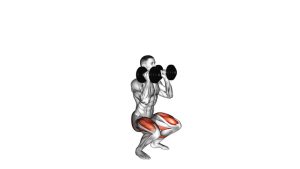
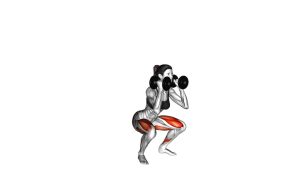
- Begin standing upright: Hold the dumbbell vertically near your chest with both elbows bent. Keep your feet planted and your abdominal muscles gently engaged.
- Initiate the squat: Bend your knees and hips together while moving your hips downward and slightly backward. Meanwhile, maintain a balanced torso position as your body descends.
- Lower into a controlled squat: Continue descending until your thighs approach parallel with the floor, or reach your comfortable squat depth. Keep the dumbbell close to your chest.
- Stabilize the bottom position: Hold the squat briefly while maintaining steady foot pressure. Your knees should remain aligned, and your spine should stay comfortably neutral.
- Press the dumbbell forward: Extend both arms directly in front of your body until the dumbbell reaches approximately shoulder height. Importantly, keep the weight traveling horizontally rather than pushing it overhead.
- Maintain the squat during the press: Keep your hips lowered while the dumbbell moves away from your chest. Additionally, resist excessive forward leaning, shoulder shrugging, and lower-back rounding.
- Return the dumbbell to your chest: Slowly bend your elbows and bring the weight back toward your sternum. Continue maintaining the squat instead of standing up immediately.
- Repeat the forward press: Perform additional controlled presses while holding the squat. The demonstrated variation includes approximately three forward pressing actions before returning to standing.
- Rise to the starting position: After completing the presses, push through your feet and extend your knees and hips together. Keep the dumbbell close to your chest throughout the upward movement.
- Reset before repeating: Stand tall, regain comfortable breathing, and check your posture. Finally, begin the next squat only when your balance and grip feel secure.
Pro Tips & Common Mistakes
- Keep the dumbbell upright: Maintain a secure two-hand grip throughout the exercise. Avoid allowing the weight to rotate unexpectedly as your arms extend forward.
- Press forward, not upward: The demonstrated movement is a horizontal forward press. Therefore, raising the dumbbell above your head changes the exercise into a different variation.
- Maintain your squat depth: Avoid repeatedly rising and lowering your hips during the pressing phase. Instead, hold a manageable squat position while your arms perform the movement.
- Control knee alignment: Keep your knees tracking comfortably toward your toes. If either knee collapses inward, reduce the load and focus on lower-body stability.
- Keep both feet grounded: Distribute your weight across the entire foot. Moreover, avoid shifting excessively onto your toes when extending the dumbbell away from your body.
- Protect your spinal position: Pressing the dumbbell forward creates additional leverage on the trunk. Consequently, a controlled abdominal brace helps limit unwanted spinal movement.
- Avoid excessive forward leaning: A moderate torso inclination is natural during squats. However, bending farther forward simply to support the dumbbell may indicate that the weight is too heavy.
- Use a controlled pressing tempo: Extend your arms over approximately 1–2 seconds. Then return the dumbbell toward your chest without swinging or using momentum.
- Do not force maximum squat depth: Choose a depth that allows comfortable hip, knee, and ankle movement. Furthermore, prioritize balance and controlled pressing over reaching an unnecessarily deep position.
- Coordinate breathing: Breathe steadily during the squat hold. For example, exhale gently while pressing forward and inhale as the dumbbell returns. Avoid unnecessarily holding your breath.
- Limit fatigue-related compensation: Sustained squatting can quickly fatigue the quadriceps. Therefore, finish the set when you can no longer hold a stable lower-body position.
- Progress gradually: First master one forward press per squat. Subsequently, introduce two or three presses before increasing the dumbbell weight. This approach supports consistent technique.
FAQ
Muscles Worked and Exercise Technique
What muscles does the Dumbbell Press Squat work?
The Dumbbell Press Squat primarily targets the quadriceps and gluteus maximus. These muscles control the squat and help maintain the lowered position. Additionally, the anterior deltoids and triceps assist with the forward press. Meanwhile, the abdominal muscles, spinal stabilizers, and hip stabilizers contribute to balance and posture.
Is the Dumbbell Press Squat the same as a dumbbell thruster?
No. A traditional dumbbell thruster combines a squat with an overhead press during the upward movement. In contrast, this variation involves holding a squat while pressing a dumbbell horizontally forward at approximately shoulder height. The athlete then returns the dumbbell toward the chest before rising to standing.
Should I press the dumbbell while standing or squatting?
In the demonstrated variation, the forward press occurs while maintaining the lowered squat position. Therefore, avoid standing up during each press. Instead, keep your hips steady until the planned pressing repetitions are complete. Finally, return the dumbbell to your chest and rise into the starting position.
How deep should I squat during this exercise?
Aim for a comfortable depth that allows stable foot pressure and controlled spinal alignment. Ideally, your thighs may approach parallel with the floor if mobility permits. However, a shallower squat is appropriate when deeper positions cause discomfort, balance problems, or excessive torso rounding.
Training Frequency, Progression, and Safety
Is the Dumbbell Press Squat suitable for beginners?
Beginners can learn this movement after developing comfortable squat mechanics and basic shoulder control. Initially, practice without a dumbbell or use a very light weight. Then add one forward press during each squat hold. As technique improves, gradually increase pressing repetitions or resistance.
How many forward presses should I perform per squat?
The demonstrated movement includes approximately three forward presses during one sustained squat. However, this is not a mandatory starting target. For example, beginners may perform one press before returning to standing. More experienced exercisers can attempt two or three controlled presses while preserving consistent squat depth.
Why do my shoulders fatigue during Dumbbell Press Squats?
Holding the dumbbell away from your body increases the demand on the shoulder muscles. Consequently, the anterior deltoids may fatigue before the legs during longer squat holds. Additionally, excessive weight can encourage shoulder shrugging and trunk compensation. Therefore, choose a manageable resistance and keep your pressing movements controlled.
Can the Dumbbell Press Squat help build stronger thighs?
Yes. The squat and sustained hold challenge the quadriceps through controlled knee movement and prolonged muscular tension. Furthermore, the glutes contribute to hip stabilization and the return to standing. However, progressive squats and other established lower-body resistance exercises remain useful for developing greater maximal leg strength.
How often should I perform Dumbbell Press Squats?
For many healthy exercisers, including this exercise in a lower-body or full-body routine one to three times weekly may be reasonable. However, training frequency depends on overall workout volume, intensity, and recovery. Allow adequate rest between demanding sessions, especially when prolonged squat holds cause substantial muscular fatigue.
What should I do if my knees or lower back hurt?
Stop the movement if you experience sharp or worsening pain. Then reassess squat depth, dumbbell weight, knee alignment, and trunk control. Although mild muscular effort is expected, joint pain should not be ignored. If discomfort continues, consult a qualified healthcare professional before resuming the exercise.
Recommended Equipment
- Adjustable Dumbbell Set — allows gradual resistance adjustments as squat control and forward pressing strength improve
- Rubber-Coated Hex Dumbbell — offers a practical single-dumbbell option for controlled squat holds and forward presses
- Non-Slip Exercise Mat — provides a designated workout surface when used on a stable, non-slippery floor
- Mini Resistance Loop Bands — useful for separate glute activation, hip stability drills, and squat preparation
- Flat-Sole Cross-Training Shoes — can provide a stable base for squatting when properly fitted and suited to the workout surface
Tip: Start with a manageable dumbbell rather than selecting the heaviest available resistance. Additionally, ensure your workout surface offers reliable traction and enough room for arm extension. For better results, prioritize stable squatting, smooth pressing, and gradual progression.