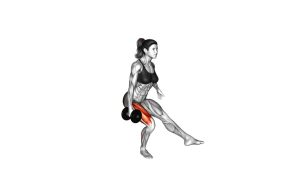
Dumbbell Bar-Grip Sumo Squat: Form, Muscles & Tips
Master the Dumbbell Bar-Grip Sumo Squat with proper form, glute and thigh training tips, sets by goal, common mistakes, and expert exercise FAQs.
Dumbbell Bar-Grip Sumo Squat
The Dumbbell Bar-Grip Sumo Squat provides an accessible way to strengthen the lower body with relatively simple equipment. Because the feet are positioned widely, the movement challenges the inner-thigh muscles alongside the quadriceps and glutes. Additionally, holding the dumbbell below the pelvis allows the arms to remain extended while the legs perform most of the work.
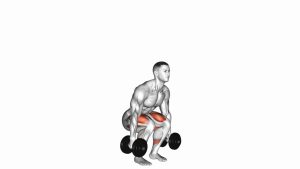
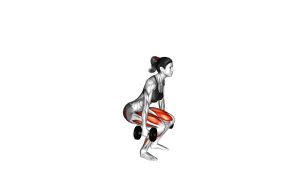
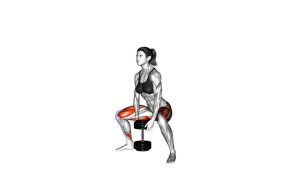
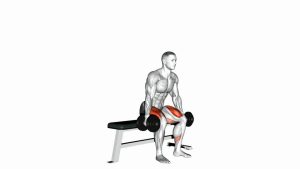
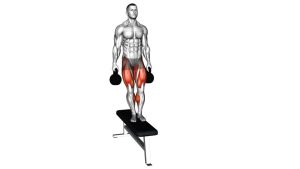
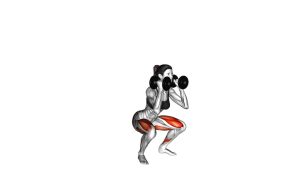
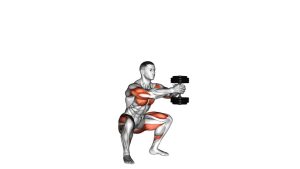
As demonstrated in the exercise video, both feet remain firmly planted throughout each repetition. The knees bend outward in line with the toes while the hips descend between the legs. Consequently, successful repetitions depend on coordinated hip movement, stable foot pressure, and controlled spinal positioning rather than excessive dumbbell weight.
Quick Overview
| Body Part | Legs |
|---|---|
| Primary Muscle | Quadriceps, gluteus maximus, and adductor magnus |
| Secondary Muscle | Other hip adductors, hamstrings, gluteus medius, core stabilizers, and forearm gripping muscles |
| Equipment | One dumbbell held by its handle with both hands; stable, non-slip training surface |
| Difficulty | Beginner to Intermediate, depending on resistance, squat depth, and hip mobility |
Sets & Reps (By Goal)
The ideal training volume depends on your strength, experience, and available resistance. Therefore, beginners should prioritize consistent technique before increasing their dumbbell weight. More experienced lifters can gradually adjust repetitions, tempo, and resistance to match their goals.
- Strength: 4–5 sets × 5–8 reps with challenging but controlled resistance. Rest approximately 90–150 seconds between sets.
- Hypertrophy (muscle growth): 3–4 sets × 8–12 reps. Use a controlled lowering phase and rest approximately 60–90 seconds.
- Muscular endurance: 2–3 sets × 15–20 reps using a lighter dumbbell. Maintain steady breathing and rest approximately 30–60 seconds.
- Mobility and movement control: 2–3 sets × 8–10 reps with light resistance and a comfortable pause near the bottom.
- Rehab-style training: If cleared by a qualified rehabilitation professional, perform 2–3 sets × 6–10 controlled repetitions using very light resistance and a symptom-free range.
Progression and Training Tempo
For most lifters, a useful starting tempo is approximately two to three seconds downward, followed by a smooth return to standing. Additionally, a brief pause near the bottom can improve positional awareness. However, avoid deliberately slowing every repetition if fatigue causes the spine or knees to lose alignment.
Progression rule: First improve squat depth, stability, and repetition quality. Next, increase repetitions within your chosen range. Finally, add dumbbell weight when you can complete every repetition without losing control.
Setup / Starting Position
- Choose an appropriate dumbbell: Select a weight you can hold securely with both hands. Initially, use a lighter load to establish proper movement mechanics.
- Establish a wide stance: Position your feet wider than shoulder-width apart. However, avoid spreading them so far that your hips or groin feel uncomfortable.
- Turn your toes outward: Angle both feet outward naturally according to your hip mobility. Your knees should subsequently follow the same general direction as your toes.
- Grip the dumbbell handle: Hold a single dumbbell securely with both hands around its handle. Allow the weight to hang vertically between your legs, with your arms extended.
- Position your upper body: Lift your chest comfortably, keep your shoulders relaxed, and maintain a neutral spine. Meanwhile, position your head in line with your torso rather than looking excessively upward.
- Brace your abdominal muscles: Gently tighten your core without holding unnecessary tension in your neck or shoulders. This helps maintain torso control as the hips descend.
- Distribute your foot pressure: Keep your heels, big-toe bases, and little-toe bases in contact with the floor. As a result, your feet create a stable foundation for the squat.
Setup tip: Your stance should allow your hips to move comfortably between your thighs. If your knees collapse inward or your feet lose contact with the floor, adjust your stance before beginning.
Execution (Step-by-Step)
- Begin in the upright position: Stand tall with your feet wide apart and your toes pointing outward. Keep the dumbbell centered between your legs while maintaining a stable grip.
- Initiate the squat: Bend your knees and hips together, allowing your pelvis to descend between your legs. At the same time, keep your abdominal muscles lightly braced.
- Track your knees outward: Allow both knees to travel in the same direction as your toes. However, avoid forcefully pushing them beyond your natural alignment.
- Lower the dumbbell naturally: As your body descends, the dumbbell moves downward between your thighs. Keep your arms extended rather than performing a curl or pulling movement.
- Maintain torso alignment: Keep your chest open and your back in a comfortable neutral position. A slight forward torso inclination is normal, especially as squat depth increases.
- Reach a controlled bottom position: Continue lowering until you reach a comfortable depth without your heels lifting. Your thighs may approach parallel, although individual mobility determines your appropriate range.
- Begin the upward phase: Push evenly through both feet while extending your knees and hips. Consequently, the dumbbell rises naturally with your body.
- Return to standing: Continue upward until your hips and knees reach a comfortable extended position. Avoid leaning backward or forcefully snapping your knees straight.
- Reset and repeat: Reestablish your breathing, posture, and foot pressure before the next repetition. Throughout the set, maintain the same controlled movement pattern.
Pro Tips & Common Mistakes
Pro Tips for Better Sumo Squat Technique
- Find your natural stance width: Experiment with a moderately wide position before moving wider. Because hip anatomy differs, the widest possible stance is not necessarily the most effective.
- Maintain balanced foot pressure: Keep your feet grounded from heel to forefoot. As a result, you can produce force without rocking onto your toes or heels.
- Control the lowering phase: Descend smoothly instead of allowing gravity to pull you downward. This improves movement awareness and helps maintain consistent knee alignment.
- Keep the dumbbell close to your center: Let the weight hang naturally between your legs. Additionally, keep both hands secure around the handle without excessively tightening your shoulders.
- Use comfortable squat depth: Lower only as far as your hips, ankles, and spine allow. Over time, improved mobility and control may permit a deeper position.
- Coordinate your breathing: Inhale and brace before or during the lowering phase. Then exhale as you return to standing, while maintaining appropriate trunk stability.
Common Mistakes to Avoid
- Allowing the knees to collapse inward: This can disrupt lower-body alignment and reduce control. Instead, keep your knees moving naturally in the direction of your toes.
- Rounding the lower back: Excessive spinal rounding may occur when depth exceeds available mobility. Therefore, reduce your squat depth and improve your bracing before adding weight.
- Using an excessively wide stance: Spreading your feet too far apart may create unnecessary hip or groin discomfort. Choose a position that allows smooth, balanced movement.
- Lifting the heels: Heel elevation during the descent can indicate balance or mobility limitations. Consequently, adjust your stance, lower the weight, or shorten the movement range.
- Turning the squat into a deadlift: Excessively pushing the hips backward while barely bending the knees changes the movement. Instead, bend both hips and knees to maintain a squat pattern.
- Rushing the upward phase: Sudden, uncontrolled extension may disrupt balance and posture. Therefore, stand up smoothly while keeping the dumbbell centered.
- Choosing too much resistance: Heavy dumbbells can cause compensations in the grip, shoulders, or lower back. Prioritize consistent technique before increasing resistance.
FAQ
Muscles Worked and Exercise Benefits
What muscles does the Dumbbell Bar-Grip Sumo Squat work?
The Dumbbell Bar-Grip Sumo Squat primarily trains the quadriceps, gluteus maximus, and adductor magnus. Additionally, the remaining hip adductors assist with lower-body control. The hamstrings, gluteus medius, and core stabilizers contribute to movement stability. Meanwhile, the forearms help maintain a secure dumbbell grip.
Is the Dumbbell Bar-Grip Sumo Squat good for beginners?
Yes, this exercise can be suitable for beginners using an appropriate dumbbell. Because the weight hangs between the legs, the grip position is relatively straightforward. However, beginners must still learn proper stance width, knee tracking, and hip control. Therefore, start light and develop consistent technique before increasing resistance.
Does the Dumbbell Bar-Grip Sumo Squat target the inner thighs?
Yes. The wide stance places meaningful demands on the hip adductors, particularly the adductor magnus. These muscles assist hip movement and stabilization throughout the squat. Nevertheless, the quadriceps and glutes remain important contributors. For balanced development, combine this exercise with other lower-body movements.
Proper Form and Movement Differences
How wide should my feet be during a dumbbell sumo squat?
Start with your feet wider than shoulder-width apart and your toes turned outward. However, the ideal position depends on your hip anatomy and mobility. Your knees should bend comfortably in the direction of your toes. If your hips feel pinched or your knees lose alignment, adjust the stance.
How low should I squat with a dumbbell?
Lower your hips as far as you can while maintaining stable foot pressure and a comfortable spinal position. For some lifters, this means reaching approximately parallel thighs. Others may safely squat deeper or require a shorter range. Therefore, prioritize controlled movement rather than forcing maximum depth.
What is the difference between a sumo squat and a goblet squat?
The main differences involve stance width and dumbbell placement. A typical goblet squat holds the weight near the chest. In contrast, this bar-grip sumo variation suspends one dumbbell between the legs. Additionally, the wide stance places greater movement demands on the hip adductors. Both exercises train major lower-body muscles.
Training Frequency, Progression, and Safety
How often should I perform Dumbbell Bar-Grip Sumo Squats?
Most healthy lifters can include this exercise in lower-body training approximately two or three times weekly, depending on total workout volume. However, harder sessions generally require adequate recovery. Begin with manageable resistance and monitor soreness, fatigue, and performance. As your strength improves, adjust frequency according to your training program.
Can I use heavier dumbbells as I get stronger?
Yes. Progressive resistance can help improve strength and muscle development. First, complete your target repetitions with stable knees and controlled squat depth. Next, increase the load gradually while maintaining proper technique. However, if grip strength limits performance, consider a manageable weight rather than compromising your lower-body mechanics.
Is the Dumbbell Bar-Grip Sumo Squat safe for knee pain?
Suitability depends on the cause and severity of your symptoms. Although squatting can be part of many strengthening programs, painful movement should not be forced. Therefore, reduce the load or range if discomfort develops. If you experience persistent knee pain, swelling, instability, or an existing injury, consult a qualified healthcare professional before continuing.
Recommended Equipment
- Rubber Hex Dumbbell — provides the resistance needed for sumo squats, with a practical handle for secure two-handed gripping
- Adjustable Dumbbell Set — offers multiple resistance levels for gradually progressing lower-body strength and muscle training
- Flat-Sole Cross-Training Shoes — provide a stable, supportive base for wide-stance squats and other controlled strength exercises
- Interlocking Rubber Gym Floor Mat — protects workout flooring and provides a durable training surface when properly installed and secured
- Fabric Resistance Loop Bands — useful for complementary glute warm-ups, lateral walks, and lower-body activation exercises
Equipment tip: Choose a dumbbell that allows secure gripping and complete control throughout the squat. Additionally, train on a level, non-slip surface and wear supportive footwear. Begin with lighter resistance before progressing to heavier loads.