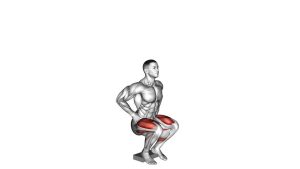
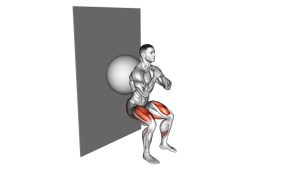
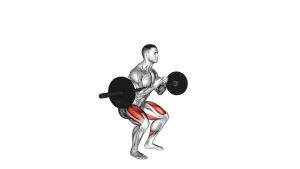
Dumbbell Front Squat: Proper Form, Muscles Worked, Sets, Tips & FAQ
Learn the Dumbbell Front Squat for stronger quads, glutes, and core control. Step-by-step form, sets by goal, common mistakes, FAQs, and equipment.
Dumbbell Front Squat
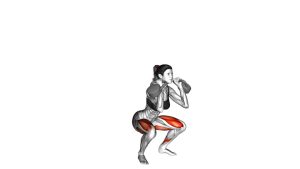
This exercise is best performed with controlled depth, steady breathing, and a strong brace through the trunk. The dumbbells should stay close to the shoulders while the knees track in line with the toes. Because the load sits in front of the body, the movement naturally challenges posture, upper-back tension, and core stability.
Quick Overview
| Body Part | Legs |
|---|---|
| Primary Muscle | Quadriceps |
| Secondary Muscle | Glutes, hamstrings, adductors, core, upper back |
| Equipment | Pair of dumbbells |
| Difficulty | Beginner to Intermediate |
Sets & Reps (By Goal)
- Muscle growth: 3–5 sets × 8–12 reps with controlled tempo and moderate-to-heavy dumbbells.
- Strength development: 4–6 sets × 4–8 reps using heavier dumbbells and longer rest periods.
- Beginner technique: 2–3 sets × 8–10 reps with light dumbbells and slow, clean movement.
- Conditioning: 3–4 sets × 12–15 reps with lighter dumbbells and shorter rest periods.
Progression rule: Add reps first, then increase dumbbell weight once every rep stays stable, deep, and controlled without losing posture.
Setup / Starting Position
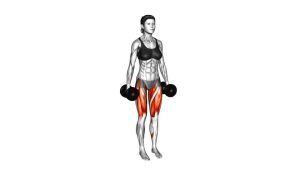
- Stand tall: Place your feet about shoulder-width apart with toes slightly turned out.
- Rack the dumbbells: Hold one dumbbell in each hand at shoulder level with the elbows slightly forward.
- Brace your core: Keep your ribs stacked over your pelvis and avoid leaning backward.
- Set your posture: Lift your chest, keep your upper back tight, and look straight ahead.
- Ground your feet: Keep even pressure through the heels, mid-foot, and big toe base.
Execution (Step-by-Step)
- Inhale and brace: Take a breath before lowering and tighten your midsection.
- Lower under control: Bend your knees and hips together while keeping your torso upright.
- Track the knees: Let your knees travel naturally over your toes without caving inward.
- Reach depth: Descend until your thighs are at least parallel, or as deep as your mobility allows with good form.
- Drive upward: Push through the floor and extend your knees and hips together.
- Finish tall: Return to standing with the dumbbells still secure at shoulder level.
Pro Tips & Common Mistakes
- Keep the chest tall: A proud chest helps prevent the dumbbells from pulling you forward.
- Do not rush the descent: Lower slowly to maintain balance and tension.
- Avoid knee collapse: Push the knees in the same direction as the toes.
- Keep heels down: If your heels lift, reduce depth slightly or work on ankle mobility.
- Do not turn it into a hip hinge: Stay upright instead of leaning too far forward.
- Use full-foot pressure: Drive through the whole foot, not just the toes.
- Brace before every rep: A strong core keeps the spine stable under the front-loaded position.
FAQ
What muscles does the Dumbbell Front Squat work?
The Dumbbell Front Squat primarily targets the quadriceps. It also works the glutes, hamstrings, adductors, core, and upper back as supporting muscles.
Is the Dumbbell Front Squat good for beginners?
Yes. It is beginner-friendly when performed with light dumbbells and controlled depth. The front-loaded position teaches upright posture and helps build confidence with squat mechanics.
How deep should I squat?
Squat as deep as you can while keeping your heels grounded, knees stable, chest lifted, and spine neutral. For most people, reaching parallel or slightly below parallel is a strong target.
Why do I feel this more in my quads?
The dumbbells are held in front of the body, which encourages a more upright torso and greater knee bend. This naturally increases quadriceps involvement compared with some hip-dominant squat variations.
Can I do this exercise at home?
Yes. The Dumbbell Front Squat is an excellent home leg exercise because it only requires a pair of dumbbells and enough space to squat safely.
Recommended Equipment
- Adjustable Dumbbells — useful for progressive overload without needing many separate dumbbell pairs
- Rubber Hex Dumbbells — stable, durable option for home and gym strength training
- Weightlifting Shoes — help improve squat stability and upright positioning
- Exercise Mat — provides a clean, stable training surface for home workouts
- Squat Wedge / Ankle Mobility Wedge — can assist squat depth and ankle positioning during quad-focused training