Dumbbell Overhead Squat: Proper Form, Muscles Worked & Tips
Learn the Dumbbell Overhead Squat with step-by-step form, muscles worked, sets and reps, mobility tips, common mistakes, and safer overhead control.
Dumbbell Overhead Squat
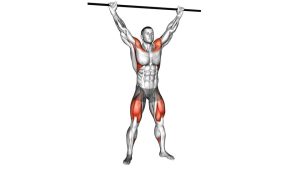
The Dumbbell Overhead Squat develops lower-body strength while demanding greater mobility and coordination than many conventional squat variations. Primarily, the quadriceps extend the knees, while the gluteus maximus helps extend the hips. Meanwhile, the abdominal muscles and spinal stabilizers resist unwanted trunk movement.
In addition, the shoulders and upper back work continuously to support the dumbbells overhead. Therefore, successful repetitions depend on maintaining a stable overhead position rather than simply lifting heavier weights. Although the movement may appear straightforward, it requires adequate ankle, hip, and shoulder mobility.
For best results, begin with light dumbbells and prioritize proper squat mechanics. Once you can maintain consistent control, gradually increase resistance according to your strength and mobility.
Quick Overview
| Body Part | Legs |
|---|---|
| Primary Muscle | Quadriceps (rectus femoris, vastus lateralis, vastus medialis, vastus intermedius) and gluteus maximus |
| Secondary Muscle | Adductor magnus, hamstrings, calves, spinal erectors, abdominal muscles, deltoids, trapezius, serratus anterior, and rotator cuff stabilizers |
| Equipment | Two dumbbells; optional non-slip exercise mat and mobility equipment |
| Difficulty | Advanced — requires coordinated lower-body strength, shoulder stability, balance, and adequate joint mobility |
Sets & Reps (By Goal)
- Technique and movement control: Start with 2–3 sets of 5–8 repetitions using very light dumbbells. Additionally, rest 60–90 seconds between sets to maintain control.
- Strength development: Perform 3–4 sets of 5–8 controlled repetitions. However, increase resistance only when your overhead position remains stable.
- Muscle hypertrophy: Complete 3–4 sets of 8–12 repetitions with manageable resistance. Meanwhile, maintain a consistent squat depth and controlled tempo.
- Muscular endurance: Perform 2–3 sets of 12–15 repetitions with lighter weights. Therefore, prioritize stable positioning instead of rushing through repetitions.
- Mobility and coordination: Practice 2–3 sets of 5–8 slow repetitions. For example, pause briefly at a comfortable depth while maintaining balanced foot pressure.
Progression rule: First, establish consistent squat mechanics with an unloaded variation or very light dumbbells. Next, improve overhead stability and comfortable squat depth. Finally, add resistance gradually without sacrificing shoulder alignment, trunk control, or foot balance. For heavier sets, allow approximately 2–3 minutes of rest when needed.
Setup / Starting Position
- Select appropriate dumbbells: Choose two lightweight dumbbells that you can safely control overhead. Initially, prioritize technique rather than resistance.
- Establish your stance: Stand with your feet approximately shoulder-width apart and toes slightly outward. Additionally, keep your weight balanced across both feet.
- Raise the dumbbells overhead: Bring both weights into a stable overhead position using a controlled lifting technique. Then extend your elbows without forcing an uncomfortable joint lockout.
- Stabilize your shoulders: Keep both arms extended overhead while maintaining active shoulder support. Moreover, position the dumbbells above your base of support without excessive lower-back arching.
- Brace the core: Tighten your abdominal muscles gently while keeping your ribs aligned with your pelvis. As a result, your torso can better resist unwanted movement.
- Prepare your squat position: Keep your head neutral, gaze forward, and knees aligned with your toes. Finally, take a controlled breath before initiating the descent.
Setup tip: If you cannot hold both dumbbells overhead without arching your lower back, reduce the load or practice the position unloaded. Likewise, adjust your stance slightly when necessary to accommodate your natural hip and ankle mobility.
Execution (Step-by-Step)
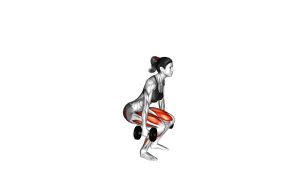
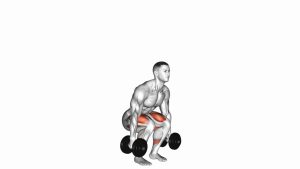
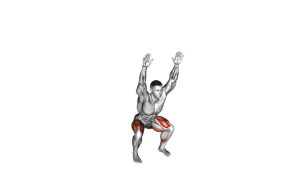
- Establish overhead control: Begin standing tall with both dumbbells extended overhead. Before descending, stabilize your shoulders and engage your abdominal muscles.
- Initiate the squat: Bend your hips and knees together while keeping the weights overhead. Meanwhile, maintain even pressure through both feet.
- Lower your hips gradually: Continue descending with controlled hip and knee flexion. Additionally, allow your knees to move naturally in line with your toes.
- Maintain overhead alignment: Keep both arms extended and the dumbbells supported above your body. However, avoid compensating by excessively arching your lower back.
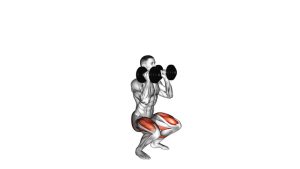
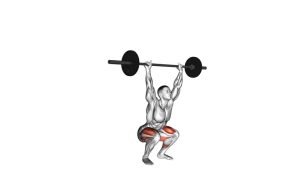
- Reach a controlled squat depth: Lower until your thighs approach or pass parallel, depending on mobility. Importantly, avoid forcing extra depth when your balance or spinal position changes.
- Stabilize the bottom position: Pause briefly while maintaining a braced torso and balanced foot pressure. At this point, both dumbbells should remain securely overhead.
- Drive upward through both legs: Push firmly through your feet while extending the knees and hips together. Meanwhile, prevent the arms from drifting excessively forward.
- Return to standing: Finish with your hips and knees fully extended and the dumbbells still overhead. Finally, stabilize your posture before beginning the next repetition.
Overhead Position and Breathing Control
During each repetition, keep your breathing controlled and your core engaged. For example, inhale before descending, maintain appropriate abdominal tension, and exhale during the ascent. However, avoid prolonged breath-holding, especially when practicing with lighter weights.
The dumbbells should remain stable throughout the squat. Therefore, if your arms drift forward or your back arches excessively, reduce the weight or squat depth.
Pro Tips & Common Mistakes
- Prioritize overhead stability: Keep both dumbbells securely supported above your body. Otherwise, excessive forward movement can compromise balance and shoulder control.
- Avoid excessive lower-back arching: Maintain abdominal tension and keep your ribs aligned with your pelvis. Instead of arching, reduce the load when shoulder mobility becomes limiting.
- Keep the heels grounded: Distribute pressure across the entire foot throughout the movement. If your heels rise, reassess squat depth, stance, and ankle mobility.
- Control knee alignment: Allow the knees to travel naturally in the direction of the toes. Meanwhile, avoid uncontrolled inward collapsing during the ascent.
- Do not rush the descent: Lower with a deliberate tempo. Consequently, you can maintain better coordination between the shoulders, trunk, hips, and knees.
- Use an appropriate squat depth: Descend only as far as you can maintain proper alignment. Although deep squats are demonstrated, depth should match your current mobility.
- Keep both arms extended: Avoid turning the movement into an overhead press during the ascent. Instead, maintain continuous overhead support from beginning to end.
- Start with lighter dumbbells: Heavy resistance can expose limitations in overhead control. Therefore, establish consistent form before attempting demanding working sets.
- Maintain a neutral head position: Keep your gaze generally forward without excessively lifting your chin. Additionally, avoid looking sharply downward during the squat.
- Develop mobility progressively: Improve comfortable shoulder flexion, ankle dorsiflexion, and hip mobility. As a result, you may gradually achieve more consistent positioning.
Recognizing When to Reduce the Weight
If the dumbbells repeatedly move forward, your heels lift, or your lower back arches excessively, reassess the exercise. First, reduce the resistance and choose a manageable squat depth. Then practice controlled repetitions before attempting a harder variation.
Moreover, remember that overhead stability is a major part of this movement. Therefore, progression should reflect both lower-body strength and your ability to maintain safe positioning.
FAQ
Muscles Worked and Exercise Benefits
What muscles does the Dumbbell Overhead Squat work?
The Dumbbell Overhead Squat primarily targets the quadriceps and gluteus maximus. Additionally, the adductors and hamstrings contribute to hip control and extension.
Meanwhile, the abdominal muscles and spinal stabilizers support the torso. The deltoids, trapezius, serratus anterior, and rotator cuff also contribute to overhead stability.
What are the benefits of Dumbbell Overhead Squats?
This exercise combines lower-body strengthening with full-body coordination. In addition, it challenges shoulder stability, trunk control, and balance during a loaded squat.
Because the dumbbells remain overhead, the movement also reveals potential mobility limitations. However, the benefits depend on using appropriate resistance and consistent technique.
Is the Dumbbell Overhead Squat good for building muscle?
Yes, the exercise can contribute to quadriceps and glute development when performed with suitable resistance. However, overhead stability may limit the amount of weight you can use.
Therefore, traditional squats and other lower-body exercises may be more practical for maximizing loading. Use overhead squats to complement your broader strength-training program.
Proper Technique and Mobility Requirements
How deep should I squat with dumbbells overhead?
Ideally, descend to a depth that allows you to maintain stable shoulders, balanced feet, and controlled spinal alignment. For some people, this means squatting below parallel.
However, deeper movement is not always better. Instead, prioritize a comfortable range of motion and gradually improve mobility when appropriate.
Why do my dumbbells move forward during the squat?
Forward movement may result from limited shoulder mobility, insufficient upper-back control, or changes in trunk positioning. Additionally, excessive loading can make overhead stabilization more difficult.
To correct this, begin with lighter dumbbells and reassess shoulder alignment. Furthermore, practice unloaded overhead positioning before increasing resistance.
Should my arms remain straight during Dumbbell Overhead Squats?
Yes, both arms should generally remain extended throughout the repetition. However, avoid forcing the elbows into an uncomfortable locked position.
Instead, maintain active shoulder stabilization while keeping the weights securely overhead. As a result, the movement remains a squat rather than an overhead press.
Beginner Modifications and Training Progression
Are Dumbbell Overhead Squats suitable for beginners?
The Dumbbell Overhead Squat is generally considered an advanced movement because it combines several physical demands. Nevertheless, beginners can prepare with bodyweight squats and unloaded overhead squat practice.
Once basic mobility and stability improve, very light dumbbells may be introduced. Therefore, progression should depend on technique rather than training experience alone.
How much weight should I use for Dumbbell Overhead Squats?
Start with the lightest dumbbells that allow consistent overhead positioning and controlled squatting. For example, lightweight fixed dumbbells may be sufficient during initial technique practice.
Afterward, increase resistance gradually when every repetition remains stable. However, avoid selecting weights based solely on your conventional squat strength.
How often should I perform Dumbbell Overhead Squats?
Most healthy trainees can begin with one or two technique-focused sessions per week. Additionally, the exercise can be included early in a workout after an appropriate warm-up.
However, total training frequency should reflect your recovery and overall exercise program. Reduce volume if fatigue affects overhead stability.
What should I do if overhead squats cause shoulder discomfort?
Stop the movement if you experience sharp pain or persistent shoulder discomfort. Additionally, avoid forcing your arms into a position that produces symptoms.
Instead, consider an unloaded squat variation while seeking guidance from a qualified healthcare professional when appropriate. Pain should never be treated as a requirement for progression.
Recommended Equipment
- Rubber Hex Dumbbells — suitable for controlled overhead squat practice, strength training, and progressive lower-body resistance
- Adjustable Dumbbell Set — allows gradual resistance adjustments as overhead stability and squat strength improve
- Resistance Bands Set — useful for controlled shoulder warm-ups, upper-back activation, and supplementary mobility exercises
- Weightlifting Shoes — provide a stable lifting base; some designs include raised heels that can help accommodate limited ankle dorsiflexion
- High-Density Foam Roller — useful for general warm-up routines and supplementary soft-tissue mobility work
Equipment tip: Prioritize comfortable, secure dumbbell grips and weights you can control overhead. Additionally, choose footwear that provides a stable base without unnecessary movement. Remember that mobility accessories support preparation but cannot replace proper strength training and controlled technique.