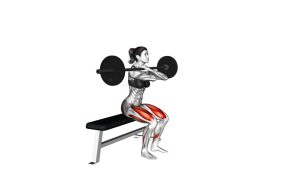
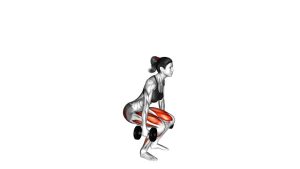
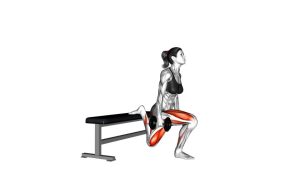
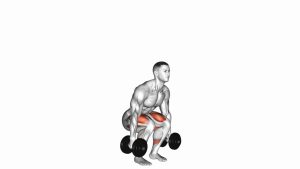
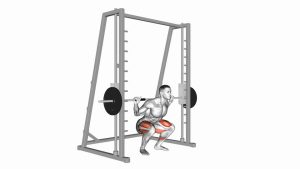
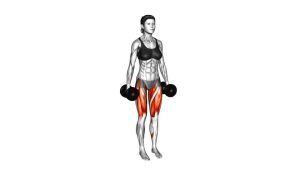
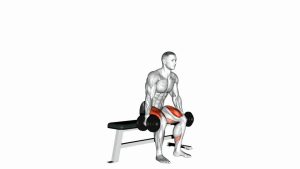
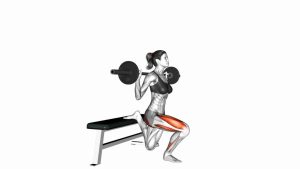
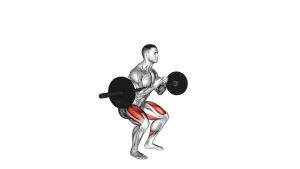
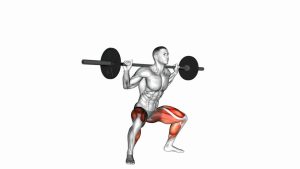
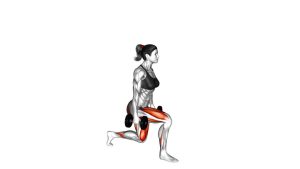
Dumbbell Front Squat: Proper Form, Sets, Benefits & Tips
Learn the Dumbbell Front Squat for stronger quads, glutes, and core. Step-by-step form, sets by goal, common mistakes, FAQs, and equipment.
Dumbbell Front Squat
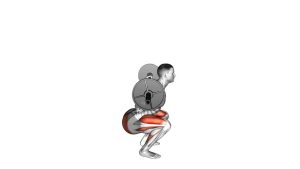
This exercise is useful for lifters who want to strengthen their legs without using a barbell. Because the load sits in front of the body, the Dumbbell Front Squat places strong emphasis on the quads while also challenging the upper back and abdominal muscles to keep the torso stable. It works well for home workouts, hypertrophy training, beginner strength programs, and athletic lower-body development.
Quick Overview
| Body Part | Legs |
|---|---|
| Primary Muscle | Quadriceps |
| Secondary Muscle | Glutes, adductors, hamstrings, core, upper back, spinal erectors |
| Equipment | Pair of dumbbells |
| Difficulty | Beginner to Intermediate |
Sets & Reps (By Goal)
- Muscle growth: 3–4 sets × 8–12 reps with a controlled 2–3 second descent.
- Strength development: 4–5 sets × 5–8 reps using heavier dumbbells and full bracing.
- Beginner technique practice: 2–3 sets × 8–10 reps with light dumbbells and perfect depth control.
- Conditioning: 3–5 rounds × 12–15 reps with moderate weight and short rest periods.
- Warm-up activation: 2 sets × 10 reps using light dumbbells before heavier leg training.
Progression rule: Add reps first, then increase dumbbell weight only when every rep stays upright, balanced, and controlled from top to bottom.
Setup / Starting Position
- Pick up two dumbbells: Choose a weight you can control without leaning forward or losing your brace.
- Bring the dumbbells to the shoulders: Hold them in a front rack position with the handles near your shoulders.
- Set your feet: Stand about shoulder-width apart with toes slightly turned outward.
- Lift the chest: Keep your torso tall and your elbows slightly forward so the dumbbells stay secure.
- Brace your core: Tighten your abs as if preparing to absorb pressure around the trunk.
- Center your weight: Keep pressure through the mid-foot and heel before starting the first rep.
Tip: If your wrists feel uncomfortable, let the dumbbells rest more on the shoulders instead of forcing the wrists to hold all the load.
Execution (Step-by-Step)
- Start tall: Stand with your chest up, elbows forward, and dumbbells stable near the shoulders.
- Begin the descent: Bend your knees and hips together while keeping your torso as upright as possible.
- Track the knees: Let the knees travel forward and outward in line with the toes.
- Lower under control: Descend until your thighs reach parallel or slightly below, depending on mobility.
- Stay braced at the bottom: Do not bounce, collapse, or let the dumbbells pull you forward.
- Drive upward: Push through the mid-foot and heel while extending the knees and hips together.
- Finish strong: Return to a tall standing position without leaning back or hyperextending the knees.
- Reset before the next rep: Re-brace, keep the dumbbells steady, and repeat with the same control.
Pro Tips & Common Mistakes
- Keep the torso upright: The front-loaded position works best when your chest stays tall.
- Do not let the elbows drop: Dropping the elbows usually makes the upper back round and the dumbbells slide forward.
- Control the descent: Lower slowly enough to keep balance and tension through the quads.
- Avoid knee collapse: Push the knees in the same direction as the toes throughout the squat.
- Do not shift onto the toes: Keep pressure centered through the mid-foot and heel.
- Use full range when possible: Squat as deep as you can while keeping a neutral spine and stable feet.
- Brace before each rep: A strong core helps protect the lower back and keeps the dumbbells from pulling you forward.
- Choose the right load: Heavy dumbbells are useful only if they do not ruin posture, depth, or control.
FAQ
What muscles does the Dumbbell Front Squat work?
The Dumbbell Front Squat mainly works the quadriceps. It also trains the glutes, adductors, hamstrings, core, and upper back as supporting muscles.
Is the Dumbbell Front Squat good for beginners?
Yes. It is a beginner-friendly squat variation when performed with light dumbbells. Beginners should focus on balance, depth, knee tracking, and keeping the dumbbells stable before increasing weight.
Is the Dumbbell Front Squat better than the Goblet Squat?
Both exercises are useful. The Goblet Squat is often easier to learn because one dumbbell is held at the chest. The Dumbbell Front Squat can allow more total load because two dumbbells are used, but it requires more shoulder, upper-back, and core stability.
Why do my heels lift during the Dumbbell Front Squat?
Heel lift can happen because of limited ankle mobility, poor foot pressure, or squatting too far onto the toes. Try a slightly wider stance, keep pressure through the mid-foot, and reduce depth until you can stay flat-footed.
How low should I squat?
Squat to the deepest position you can control while keeping your heels down, knees tracking well, and spine neutral. For many lifters, this means reaching parallel or slightly below parallel.
Can I use the Dumbbell Front Squat for muscle growth?
Yes. It is effective for leg hypertrophy when performed with enough load, controlled tempo, and consistent progression. Use moderate-to-heavy dumbbells and work mostly in the 8–12 rep range.
Recommended Equipment
- Adjustable Dumbbells — useful for progressing the Dumbbell Front Squat without needing multiple fixed pairs.
- Rubber Hex Dumbbells — stable, durable dumbbells for lower-body strength training and home gym setups.
- Weightlifting Shoes — help improve squat depth, foot stability, and upright torso positioning.
- Exercise Mat / Gym Flooring — provides a stable training surface and protects floors during dumbbell workouts.
- Weightlifting Belt — optional support for heavier sets when bracing technique is already strong.
Tip: Equipment should support your form, not hide poor technique. Master control first, then increase load gradually.