Landmine Rear Lunge: Proper Form, Muscles Worked, Sets & Tips
Learn the Landmine Rear Lunge with a side-held barbell grip. Build stronger quads and glutes with clear setup, controlled technique, sets, tips, and FAQs.
Landmine Rear Lunge
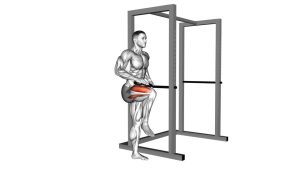
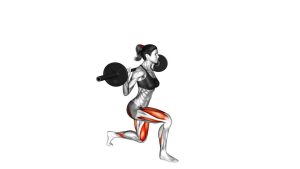
The Landmine Rear Lunge combines unilateral leg training with the unique resistance path of a landmine barbell. Unlike a traditional reverse lunge, the loaded barbell end remains connected to a fixed anchor. As a result, the weight follows a curved path while the athlete controls the backward step and descent.
This exercise places significant demands on the front-leg quadriceps and glutes. Meanwhile, the hamstrings, adductors, calves, and core muscles help maintain alignment throughout the movement. Because the weight is held beside the body, the torso must also resist unwanted rotation and sideways leaning.
For the best results, prioritize a comfortable stride, controlled knee bending, and a stable front foot. Furthermore, keep the loaded arm relaxed without allowing the barbell to swing. The movement should remain smooth from the backward step through the final standing position.
Quick Overview
| Body Part | Legs |
|---|---|
| Primary Muscle | Quadriceps (rectus femoris, vastus lateralis, vastus medialis, vastus intermedius) and gluteus maximus |
| Secondary Muscle | Hamstrings, adductors, gluteus medius, gluteus minimus, calves, obliques, and other core stabilizers |
| Equipment | Barbell, landmine attachment, weight plates, and optional barbell collars |
| Difficulty | Intermediate, depending on balance, load, hip stability, and unilateral leg strength |
Sets & Reps (By Goal)
- Beginner technique and control: Perform 2–3 sets of 6–8 repetitions per leg with a light load. Rest 60–90 seconds between sets and focus on consistent positioning.
- Muscle hypertrophy: Perform 3–4 sets of 8–12 repetitions per leg. Choose a challenging but manageable weight and rest approximately 60–120 seconds between sets.
- Lower-body strength: Complete 3–5 sets of 5–8 repetitions per leg. Use a progressively challenging load while maintaining balance. Rest approximately 2–3 minutes between demanding sets.
- Muscular endurance: Perform 2–3 sets of 12–15 repetitions per leg. Use lighter resistance and prioritize steady movement over lifting heavier weights.
- Balance and stability: Complete 2–3 sets of 8–10 repetitions per leg. Pause briefly in the bottom position before returning to standing with control.
Recommended Tempo and Progression
For most training goals, begin with a controlled 2–3-second lowering phase. Then rise smoothly over approximately 1–2 seconds. Avoid bouncing from the bottom or rushing the backward step.
Additionally, complete the same number of repetitions on each leg. If one side feels less stable, begin with that side and match its clean repetitions on the other.
Progression rule: First develop consistent balance and a comfortable range of motion. Next, increase repetitions or improve movement control. Finally, add small amounts of weight only when the front knee, hips, and torso remain stable.
Setup / Starting Position
- Secure the landmine attachment: Insert one end of an appropriate barbell into a stable landmine base. Ensure that the attachment is firmly secured and cannot shift during the exercise.
- Load the barbell: Place a suitable weight plate on the free end of the barbell. Start light enough to maintain balance during every repetition. Secure the plates when required.
- Position yourself beside the bar: Stand near the loaded end with your feet approximately hip-width apart. The barbell should extend diagonally toward its fixed attachment.
- Establish your grip: Hold the loaded end with the hand nearest the barbell. Keep the working arm extended naturally beside your thigh without shrugging your shoulder.
- Prepare the opposite arm: Allow your free arm to move naturally for balance. Meanwhile, keep your shoulders reasonably level and avoid rotating your torso toward the barbell.
- Brace your core: Engage your abdominal muscles gently. Maintain a neutral spine, comfortable chest position, and forward gaze.
Foot Placement and Load Alignment
Before beginning, confirm that your feet have enough space to move naturally. The planted foot should remain stable while the opposite leg steps backward.
Additionally, position the barbell so the loaded end can travel without striking your knee or thigh. Because the attachment creates a fixed pivot, the bar moves through an arc rather than a completely vertical path.
Therefore, avoid positioning yourself so far from the attachment that the bar pulls your shoulder forward. Similarly, do not stand so close that the plates interfere with your legs.
Setup checkpoint: You should feel balanced before taking the backward step. If the load pulls your torso sideways, reduce the weight or adjust your position.
Execution (Step-by-Step)
Phase 1: Backward Step and Controlled Descent
- Begin from a stable stance: Stand upright with both feet planted. Hold the landmine barbell beside your body and maintain gentle abdominal tension. Keep your eyes facing forward.
- Initiate the backward step: Move one foot behind your body while keeping the opposite foot firmly planted. As the stepping leg travels backward, allow your hips to begin descending.
- Lower your body gradually: Bend the front knee and hip while allowing the rear knee to move toward the floor. Maintain control over the entire lowering phase.
- Maintain front-leg stability: Keep the front foot planted with pressure distributed across the heel, midfoot, and forefoot. Meanwhile, guide the knee generally in the direction of your toes.
- Control the rear leg: Allow the rear heel to rise naturally as the back foot contacts the ground. The rear knee should bend comfortably without being forced into the floor.
- Keep the landmine steady: Let the loaded end follow the movement of your body without swinging. Avoid pulling upward with your shoulder or rotating toward the barbell.
Phase 2: Bottom Position and Upward Drive
- Reach a comfortable lunge depth: Continue lowering until the rear knee approaches the ground or your available range of motion ends. The front knee should remain controlled throughout.
- Stabilize the bottom position: Maintain a firm front-foot contact and a braced torso. A slight forward torso inclination is acceptable, provided your spine stays neutral.
- Drive through the front leg: Push firmly through the planted front foot. Extend the front knee and hip to begin raising your body.
- Bring the rear foot forward: As your body rises, move the rear leg toward its original position. Keep the return smooth instead of kicking or swinging the foot forward.
- Return to standing: Bring both feet back into a stable standing stance. Finish with your hips and knees comfortably extended, without leaning backward.
- Reset before repeating: Reestablish your balance and breathing. Then perform the next repetition on the same leg or alternate sides, depending on your workout plan.
Breathing and Movement Control
Inhale naturally as you prepare and lower into the lunge. Then exhale during the upward drive while maintaining abdominal tension. Avoid holding your breath unnecessarily during lighter repetitions.
Furthermore, focus on the front leg producing most of the upward force. The rear foot can assist with balance, but it should not create an uncontrolled push or bouncing movement.
As you return to standing, allow the landmine to follow its natural path. However, prevent sudden changes in barbell position that could disturb your balance.
Pro Tips & Common Mistakes
Pro Tips for Better Landmine Rear Lunges
- Prioritize the front leg: Drive through the planted foot during the upward phase. Consequently, the quadriceps and glutes can perform most of the lifting work.
- Choose a comfortable stride: Step far enough backward to create room for both knees to bend. However, avoid excessively long strides that compromise balance.
- Maintain a neutral spine: Keep your abdominal muscles engaged and avoid excessive lower-back arching. A small forward torso inclination can occur naturally during descent.
- Keep the loaded shoulder relaxed: Allow the working arm to hold the bar securely without shrugging. Additionally, prevent your torso from leaning toward the weight.
- Control the lowering phase: Descend gradually instead of dropping into the lunge. This approach improves movement awareness and makes balance corrections easier.
- Train both sides evenly: Complete equal repetitions with each leg. When practical, also switch your holding hand and standing position to distribute the offset challenge.
Common Mistakes to Avoid
- Allowing the front knee to collapse: Excessive inward knee movement can reduce lower-body control. Instead, guide the knee in line with the general direction of your foot.
- Using excessive weight: A heavy barbell can pull your torso sideways and disturb balance. Therefore, increase resistance only after mastering the movement.
- Taking an unstable backward step: Stepping directly behind the front foot can create a narrow, difficult stance. Instead, maintain enough lateral separation to support balance.
- Dropping the rear knee: Allowing the back knee to strike the floor can create unnecessary impact. Lower carefully and stop at a comfortable depth.
- Leaning toward the barbell: Offset resistance can encourage sideways trunk bending. Consequently, the core must remain active to preserve a stable torso.
- Relying on the rear leg: Pushing excessively through the rear foot may reduce the intended front-leg training emphasis. Focus instead on a strong, controlled front-leg drive.
- Rushing the return to standing: Moving too quickly can cause the barbell to swing or the feet to land awkwardly. Therefore, complete each repetition before starting the next.
Coaching tip: Begin with light resistance and develop a consistent backward step. Next, refine your lowering depth and upward drive. Once every repetition feels balanced, gradually increase training difficulty.
FAQ
Muscles Worked and Exercise Technique
What muscles does the Landmine Rear Lunge work?
The Landmine Rear Lunge primarily strengthens the quadriceps and gluteus maximus. These muscles control knee and hip movement during the lowering and lifting phases.
Additionally, the hamstrings, adductors, gluteus medius, calves, and core stabilizers contribute to movement control. Because the weight is held beside the body, the obliques also help resist unwanted trunk rotation and side bending.
What is the difference between a Landmine Rear Lunge and a regular Reverse Lunge?
Both exercises use a backward stepping movement followed by a controlled return to standing. However, the Landmine Rear Lunge adds resistance through a barbell attached to a fixed pivot point.
Consequently, the load follows an arcing path rather than moving completely independently. Furthermore, the side-held variation challenges the core to stabilize the torso against offset resistance.
Should I feel the Landmine Rear Lunge more in my quads or glutes?
You may feel both muscle groups working strongly. Generally, the quadriceps help control and extend the front knee, while the glutes contribute to hip extension.
A comfortable shorter stride with greater knee flexion may increase quadriceps demand. Meanwhile, a somewhat longer stride and greater hip flexion may shift more work toward the glutes. However, balance and joint comfort should always determine your movement range.
Balance, Strength, and Training Progression
Is the Landmine Rear Lunge suitable for beginners?
The exercise can be introduced after developing basic reverse-lunge technique and unilateral balance. However, beginners may find the offset barbell load challenging.
Therefore, start with bodyweight reverse lunges or supported split squats when necessary. Once you can control the backward step, use a lightly loaded landmine and gradually increase difficulty.
Why do I lose balance during Landmine Rear Lunges?
Balance problems often result from stepping too narrowly, using excessive resistance, or moving too quickly. Additionally, uneven hip control may allow the pelvis or torso to shift during the descent.
To improve stability, reduce the weight and slow the movement. Furthermore, maintain a comfortable distance between your feet. Keep the front foot planted and allow the free arm to assist with natural balance.
How many sets and reps should I perform?
For general muscle development, begin with 3–4 sets of 8–12 repetitions per leg. Choose a load that allows controlled movement without excessive leaning or loss of balance.
Alternatively, strength-focused training may use 3–5 sets of 5–8 repetitions per leg. Meanwhile, beginners can start with 2–3 sets of 6–8 repetitions. Always prioritize technique before increasing volume or resistance.
Variations, Safety, and Practical Questions
Should I alternate legs or complete one side first?
Both approaches can be effective. Performing every repetition on one leg before switching makes it easier to monitor movement consistency and muscular fatigue.
Alternatively, alternating legs can improve coordination and distribute the effort across both sides. However, the landmine’s position must allow each repetition to remain controlled. If necessary, reset the bar and your stance before changing sides.
Can I perform Landmine Rear Lunges with heavier weights?
Yes. Progressive resistance can increase the strength and muscle-building challenge. Nevertheless, the load should never prevent controlled knee tracking or stable posture.
First, master the exercise with light resistance. Then add weight gradually while maintaining your normal range of motion. If balance or technique deteriorates, reduce the load before continuing.
Are Landmine Rear Lunges safe for people with knee pain?
Suitability depends on the cause and severity of knee symptoms. Although some people find reverse lunges more comfortable than forward lunges, this does not make the exercise universally appropriate for painful knees.
Therefore, avoid forcing deep knee bending or using heavy resistance when symptoms occur. If you have persistent pain, swelling, instability, or a recent injury, seek guidance from a qualified healthcare professional.
Recommended Equipment
- Landmine Barbell Attachment — provides the fixed pivot point required for landmine training. Choose a stable attachment compatible with your barbell and training setup
- Olympic Barbell — serves as the primary resistance tool for the exercise. A suitable barbell allows controlled loading and movement through the landmine’s natural arc
- Olympic Bumper Weight Plates — allow progressive resistance for leg strength and muscle development. Select manageable weights that support balance and proper lunge technique
- Olympic Barbell Collars — help secure weight plates on the barbell sleeve. Properly fitted collars reduce unwanted plate movement during controlled lower-body exercises
- Stable Cross-Training Shoes — provide secure ground contact during lunges and other unilateral leg movements. A stable sole can support consistent foot pressure and controlled balance
Equipment tip: Prioritize a secure landmine base, compatible barbell, and manageable resistance. Additionally, inspect the weight plates and collars before each session. Good equipment preparation helps maintain a consistent movement path and reduces avoidable setup problems.