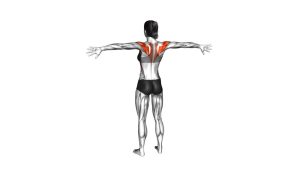
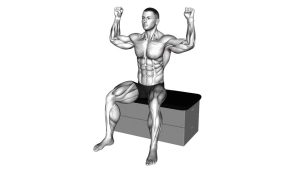
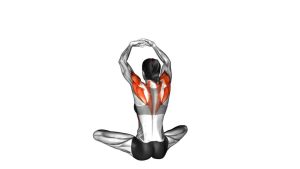
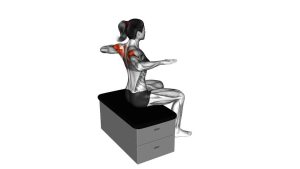
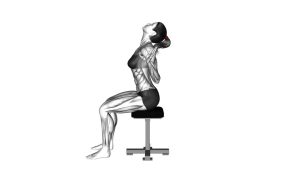
Standing Elbows-Tucked Open and Close: Form, Muscles Worked, Sets, Tips & FAQ
Learn how to do the Standing Elbows-Tucked Open and Close with proper form. Discover muscles worked, setup, step-by-step execution, sets by goal, common mistakes, FAQs, and recommended equipment.
Standing Elbows-Tucked Open and Close
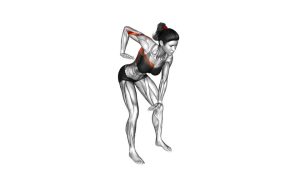
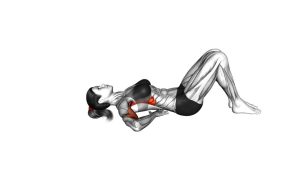
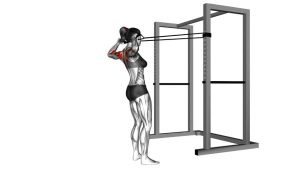
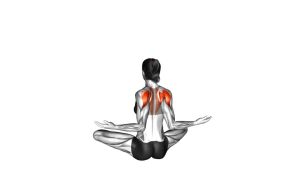
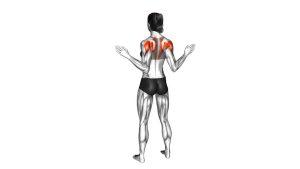
This exercise is most effective when performed with a small, precise range of motion and steady control. The goal is to rotate the forearms outward while keeping the elbows tucked and the shoulders relaxed. You should feel the rear delts, rotator cuff, and upper back assisting the motion, rather than the traps taking over. Clean reps matter more than speed or range.
Quick Overview
| Body Part | Rear Shoulders |
|---|---|
| Primary Muscle | Posterior deltoids (rear delts) |
| Secondary Muscle | Rotator cuff external rotators, rhomboids, middle trapezius, scapular stabilizers |
| Equipment | None, or optional light resistance band / Pilates ring |
| Difficulty | Beginner |
Sets & Reps (By Goal)
- Warm-up / activation: 2–3 sets × 10–15 reps with slow, controlled tempo
- Posture practice: 2–4 sets × 12–20 reps with light effort and perfect form
- Shoulder stability work: 3–4 sets × 8–12 reps with a 1–2 second pause in the open position
- Rehab-style control: 2–3 sets × 8–10 reps using a very small, pain-free range
Progression rule: Add reps, improve control, or increase pause time before adding resistance. This movement should stay crisp and smooth, not heavy and sloppy.
Setup / Starting Position
- Stand tall: Place your feet about hip-width apart and keep your spine neutral.
- Bend the elbows: Bring both elbows to roughly 90 degrees and tuck them close to your sides.
- Set the shoulders: Keep the shoulders down and relaxed, with the chest gently open.
- Brace lightly: Engage your core just enough to avoid leaning back or arching the lower back.
- Start centered: Position the forearms in front of the body, ready to rotate outward.
Tip: Imagine your upper arms are pinned to your ribs. The forearms move, but the elbows should stay nearly fixed.
Execution (Step-by-Step)
- Begin in control: Keep the elbows tucked and the wrists aligned with the forearms.
- Open outward: Rotate the forearms away from the midline while keeping the elbows close to the torso.
- Squeeze lightly: As you open, allow the shoulder blades to draw slightly back without shrugging.
- Pause briefly: Hold the open position for 1–2 seconds and feel the rear delts and upper back working.
- Return slowly: Bring the forearms back inward under control without losing posture.
- Repeat smoothly: Maintain the same path each rep and avoid rushing the close phase.
Pro Tips & Common Mistakes
- Keep the elbows anchored: Letting them float away from the body changes the exercise.
- Do not shrug: Keep the upper traps quiet so the rear delts and rotator cuff can do the work.
- Use a modest range: Open only as far as you can without pain or compensation.
- Stay tall: Avoid leaning back or flaring the ribs just to create more range.
- Control both directions: The closing phase is just as important as the opening phase.
- Think rotation, not pulling: This keeps the movement specific to shoulder mechanics and posture work.
FAQ
What muscles should I feel during this exercise?
Most people should feel the rear delts, small external rotators of the shoulder, and light upper-back involvement. You should not feel dominant shrugging or tension only in the neck.
Is this a shoulder exercise or a back exercise?
It is primarily a rear-shoulder and shoulder-stability exercise, but the upper back assists by helping control the shoulder blades.
Can beginners do the Standing Elbows-Tucked Open and Close?
Yes. It is beginner-friendly because it uses a simple setup and can be done without equipment. The key is to keep the range small and controlled.
Should I use resistance for this movement?
Not at first. Bodyweight or very light resistance is usually enough to learn the pattern. Add a light band only after your form is consistent.
Where does this fit in a workout?
It works well in a warm-up before shoulders or back, inside a posture circuit, or as a light accessory after bigger compound lifts.
Recommended Equipment
- Shoulder Rehab Resistance Bands — useful for adding light resistance to external rotation and shoulder-control drills
- Figure-8 Resistance Bands — convenient for upper-back, rear-delt, and shoulder activation work
- Pilates Ring — helpful for light upper-body tension, posture drills, and controlled arm opening patterns
- Posture Corrector — optional awareness tool for reducing rounded-shoulder habits between training sessions
- General Shoulder Resistance Bands — practical for progressing shoulder stability, mobility, and warm-up routines
Choose light resistance and prioritize control. This exercise responds better to precision than heavy loading.